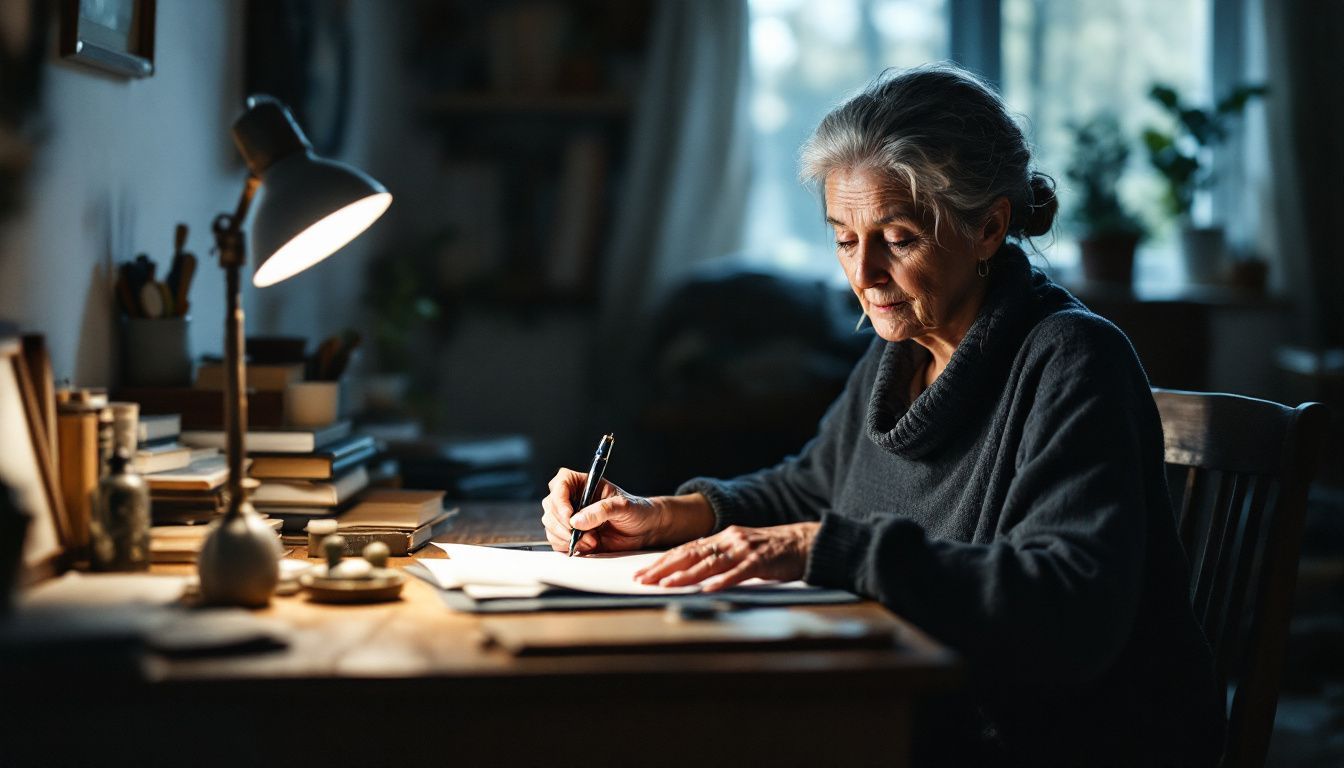
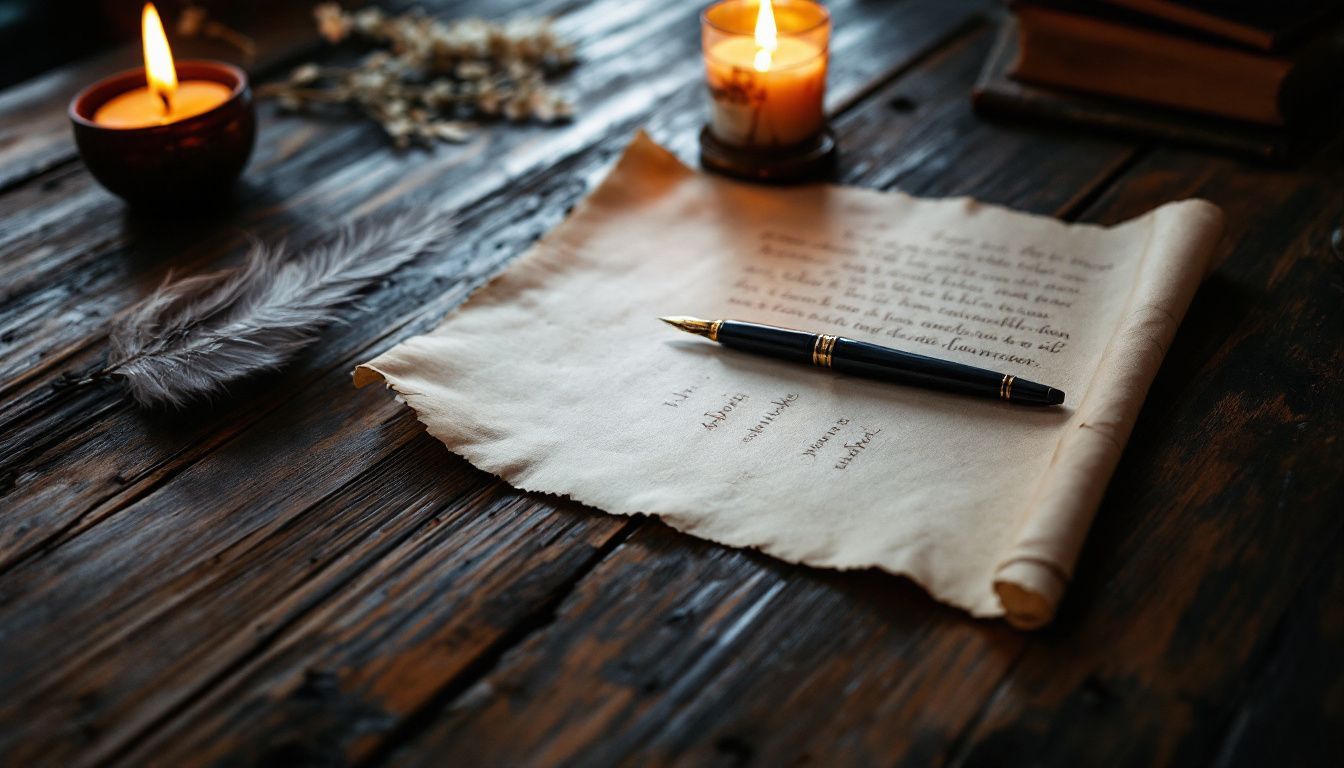
In today’s fast-paced world, finding ways to deeply connect with someone can be hard. Many choose quick texts or social media messages to share feelings. But what if there was a more meaningful way? Love letters bring us back to the art of personal connection, allowing feelings to flow from pen onto paper.
This tradition has a rich history, dating back to the Renaissance period when knights and damsels expressed their love in carefully crafted notes.
Love letters are not just pieces of paper; they’re treasures that hold deep emotions—laughing jokes shared between two hearts, promises wrapped up like jewellry in words, and dreams sketched out like paintings on canvas.
By choosing handwritten letters over digital messages, you keep a piece of your heart with your loved one in a unique and sincere way. Our blog will guide you through writing impactful love letters, making them personal and filled with emotion.
Ready to revive this beautiful tradition?
This can be done for different relationship stages. You personalize love letters by matching the tone, focus, and promises to where the relationship actually is, from “getting to know you” through decades together.
Match intensity to reality: sweet and hopeful in early stages, deeper commitment in long-term or married life.
Use specific shared memories instead of generic lines (“our first road trip” or “Sunday walks” rather than “you’re amazing”).
Look slightly ahead, but not too far: a next date or trip in early dating, life plans and aging together in long-term relationships.
Focus on curiosity, excitement, and appreciation without heavy declarations.
Keep language light: “I really enjoy getting to know you” rather than “you’re my soulmate.”
Center the present: mention recent dates, little quirks you like, and how they brighten your day.
Future: suggest near-future moments (“I can’t wait for our next coffee / walk / movie together”).
Example angle: “Every time we meet, the world looks a little brighter, and I’m excited to see where this goes.”
Here you can safely talk about love, shared history, and deeper emotional impact.
Use “I love you” if it’s already mutual, and describe what that love feels like day to day.
Highlight shared memories and growth: trips, challenges, inside jokes, how you’ve influenced each other.
Future: talk about ongoing adventures and building more memories together.
Example angle: “You’re the first person I think of when I wake and the last before I sleep, and life feels bigger because you’re in it.”
Emphasize reassurance, trust, and how you stay emotionally close despite the miles.
Acknowledge the difficulty honestly, then underline why it’s worth it (“you’re worth the wait / distance”).
Describe how they show up in your everyday life (hearing their laugh in songs, picturing them on your commute, etc.).
Future: focus on reunion and long-term commitment, not just missing them now.
Example angle: “I’m learning that home isn’t a place; it’s a person, and for me, that person is you.”
Lean into shared history, stability, and chosen commitment over time.
Honor the ordinary: routines, small rituals, and family life as proof of enduring love.
Acknowledge change: how you’ve grown together, what you’ve survived, and why you’d choose them again.
Future: aging together, future trips, supporting each other’s dreams, shared legacy.
Example angle: “You’re the reason each day feels worth waking up for, and I’d choose this life with you again and again.”
For any stage, adjust the content, not the skeleton:
Greeting that fits the stage (first name or nickname early; “my love,” “my husband/wife,” later).
One paragraph on what you appreciate about them right now.
One paragraph on a few concrete memories.
One paragraph looking gently toward an appropriate future (next date, trip, shared life, growing old together).
Close with a sign-off that matches intensity (“Warmly,” “With love,” “Forever yours”).
If you tell me the exact stage (e.g., “3 dates in,” “10 years married,” “2-year long-distance”), I can draft a tailored template you can adapt.

Love letters create a strong bond between people. They let us share deep feelings in a special way.

Writing love letters can strengthen relationships further. It’s akin to adding more stars to the night sky, enhancing its beauty. These letters provide a medium for expressing feelings in a heartfelt and truthful way.
They extend beyond mere words on a page; they’re tangible evidence of emotional bond.
Ali El-Chaer, a Nashville, Tennessee-based artist, portrays through their creations how sharing narratives brings us closer. Love letters accomplish the same, offering a platform to manifest our emotions uniquely.
This practice has held significance since the Renaissance era, still managing to touch lives as time progresses.
A handwritten letter carries not only the words but also a fragment of the individual’s spirit with it.
Contemplate presenting someone special with small tokens like jewelry or bangles accompanied by personalized letters. This combination can stir emotions in a way that digital messages fail to achieve.
Expressing your sentiments by hand draws you nearer, filling the gaps left by digital modes of communication.

After focusing on how love letters can make relationships stronger, we now see how they express deep feelings. Love letters let someone share what’s in their heart. They help people say things they might find hard to say out loud.
Handwriting a love letter takes thought and care. It shows you took the time to sit down and put your feelings on paper. This act adds a personal touch that texting or emailing cannot match.
Imagine spending hours picking the right words to tell someone how much they mean to you. That effort alone speaks volumes.
Love letters have shared heartfelt emotions for centuries, dating back to the Renaissance period around the 14th century. They’ve helped people across different cultures and times connect deeply with each other.
Even today, taking pen to paper can bridge gaps between hearts like nothing else can.

In a world full of emails and texts, nothing beats the charm of handwritten love letters. The feel of pen on paper brings a personal touch that digital messages can’t match.

Even in a world filled with emails and instant messages, the personal touch of handwritten love letters stands out. This act blends tradition with modern affection, proving that some things never lose their charm.
It’s like finding a unique piece of jewelry among everyday items. A love letter, much like a special necklace or hoop earrings from Castor and Pollux, carries an emotional connection that digital messages can’t match.
Handwritten words in Love letters carry the heartbeat of their author.
Incorporating elements like your own handwriting or little drawings makes each of the love letters feel as rare and precious as a piece of fine jewelry. This approach bridges centuries-old practices with today’s fast-paced lifestyle.
Crafting such letters pulls us back to the essence of communication—sharing genuine feelings through pen on paper. It brings an aesthetic pleasure unmatched by text on screens, creating memories that last beyond the moment.

The look of pen on paper brings a special beauty. Each stroke tells a story, more personal than typed words ever could. This is true art, where the writer’s hand shows feelings and thoughts in a way that feels real.
Handwritten love letters shine among digital messages because they hold the person’s touch.
This kind of letter writing takes time and care. Choosing the right pen, feeling the paper under your fingers, and seeing your words flow creates a bond with what you write. It makes each love letter unique, like jewellery or necklaces that are made just for one person.
Writing by hand lets you share parts of yourself in every curve and line.
Ali El-Chaer’s work might not seem linked at first but think about it this way: both his art and handwritten letters capture deep emotions through physical form. One through visuals tied to land and identity, the other through words woven into expressions of love in the love letters.
Both require skill, patience, and a desire to connect on a deeper level.

Writing love letters isn’t just about putting words on paper. It’s an art that touches the heart. To do it right, focus on choosing words that speak to your feelings. Think of how your loved one makes you feel and let that guide your pen.
Make it personal by sharing stories or moments that mean a lot to both of you. This way, your letter will stand out as not just another note, but as a special piece of your shared history.
Picking the right words in love letters is like choosing the perfect piece of jewelry for a special someone. Each word must shine and hold value, just as every gem has its own meaning.
Love letters, with their long history dating back to the Renaissance period, are personal treasures. They capture deep feelings and thoughts.
Good words make readers feel understood and valued. Think about how a handmade card feels more special than a store-bought one. The same goes for love letters. Words from the heart touch people deeply, showing true emotions.
This makes your letter timeless, like the art pieces by Ali El-Chaer or those passionate exchanges from Britain’s rich past.
After carefully selecting the right words, ensuring your love letter feels personal and genuine is crucial. Incorporate specifics that resonate with both of you. Refer to significant occasions or shared humor that’s exclusive to your relationship.
Such inclusion intensifies the level of closeness. It demonstrates that you value and keep those memories alive.
Including a personal touch elevates your letter’s uniqueness. You could fasten a tiny piece of jewelry to the paper with a string, for instance. Or illustrate something sentimental on the wrapper.
These actions exhibit dedication and consideration more advanced than merely written words. They transform your letter into a precious keepsake, similar to those fervent communications from older times, reverberating the enduring allure across societies and eras mentioned before.
You can use examples and templates as starting points, but it’s important not to copy full sample love letters word‑for‑word. This is because many are copyrighted and, more importantly, won’t sound like you.
You can adapt this framework to any relationship stage or occasion:
“My dear [Name],” “To my favorite person,” or a nickname that feels natural to you.
State the occasion or impulse:
“I’ve been thinking about how much you mean to me today.”
“On our anniversary, I wanted to put into words what I usually just feel.”
Mention 3–5 specific traits or habits.
Example structure (rewrite in your own words):
“I adore the way you [specific habit], how you [specific act of kindness], and how you always [support/encourage/etc.].”
Pick 1–3 concrete moments.
Example structure:
“I’ll never forget [memory 1]. I still smile whenever I think about [memory 2]. Those moments remind me how lucky I am to share my life with you.”
Light if the relationship is new; deeper if long‑term.
Example structure:
“I’m excited for [near‑future plan], and I love imagining [broader life together]. Knowing you’ll be there makes everything feel more possible.”
One clear emotional sentence plus a natural sign‑off.
Example: “You are my favorite part of every day. With all my heart, [Your Name].”
These are patterns you can imitate; swap in your details and phrasing so it feels like you.
Opening: “Hi [Name], I’ve been smiling to myself all week thinking about you, so I wanted to write this down.”
Appreciation: 2–3 things you like (“the way you tell stories,” “how you listen,” “your curiosity”).
Memory: 1–2 recent dates or conversations that felt special.
Future: “I’m really looking forward to our next [coffee / walk / movie], and to seeing where this goes.”
Closing: “You’ve quietly become the best part of my week. Warmly, [Your Name].”
Opening: “My love, today I found myself thinking about how much our life together means to me.”
Appreciation: Mix personality and everyday support (“your patience when I’m stressed,” “your terrible but charming jokes”).
Memories: One early‑relationship memory plus one recent moment that shows how you’ve grown together.
Future: “I can’t wait to keep building our little world—slow mornings, shared projects, and all the surprises we haven’t met yet.”
Closing: “Thank you for choosing me, again and again. With all my heart, [Your Name].”
If you want pre‑designed pages or more prompts (for brainstorming themes like “reasons I love you,” “our story,” or “bucket list dreams”), you can explore online collections that offer love‑letter prompts, layouts, and printable or digital designs.
These resources usually give you headings and structures—“Our Story,” “Things I’ve Learned From You,” “Hopes and Dreams”—that you can fill with your own words and memories.
Many of the most famous love letters are moving because they are specific, vulnerable, and written in an unmistakably personal voice.
Napoleon Bonaparte to Joséphine de Beauharnais: His letters mix passion and jealousy, with lines about Josephine’s “incomparable charms” and a love that burns “continually” in his heart.
Ludwig van Beethoven’s “Immortal Beloved” letter: A long, unsent letter to an unknown beloved, filled with longing, frustration, and the sense of a love that feels larger than life.
Prince Albert to Queen Victoria: Tender, steady devotion, describing how her image “fills my whole soul” and how he treasures even brief times together.
Winston Churchill to Clementine Churchill: Warm, playful affection, combining admiration and domestic intimacy in letters written across decades of marriage.
Frida Kahlo to Diego Rivera: Intensely emotional, often describing how deeply she misses him and how central he is to her identity and daily life.
Vita Sackville-West and Virginia Woolf: Their correspondence blends intellectual connection and romantic longing; Vita writes “I am reduced to a thing that wants Virginia,” capturing raw dependence and desire.
Oscar Wilde to Lord Alfred Douglas: Lyrical, ornate, and adoring, calling Douglas “my own boy” and praising his “red rose-leaf lips” and “slim gilt soul” walking between passion and poetry.
Franz Kafka to Milena Jesenská: Intense and self-analytical, with lines like “You are the knife I turn inside myself; that is love,” showing love as both solace and torment.
John Keats to Fanny Brawne: Romantic and yearning, written while ill and often separated from her, combining poetic imagery with very direct need and vulnerability.
Zelda Sayre Fitzgerald to F. Scott Fitzgerald: Dramatic, overflowing declarations—she writes of being “made” for him and wanting to be worn like a charm, capturing obsession and dependency.
Richard Nixon to Pat Nixon: Private letters that are surprisingly tender, calling her his “dearest heart” and describing falling in love with her as the finest thing that ever happened to him.
Johnny Cash to June Carter Cash: He writes of her as his greatest companion and source of happiness, often signing with simple but powerful phrases of enduring devotion.
Each letter sounds like its writer: Wilde’s is ornate, Kafka’s is anxious and intense, Kahlo’s is visceral and direct, Churchill’s is witty and affectionate.
They use concrete images and private language (pet names, specific memories, shared metaphors) rather than generic compliments.
Many sit at emotional extremes—deep longing, separation, illness, scandal—which gives them urgency and a sense of “nothing left unsaid.”
Henry VIII’s love letters to Anne Boleyn were written in the late 1520s, during a courtship that helped trigger England’s break with Rome and reshaped the monarchy.
By the mid‑1520s Henry had been married to Catherine of Aragon for around 15 years, with only one surviving child, Princess Mary, and no surviving son, which he saw as a dynastic crisis.
Anne Boleyn, daughter of Thomas Boleyn, had returned from the French court and was serving Catherine as a lady‑in‑waiting; she was witty, stylish, and politically well‑connected, which made her stand out at court.
Around 1526 Henry shifted his attention from Anne’s sister Mary (his former mistress) to Anne, but Anne refused to become just another royal affair, holding out for marriage and thus great power.
Seventeen of Henry’s love letters to Anne survive today in the Vatican Library; they are undated, probably written between about 1526 and 1529, and show an unusually vulnerable, lovesick king rather than the commanding ruler seen in state papers.
Historians think the letters were likely stolen from Anne and sent to Rome as evidence of Henry’s intention to set aside Catherine and marry Anne during his campaign for an annulment.
In early letters Henry writes that he has been “stricken with the dart of love” for a whole year and tormented by separation when Anne is away at Hever, stressing how her absence “grieves” him and how intensely he longs to see her.
The tone mixes courtly love and obsession: he begs Anne for a clear answer about whether she will be his, sends hunting trophies and jewelry, and even adopts her device (the ship with the solitary damsel) as a shared symbol of their bond.
Commentators note how unusually dependent Henry sounds—pleading, anxious, sometimes jealous—which underlines how much emotional leverage Anne gained by resisting him.
As Henry’s attachment deepened, he came to see Anne as the woman who could give him a legitimate male heir, and by 1527 he had resolved to seek an annulment from Catherine so he could marry her.
The letters were written while Henry’s agents argued before the papacy that his marriage to Catherine was invalid, even as many observers believed the true motive was his desire for Anne.
When the pope refused to grant an annulment, Henry began the process that led to the English Reformation—breaking with Rome, making himself head of the Church of England, and eventually marrying Anne in 1533.
The same correspondence that shows Henry’s devotion also foreshadows the volatility of his affections; within a few years of their marriage, Anne was accused of adultery and treason and executed in 1536.
Historians often read the letters as a snapshot of a brief period when Anne was the king’s “true love and passion,” powerful enough that he upended a kingdom to possess her, before politics, gender expectations, and dynastic anxiety turned against her.

Bringing back love letters today mixes old charm with new tricks. People are finding creative ways to share their feelings, using both the classic pen and paper and digital tools like emails and social media.
To make love letters fit today’s world, we can mix old and new ways. Think about adding a small piece of jewelry with the letter. It shows extra care. Also, using apps on your phone or computer to design or print your letter adds a cool touch.
This mixes tradition with tech smoothly.
Another idea is to take bits from Ali El-Chaer’s art for inspiration. Their work touches on deep emotions and ties to land which could add more depth to your words. Imagine combining such powerful themes with the beauty of handwritten notes.
Lastly, sharing love letters through social media might seem odd but it’s a way to publicly express love in our digital age. Whether you post just a part of the letter or its effect on you, it brings an old tradition into the light of current times.
The art of love letters thrives by keeping its core spirit alive, even as we add modern twists. We see this in the way Ali El-Chaer brings fresh perspectives through their artwork on subjects like colonization and land back, all while rooted in Nashville, Tennessee.
This approach mirrors how we can breathe new life into the tradition of love letters. It’s about blending the old with the new—taking inspiration from centuries past since the Renaissance era when passionate correspondences began.
Yet, it doesn’t forget today’s context.
We make our messages deeply personal and sincere by choosing words that resonate and connect. This echoes how Britain’s history is captured through intimate letters exchanged over time across cultures.
The essence lives in each stroke of pen on paper or digital note crafted with care—a timeless jewelllery piece woven from words that capture hearts regardless of era or place. Now, let’s explore how to revive this cherished practice further.
Modern alternatives keep the emotional core of a love letter but use formats that fit today’s digital, visual, and always‑on lives.
Thoughtful email or long-form message
Curated playlist with notes
Video or voice-message “letter”
Digital scrapbook / mini-website
Interactive or multimedia card (e-card, animated letter, Canva page)
Message threads, DMs, or texts turned into a “story”
Physical but creative twists (scrapbook, coupons, puzzles)
Long emails, DMs, or app messages can function as modern love letters if they are structured, reflective, and saved, rather than just quick chats.
You can combine text with emojis, photos, and links to shared memories (screenshots, old posts, maps of places you’ve been together).
Example: a single, titled email (“What I Love About Our Tuesdays”) that they can archive and reread.
Short video messages or “instant videos” let them see your face and hear your voice, which can be powerful for long-distance or busy couples.
Voice notes or a sequence of audio messages can feel like a spoken letter, especially if you record in one sitting with a clear beginning, middle, and end.
Animated love-letter templates and digital video greeting cards (e.g., editable Canva animations) let you overlay text, music, and imagery into one keepsake clip.
Example: a 1–3 minute “video letter” where you tell one favorite memory, one thing you appreciate now, and one thing you’re looking forward to.
Curated playlists function as emotional letters when each song is chosen for a specific reason; you can explain the choices in a note or messages.
Digital love-letter websites let you combine text, photos, a favorite song, and countdowns to an anniversary or reunion in a private link.
Interactive e-cards or multimedia “pages” with illustrations, photos, or mini-scrapbooks add keepsake value to your words.
Example: a private page with a short letter, a gallery of 10 photos, your song embedded, and a countdown to your next trip.
DIY formats such as treasure-hunt letters, puzzle letters, balloon messages, coupons, or doodle-filled notes mix old-fashioned handwriting with playful game-like elements.
Tiny physical add-ons (ticket stubs, printed screenshots, mini-photo strips) can echo your digital life together in a tangible way.
Example: a small envelope of “love coupons” (coffee made for you, movie night of your choice, tech-free evening) attached to a short note.
Keep the letter logic: a clear opening, a few specific memories, statements of appreciation, a small future hope, and a warm closing, even if it’s in video, audio, or web form.
Anchor everything in concrete details only the two of you share—nicknames, places, jokes, photos, or songs tied to real moments.
If you tell me your partner’s tech comfort level and whether you’re long‑distance or local, I can suggest 2–3 specific modern formats and outline exactly how to build them.
The most common mistakes come from trying too hard, not thinking about your reader, or ignoring basic clarity and honesty.
Leaning on stock phrases (“your eyes sparkle like stars,” “I can’t live without you”) makes the letter feel like it could be sent to anyone.
Overusing quotes, song lyrics, or famous lines can drown out your own voice and feel borrowed rather than personal.
Fix it: Use specific moments, quirks, and shared memories that no one else would recognize.
Declaring huge feelings or lifelong promises too early can feel overwhelming or manipulative, especially if the relationship is new or undefined.
Making the letter a demand (strong expectations, guilt, ultimatums) turns a gift into emotional pressure.
Fix it: Match the depth of emotion and future talk to your actual stage and what you’ve already said face-to-face.
Writing in stiff, formal language or trying to sound literary can make your partner feel like they’re reading homework rather than hearing you.
Getting lost in dense metaphors, long tangents, or three pages of abstract musings can blur what you actually feel or want.
Fix it: Write as you speak on a good day—clear, warm, and direct—and say plainly what you appreciate and what you hope for.
Obvious spelling and grammar errors can distract from the feeling, and some people do judge carelessness here.
Having someone else write it, or lifting large chunks from poems, songs, or the internet, risks the letter not sounding like you at all.
Saying things you don’t truly feel just to sound romantic undermines trust if your partner senses the exaggeration.
Fix it: Draft, then reread once for clarity and small corrections, and keep every line honest, even if it’s simple.
Writing something highly sexual, revealing, or intensely emotional without knowing their comfort level can come off as creepy or invasive.
Sending a grand letter when you’ve barely interacted, or using it to replace needed conversations about problems, can feel like avoidance rather than connection.
Fix it: Consider their personality, your history, and how they might feel reading it; a love letter should feel safe, not like an ambush.
Rambling for pages without a clear message or a gentle “what next” can leave the other person unsure how to respond.
Fix it: Aim for a simple arc—why you’re writing, what you cherish, a memory or two, what you hope for, and a warm sign-off—so the letter feels complete but not confusing.
If you’d like, tell me the relationship stage and I can help you rewrite a draft to avoid these traps while keeping your authentic voice.

Love letters hold a magic that strengthens bonds and shares deep feelings. Writing by hand adds a personal touch, making each word special. Tips like choosing heartfelt words and being sincere help anyone write a touching love letter.
Even today, we can mix old traditions with new ideas to keep this art alive. Love letters bring people closer across time and space. Let’s all try writing one; it might just spark joy in someone’s life.
The art of writing love letters involves expressing your feelings in a sincere, heartfelt way. It’s about using words to paint a picture of your affection and building an emotional connection with the reader.
To enhance your skills in penning love letters, focus on being genuine and personal. Use specific details that only you two share, this will make your letter more impactful. Also, don’t shy away from expressing your emotions openly.
Yes, many people think that you need to be a poet or an expert writer to craft a good love letter which isn’t true! A great love letter comes from the heart and not necessarily from perfect grammar or extravagant vocabulary.
Absolutely! Writing effective love letters is not exclusive to writers or poets – it’s all about authenticity and sincerity… Anyone willing to express their feelings honestly can master this art with some practice.