Contact us: ww@blogquizshop.com

Writing a romantic love letter can seem hard. You may want to share your feelings but find it tough to start. Fear not! Handwritten notes are still a powerful way to show love, even in our digital world.

Jessica Joyce Jacolbe explored their history and charm.

Our guide will walk you through creating heartfelt DIY love letters that your partner will cherish. We’ll cover everything from using scrapbook paper for a nostalgic touch to overcoming writer’s block with creativity prompts.

Get ready to express your affection in words.

Ready? Let’s make them feel special.

Key Takeaways

  • Writing love letters lets you share feelings with your partner. Use personal stories and real compliments to make them feel special.
  • Adding poetry, quotes, or memories from trips can make your letter stand out. This shows deep thought and care.
  • Calligraphy and wax seals add a unique touch to your letters. They show extra effort and make your letter a keepsake.
  • When stuck, use prompts or think of happy moments together to start writing. Shared memories can inspire words that come straight from the heart.
  • Love letters keep romance alive in the digital age. Putting pen to paper creates a lasting gift of love for your partner.

Essential Elements of a Romantic Love Letter

A romantic love letter works best when it is personal, sincere, and clearly centered on you and your loved one. Below are the key elements most relationship and writing experts agree on.

1. Warm, intimate opening

Start with a tender greeting that acknowledges this is a love letter, such as “My dearest…”, “To the love of my life…”, or a shared nickname.
A brief sentence explaining why you’re writing (“I wanted you to know how much you mean to me”) instantly sets the emotional tone.

2. Why you love them (specifics matter)

List a few specific things you admire—looks, mannerisms, values, or small habits—rather than vague praise.
For example, instead of “you’re nice,” say, “I love how you always pause and really listen when someone is hurting.”

3. Shared memories and moments

Include one or two vivid scenes: a first date, a quiet evening at home, or a trip that strengthened your bond.
Pulling in sensory details (a smell, a melody, or a color) makes the memory feel tangible and heartfelt.
An unopened love letter surrounded by dried rose petals and a candle.

4. How your life changed because of them

Describe how meeting or staying with this person altered your perspective, mood, or daily rhythm.
You might say something like, “Since you came into my life, mornings feel hopeful instead of rushed,” linking emotion to lived experience.

5. Mood of the letter: honesty and vulnerability

Be genuine instead of overly “poetic” or trying to sound like a movie script.
Don’t shy from softening harsh edges (“I don’t always say this enough”) to enhance authenticity.

6. Commitment and future hope

Reaffirm your feelings and, if appropriate, add a sentence about the future: stability, adventure, or growing old together.
Instead of just “I love you,” you might write, “I look forward to building a life with you, one small decision at a time.”

7. Closing and sign‑off

End with a memorable line that echoes the letter’s theme—something tender, promising, or quietly poetic.
Choose a closing like “With all my love,” “Forever yours,” or a private in‑joke, and sign your name (handwritten is especially effective)

Different types of Romantic Relationships

Romantic relationships can differ by commitment level, emotional pattern, and structure (how many people and what agreements are involved).

By commitment and clarity

  • Casual dating

    • Spending time together, some attraction, but no explicit long‑term commitment or exclusivity yet.

  • Situationships

    • Romantic and/or sexual connection without clear labels, expectations, or future plans; often ambiguous and unstable.

  • Committed long‑term relationships

    • Partners explicitly choose each other, plan a shared future, and integrate lives (home, finances, family, routines).

  • Toxic or unhealthy relationships

    • Patterns of control, disrespect, manipulation, or repeated emotional harm, even if strong attraction is present.

By emotional “style” (attachment)

  • Secure

    • Comfortable with closeness and independence; able to trust, communicate, and repair conflict relatively well.

  • Anxious (preoccupied)

    • Craves closeness and reassurance, fears abandonment, may worry a lot about the relationship and over-analyse partner’s signals.

  • Avoidant (dismissive)

    • Values independence, feels uncomfortable with too much intimacy, may pull away when things feel “too close.”

  • Disorganised (fearful‑avoidant)

    • Wants closeness but also fears it; mixes anxious and avoidant behaviours, often linked to earlier inconsistent or traumatic bond

By structure: who’s involved and how

  • Monogamous

    • Two partners agree to be each other’s only romantic and sexual partner.

  • Open relationships

    • A main couple keeps their bond primary but permits sexual (sometimes limited romantic) connections with others, under agreed rules.

  • Polyamory

    • People have, or can have, multiple romantic, often committed relationships at the same time, with everyone informed and consenting.

  • Other consensual non‑monogamy

    • Includes styles like swinging, polyfidelity, and relationship anarchy, with varying rules about sex, romance, and hierarchy.

By “type of love” flavour

  • Infatuation / passion‑only

    • Strong physical or romantic attraction without deep intimacy or commitment (“crush”, whirlwind romance).

  • Romantic love (passion + intimacy)

    • Emotional closeness and desire are present, but long‑term commitment may still be forming.

  • Companionate / pragma

    • Deep friendship, shared life, and steady affection; passion may be quieter but the bond is stable and practical.

  • Consummate love

    • Ideal blend of passion, intimacy, and commitment; often described as a mature, balanced partnership.

Overview table

Lens Main types (examples)
Commitment/clarity Casual dating, situationship, committed, toxic/unhealthy
Emotional attachment Secure, anxious, avoidant, disorganised/fearful‑avoidant
Structure/agreements Monogamous, open, polyamorous, other CNM styles
Love “flavour” or tone Infatuation, romantic love, companionate/pragma, consummate love

How to Identify if a Relationship is Toxic

A relationship is likely toxic when its ongoing pattern makes you feel unsafe, drained, or smaller over time, rather than supported and respected.

Core question to ask yourself

Ask: “Do I mostly feel safe, respected, and myself with this person, or mostly anxious, guilty, and on edge?”
If the second is true most of the time, and efforts to change the pattern go nowhere, that’s a strong sign of toxicity.

Common red‑flag patterns

  • You’re often walking on eggshells

    • You monitor your words, tone, or even clothing to avoid them getting angry, sulking, or starting a fight.

    • You feel relief when they’re in a good mood rather than relaxed by default.

  • Control and isolation

    • They try to dictate who you see, what you do, how you spend money, or where you go; they may check your phone or social media.

    • They discourage or mock your connections with friends and family, or guilt‑trip you for spending time away from them.

  • Constant criticism and contempt

    • You’re regularly put down, mocked, or nit‑picked, in private or in front of others; your achievements are minimised.

    • Sarcasm, eye‑rolling, name‑calling, and devaluing comments are common, and apologies are rare.

  • Blame shifting, gaslighting, and manipulation

    • Somehow every argument becomes your fault; you end up apologising even when they clearly crossed a line.

    • They deny things you remember, twist events, or tell you you’re “too sensitive” until you question your own perception.

  • Lack of support and persistent unhappiness

    • You don’t feel encouraged or “on the same team”; after interactions you feel smaller, guilty, or exhausted.

    • There is frequent drama, unresolved arguments, or silent treatment rather than calm problem‑solving.

Unhealthy vs abusive

  • Unhealthy

    • Poor communication, some disrespect, or occasional jealousy, but both people can still take responsibility and change with effort.

  • Abusive

    • Clear pattern of power and control (emotional, financial, sexual, or physical), threats, intimidation, or coercion; your safety or freedom feels at risk.

    • Abusive dynamics usually require outside help and physical or emotional distance, not just “working on it together.”

Quick self‑check questions

If you answer “yes” to several, it’s worth treating the situation as toxic and getting support:

  • Do I feel more anxious or afraid than loved and secure around them?

  • Do I hide parts of my life or feelings to avoid their reaction?

  • Do I feel guilty or “not good enough” most of the time with them?

  • Have I pulled back from friends, family, or hobbies because of this relationship?

  • Do they ignore, mock, or punish my boundaries?

If any of this sounds uncomfortably familiar, consider talking to a trusted friend, therapist, or local support service, and making a safety and exit plan if there’s any sign of abuse.

Crafting Romantic Love Letters

Start with one genuine feeling, keep it specific and personal, and write as if you were speaking softly to the person right in front of you.

Simple structure you can follow

Use this 5-part outline and keep each part a short paragraph.

Greeting

Use a warm, intimate opening:

“My dearest Anna,” “To my love,” or a special nickname.

Why you’re writing

One clear sentence that sets the tone:

“I’m writing this because I don’t say often enough how much you mean to me.”

What you love about them

Be specific: mention 3–5 concrete things (habits, looks, values, quirks).

Example prompts: “You make me happy because…”, “I always look forward to seeing you because…”.

Shared memories and the future

Recall 1–3 moments that brought you closer: a first date, a trip, a small everyday ritual.

Add one or two future lines: “I can’t wait to…”, “I look forward to…”.

Closing line and sign-off

End with a strong, emotional line, not “Sincerely”.

Examples: “With all my love,” “Forever yours,” “Yours, completely.”

Style tips that make it feel real

  • Be yourself, not a poet

    • Use your natural voice; write the kind of letter you’d love to receive yourself.

    • A few simple, honest sentences beat pages of forced “flowery” language.

  • Get concrete, not generic

    • Avoid only saying “you’re amazing” or “you’re perfect”; add because-statements.

    • Example: “You’re kind and patient, especially when I’m stressed about work and you just listen without judging.”

  • Use small sensory details

    • Mention how their laugh sounds, how their hand feels in yours, the way they smell when you hug them.

  • Avoid cliché overload

    • A few classic phrases (“I love you”, “You mean the world to me”) are fine, but balance them with details that only fit this person.

  • Keep the tone matched to the relationship

    • New crush: lighter, more playful, with a clear invitation (e.g., ask them out).

    • Established partner: deeper emotion, gratitude, shared history, and future.

Common mistakes to avoid

  • Being vague about what you want

    • Especially with a crush, add a gentle “call to action”: “I’d love to take you out to dinner next week, if you’d like.”

  • Overloading with metaphors

    • Too many grand comparisons can make the letter feel confusing or insincere.

  • Typos and sloppy presentation

    • Read it aloud once, fix obvious mistakes, and write neatly or print cleanly; it shows care.

  • Copying whole examples

    • You can skim examples for inspiration, but rewrite in your own words so it feels authentic.

Personal anecdotes

Personalizing a love letter for a long‑term partner is about showing that you truly see who they are and the life you’ve built together.

Lean on shared history

  • Name specific milestones: moves, trips, illnesses, job changes, raising kids, or any “we got through this together” moments.

  • Highlight everyday rituals: morning coffee, evening walks, TV shows you always watch, private jokes, or “your” song; these details prove the letter could only be for them.

  • Mention growth over time: how you’ve both changed and how the relationship has deepened, matured, or become more peaceful and secure.

Show you know them

  • Use their nickname, speech quirks, and favorite phrases; weaving these into the letter makes it feel intimate and familiar.

  • Tie compliments to their real behavior: “your patience when I’m stressed,” “how you always fix things around the house,” “how you care for our families.”

  • Reflect their values and “love language”: if they love acts of service, praise the ways they quietly help; if they love words, add extra affirmation and reassurance.

A couple in their mid-30s sitting at a cozy table reminiscing.

Celebrate the ordinary magic

  • Point out small, repeated gestures that mean a lot—bringing you tea, checking you got home safe, texting you during a long day.

  • Describe how being with them makes you feel safe, understood, relaxed, or more yourself; long‑term partners often crave this recognition more than grand drama.

  • Acknowledge imperfections lightly (“we sometimes bicker about X”) and then affirm your choice of them again and again.

Honor the present and the future

  • Anchor the letter in now: “Today, after all these years, I still feel…”, “This season of our life together feels…”.

  • Name concrete things you’re looking forward to: future trips, retirement plans, projects at home, or simply “more slow Sunday mornings with you.”

  • Re‑choose them in writing: clearly state that you would choose them again and that you’re committed to the years ahead.

Simple personalized template

You can adapt this to your voice:

  • Opening: “My dearest [Nickname], after all these [years/decades] together, I’ve been thinking about how much our life means to me.”

  • Past: “I still think about [specific memory] and how you [what they did]. Moments like that made me realize just how lucky I am.”

  • Present: “These days, my favorite parts of life are the small things with you: [2–3 everyday details]. You probably don’t even notice how much they mean to me.”

  • Them: “I love your [traits] and the way you [specific habits or sacrifices]. You’re my safe place and my favorite person to come home to.”

  • Future: “I can’t wait for [specific future hopes], and I’m so grateful I get to face everything ahead with your hand in mine.”

  • Closing: “After all this time, I would still choose you, every single day. All my love, [Your Name].”

Sharing anecdotes from our lives makes love letters more meaningful. Let’s discuss why these personal elements are significant. Penning down memories signifies the level of your affection.

For instance, you might write about the initial moment you realized your feelings for them. It could be an inconsequential act they did or a shared moment during a journey.

Incorporating details like these enhances the vibrancy of your letter. Your significant other feels exceedingly cherished because they realize how vividly you recollect those moments.

Additionally, Jessica Joyce Jacolbe and Romance 101 insist on the continued relevance of handwritten letters in today’s times. They call attention to the charm involved in dedicating time to express our emotions through written words.

Thus, keep in mind your mutual experiences or something unique about your significant other when you’re drafting your love letter. It could be their smile, generosity, or an internal jest that only the two of you understand—bringing up these aspects will make your letter even more unique!

Sincere complimentsA heartfelt love note on a rustic wooden desk in soft light.

Sincere compliments in love notes are key. They make your partner feel special and loved. It’s like telling them why they stand out to you. Start with what catches your eye about them.

This could be their smile or how they laugh. Make sure it’s true for you.

Next, talk about their character traits that you admire. Maybe they’re kind, funny, or smart. Tell them how these qualities affect you and others around them. Keep it real and from the heart.

Use words that feel natural to you when giving compliments in your note. This will help your partner see the genuine feeling behind them.

Creative Ideas for Love Letters

Here are several concrete, creative angles you can use for love letters, plus prompts you can adapt.

1. Memory-based letters

Anchor the letter in specific shared memories so it feels personal and vivid.

  • “The first time I noticed you…” – Describe in detail the first moment they stood out to you: where you were, what they wore, what you thought.

  • “Our timeline” – Pick 5–7 milestones (first message, first date, a tough moment you got through) and give each a short paragraph.

  • “A day I’d relive” – Choose one perfect day together and write the letter as if you’re re-walking through it hour by hour.

  • “Before you / after you” – Two short sections: how life felt before you met them, and how it feels now.

Example opening:
“Before you, Tuesdays were just Tuesdays. Now they’re the days I secretly love most, because that’s when we usually end up talking too long and going to sleep too late.”

2. Future-focused letters

Write from the perspective of the future to show commitment and imagination.

  • “Letter from 10 years ahead” – Write as your future self, looking back at everything you’ve shared and thanking them for staying.

  • “A day in our future life” – Describe waking up, having coffee, work, evening routine together in a future home or city.

  • “What I can’t wait for” – List 10 small future moments you’re excited about (your first grey hair, your first big trip, your first garden, etc.).

  • “Promises I’m making now” – A short letter built around 3–5 sincere promises, big or small.

Prompt:
“Imagine it’s 2036, and we’re reading this letter together. We’re laughing at how nervous I was when I wrote it, but everything I hoped for is sitting right next to me: you.”

3. Themed or metaphor letters

Choose a theme (music, travel, nature, sports, books, etc.) and extend it through the letter.

  • Playlist letter – Each paragraph is titled with a song that reminds you of them, and you explain why.

  • Travel map – Structure the letter as a journey: “departure” (how you met), “layovers” (challenges), “destination” (where you’re heading together).

  • Nature letter – Compare them to natural images that fit their personality (steady like a tree, bright like morning sun, etc.).

  • Sports or game letter – Use gentle metaphors: “You’re the teammate I didn’t know I needed,” “My favourite win is still the day you said yes.”

Prompt:
“If our love were a playlist, it would start with that song we both pretend not to like, peak with the one we shout in the car, and end with something soft we fall asleep to.”
A vintage desk adorned with love letters, quill pen, and tea.

4. Interactive and playful letters

Turn the letter into something they can play with or revisit.

  • Love coupons – Write a short letter plus 5–10 coupons they can ‘redeem’ (homemade dinner, foot massage, pick-the-movie night, tech-free walk together).

  • Q&A letter – Ask yourself questions (“When did I know?”, “What scares me?”, “What do I adore most?”) and answer them honestly.

  • Riddle or puzzle – Hide a message in acrostics (first letters of each line spell something) or include a small puzzle where the final answer is a sweet phrase.

  • “Open when…” series – Several mini-letters: “Open when you’ve had a bad day,” “Open when you can’t sleep,” “Open when you miss me.”

Example:
“At the start of each paragraph, the first letters spell out what I’ve been too shy to say out loud.”

5. List-style letters

Lists feel easy to write and powerful to read.

  • “25 tiny reasons I love you” – Keep reasons very specific and concrete, not generic.

  • “Things you don’t know you do” – Focus on unconscious habits you find adorable or admirable.

  • “Ways you’ve changed me” – List the habits, beliefs, or feelings that are different because of them.

  • “Thank-you letter” – Every line starts with “Thank you for…” and stays focused on real moments.

Prompt:
“Today I’m not writing poetry or big declarations. I’m just making a list of the quiet ways you’ve changed my life without even noticing.”

6. Format and presentation ideas

You can make even simple words feel special with the right format.

  • Handwrite on unusual paper: brown kraft paper, a postcard, a page from a travel brochure, or the back of a printed photo.

  • Double-sided note: one side is an image (photo, doodle, small collage), the other side is your letter.

  • Tuck it somewhere meaningful: inside their favourite book, in a coat pocket, taped under a chair, in a lunchbox.

  • Add a sensory element: a light spritz of your perfume/aftershave, a pressed flower, or a tiny printed photo.

7. Simple structure you can reuse

If you want a reliable template you can adapt again and again:

Opening: one honest sentence about why you’re writing now.

Past: one memory that captures how you fell for them.

Present: what you appreciate about them in your life right now (with 2–3 specific examples).

Future: one image or hope you have for both of you.

Closing: a short, direct line that sounds like you (not a cliché).

Example mini-letter:

“I’m writing this because I keep catching myself smiling at nothing, and it always turns out to be you. I still remember the first time we sat talking long after we should have gone home; the lights were harsh, the chairs were uncomfortable, and somehow I didn’t want the night to end. These days you’re in everything: in my coffee breaks when I replay your jokes, in my walks when I hear your voice in my head, in the way I’m braver with my choices because you’re in my corner. One day I hope we’ll look back at this letter from a home we built together and laugh at how nervous I was writing it. Until then, this is just me saying that loving you is my favourite part of my life.”

Putting words from the heart on paper can really make love letters shine. Think about bringing in lines from songs or books that you both like, or write about trips you’ve taken together to fill your letter with warmth and personal stories.

Incorporating poetry or quotes

Adding poetry or famous sayings to your love letter can make it extra special. Choose lines that speak to your feelings. It’s like using the words of great writers to tell your story.
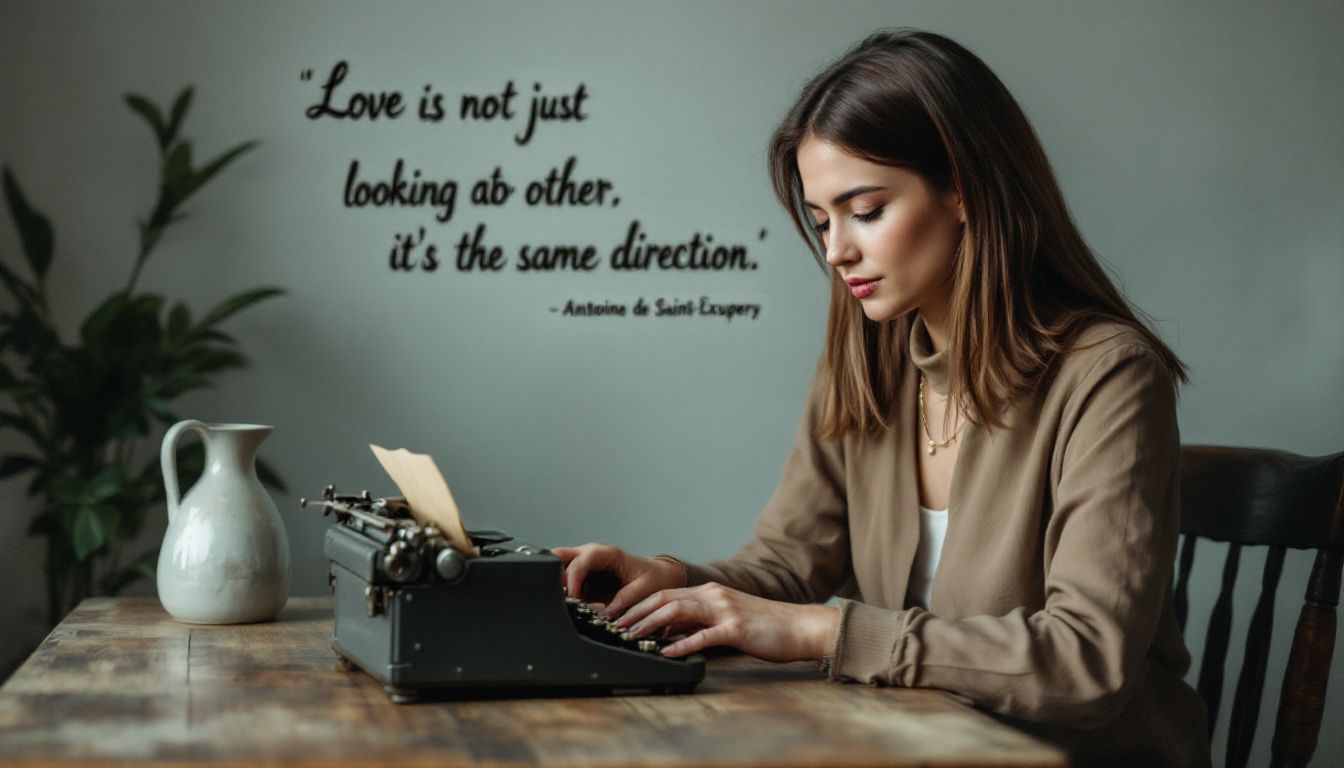
A woman typing a love letter on a vintage typewriter.

You don’t have to write a poem yourself. Find one that fits how you feel about your partner.


Love is not just looking at each other, it’s looking in the same direction.

This quote by Antoine de Saint-Exupéry captures what being in love means. Adding such quotes shows you’ve thought deeply about your feelings and expresses them beautifully.

Using memorable travel experiencesA couple in a crowded market, laughing while looking at a map.

Travel memories can turn a love letter into something very special. Think of a trip you both loved. Describe the places, the smells, and how it felt to be there together. This makes your partner feel those good times again.

Talk about funny or sweet moments from your travels. Maybe you got lost in a new city but found an amazing place by accident. Share what that adventure taught you about each other.

It shows how much you treasure those experiences together.

Adding details like this brings your love letter to life. It’s not just words on paper—it’s a doorway back to those happy moments spent side by side, exploring the world together.

Tips for Making Your Love Letter Stand Out
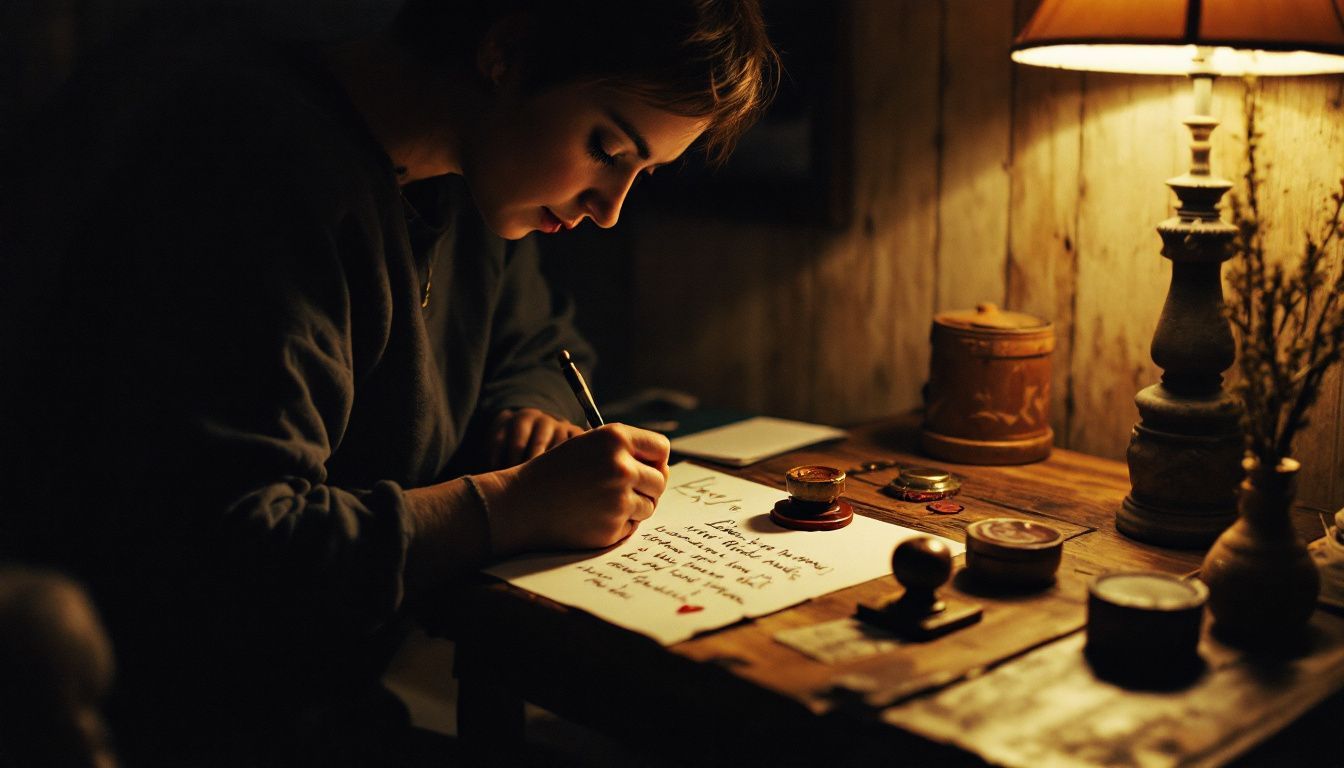
A person writing a love letter with a wax seal.

To make your love letter grab attention, consider using artistic handwriting. It adds a unique flavor. How about sealing it with a special wax or stamp? This old-school touch shows you care.

Adding a personal touch with calligraphy

Calligraphy makes your love letter unique. This writing style adds a special feel to your words, making them stand out. It shows you took extra time for someone important. Calligraphy pens and ink are tools that help create beautiful letters.

You need practice, but it’s worth it.


Using calligraphy in a love letter can turn simple words into art.

Starting with basics like holding the pen right helps. Each stroke and curve tells its own story, giving life to the letter. Your partner will see how much care you put into each word.

This personal touch turns a simple note into a keepsake they’ll cherish forever.

Sealing with a unique wax seal or stamp

A unique wax seal or stamp makes your love letter special. It adds a personal touch no one else can copy. You melt the wax, drop it on the envelope, and press your stamp into it. This old way of sealing letters shows care and effort.

Choose stamps that mean something to you both. Maybe it’s a symbol of a shared joke, a favorite animal, or just initials. This method ties back to ancient times when people sealed letters this way for privacy and decoration.

Your partner will see the seal and know there’s something meaningful inside just for them.

Overcoming Writer’s Block

A woman sits at a cluttered desk staring at a blank laptop.

Getting stuck happens to everyone, even when trying to write something as personal as a love letter. Think about the good times you’ve shared and use them as fuel for your words.

Using prompts to ignite creativity

Facing an empty page can often feel intimidating. At times, words might not come naturally. This is where prompts prove to be useful. Consider them as gentle pushes to stimulate your brain to begin its operation.

They can be straightforward – like recalling the shade of your significant other’s eyes or the sensations you endured on your initial date. In reality, 25 dedicated prompts are available to assist in initiating the procedure of crafting a love letter that resonates authenticity and completeness.

Prompts inspire you to explore in-depth the memories and emotions you hold with your significant other. Contemplating on time shared together or even envisaging future explorations can create a rich array of words for your letter.

The significance of quotes or poetry should not be ignored; occasionally, words from someone else can perfectly articulate what’s in our hearts. With these instruments, writer’s block has no room to thrive.

Reflecting on shared memories

Looking back at shared moments can spark creative ideas for love letters. Think about the trips you took together or simple, happy days. These stories show your deep connection and bring your words to life.

Writing down 2 or 3 things you adore about each other’s appearance can also add a personal touch.

Shared joy from past experiences makes your letter unique. Use these memories as inspiration to write something meaningful. You might talk about a funny incident or a quiet moment that means a lot to both of you.

This way, your partner sees how much those times mean to you too.

Conclusion
A couple in their mid-30s working together on a romantic love letter.

Writing love letters brings us closer, even in a world filled with texts and emails. We talked about using personal stories, kind words, quotes, and travel tales to make letters special.

We shared tips like calligraphy and unique seals for a personal touch. Overcoming the fear of starting was also covered with ideas and looking back at happy times together. Let’s keep this beautiful art alive by putting pen to paper—your words can be a powerful gift of love.

FAQs

1. What are some tips for crafting romantic love letters?

When crafting a romantic love letter, it’s crucial to be genuine and express your feelings honestly. Use specific examples that highlight your relationship and make the recipient feel special.

2. How can I make my love letter more meaningful?

To make your love letter more meaningful, include personal memories or moments you’ve shared together. This not only makes the letter unique but also shows that you value your time spent with them.

3. Is there a proper format for writing a romantic love letter?

While there’s no strict format for writing a romantic love letter, it helps to start by expressing why you’re writing the letter, followed by sharing your feelings and ending on a hopeful note about the future of your relationship.

4. Can writing a romantic love letter improve our relationship?

Yes! Writing a heartfelt, sincere message can help strengthen emotional intimacy in relationships. It allows you to articulate feelings that might be difficult to express verbally.
 

Crafting Romantic Love Letters generated pin 21240
pinit fg en round red 32
Shopping Basket