
 Cart is empty





TAKE THE QUIZ
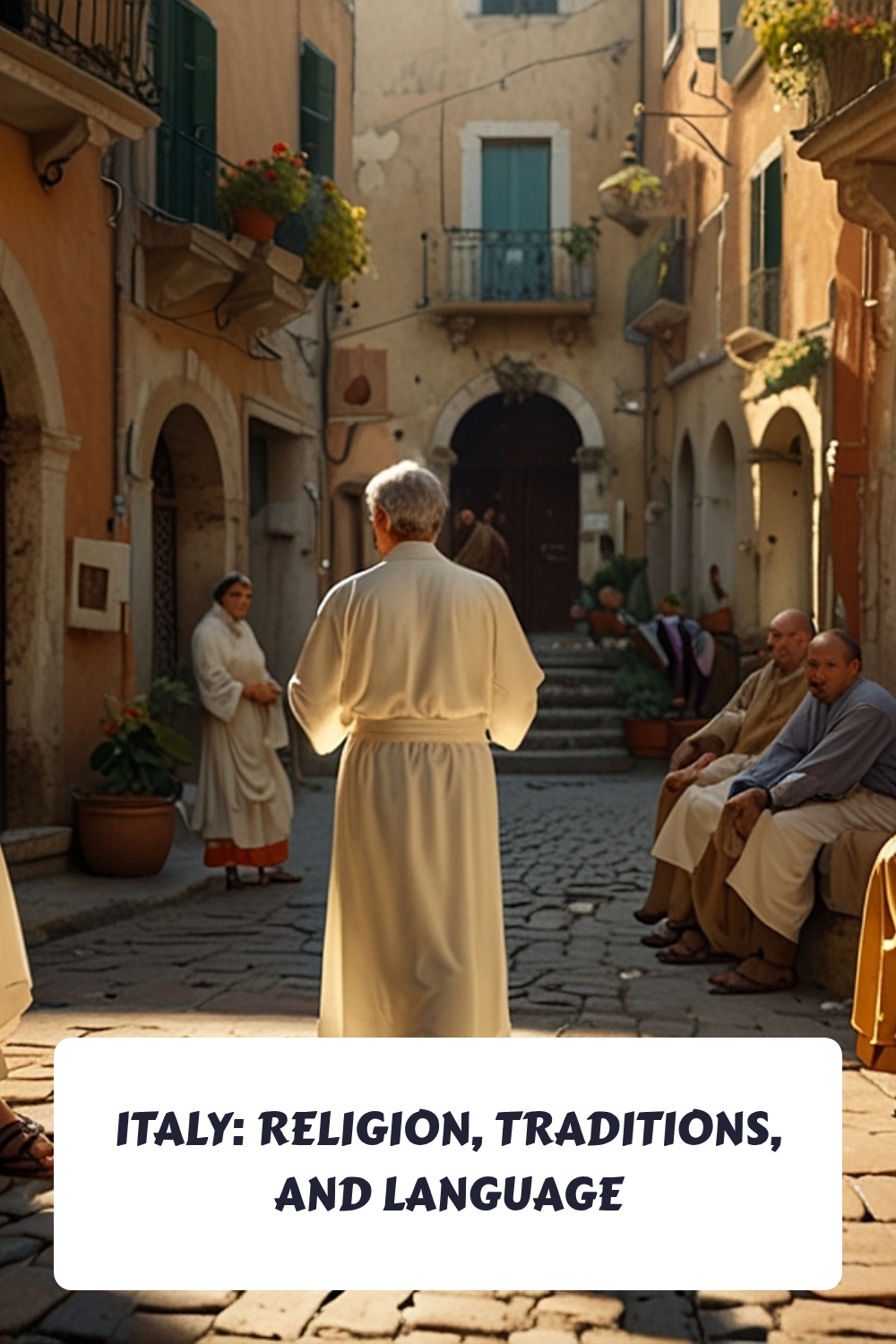
Italy: Religion, Traditions, and Language
This Podcast explores the cultural tapestry of Italy, highlighting the interwoven roles of Catholicism, traditions, and the Italian language. It explains how the dominant presence of Catholicism influences holidays, social structures, and customs, while also noting the growing religious diversity brought by immigration.
The Podcast discusses key Italian traditions and customs, often tied to religious festivals, and underscores the significance of the Italian language, including its regional dialects, in preserving cultural heritage and identity. Furthermore, it examines unique customs and food traditions linked to both Catholicism and other faiths in Italy.
Italian Culture, Traditions, and Religion
This briefing document synthesizes information from the provided sources to offer a comprehensive overview of Italian society, focusing on its festivals, social norms, and the complex role of religion.
Key Themes:
- The Centrality of Family: Family is paramount in Italian society, influencing social interactions, gatherings, and traditions.
- The Art of Socializing: Italians highly value spending time with friends and family, with food and drink often serving as central components of social occasions.
- Deeply Rooted Traditions: Italy boasts a rich tapestry of historical, regional, and religious traditions that are celebrated throughout the year.
- Catholicism as a Shaping Force: Catholicism has historically played a significant role in Italian life, influencing holidays, laws, social norms, and artistic expression, though its influence is evolving, particularly among younger generations.
- Growing Religious Diversity: While predominantly Catholic, Italy is experiencing increasing religious diversity due to immigration.
- Linguistic Richness and Regional Identity: Beyond standard Italian, various regional languages and dialects persist, reflecting local history and contributing to distinct regional identities.
- The “Italian Problem” in the Context of Immigration: Italian Catholic immigrants to the United States faced challenges relating to their religious practices, which differed from the dominant Irish-American Catholic norms, highlighting a complex interplay of cultural expectations and historical context.
- Food as Culture: Italian cuisine is integral to the culture, emphasizing fresh ingredients, regional specialties, and the importance of sharing meals with loved ones.
Most Important Ideas or Facts:
- Family First: “In Italy family comes first and relationships between family members are valued above all else.” (Crash course on Italian Society) Extended family gatherings, particularly on Sundays and holidays, are a “cornerstone of Italian life” and the “heartbeat of Italian social life.” (What Are Some Essential Italian Traditions)
- Socializing and “La Passeggiata”: “Italians love to talk and they take great pleasure in spending time with friends and family whether it’s over a cup of coffee a glass of wine or a delicious meal socializing is a key part of Italian culture.” (Crash course on Italian Society) The tradition of “la passeggiata or the evening stroll” after dinner is a significant social ritual for connecting with the community. (What Are Some Essential Italian Traditions)
- Predominantly, but Increasingly Diverse, Religious Landscape: Italy is a “predominantly Catholic country,” and the “largest Catholic nation in Europe.” (Crash course on Italian Society, Italy Culture | Fun Facts About Italy) Estimates suggest between 61% and 80% of Italians identify as Catholic. (The Fascinating World of Italy) However, due to immigration, Italy now has growing Muslim, Eastern Orthodox, Protestant, Hindu, Sikh, and Buddhist communities, with about 5% of Italians following different beliefs. (The Fascinating World of Italy)
- Evolving Religious Practice: While historically religious, the younger generation is less religious than the older generation. (Is italy ACTUALLY a “religious” country?) Regional differences exist, with Southern Italy tending to be more traditional and religious compared to the North. (Is italy ACTUALLY a “religious country?“)
- Impact of Catholicism on Public Life: Catholicism “informs public holidays and laws.” (The Fascinating World of Italy) Many national holidays have Catholic roots, such as Christmas, Easter, and Ferragosto (Assumption of Mary). (The Fascinating World of Italy) Saints’ days are also celebrated locally. (The Fascinating World of Italy)
- The Vatican’s Influence: Vatican City, an independent country within Rome, is the seat of the Catholic Church and the Pope. (Italy Culture | Fun Facts About Italy) The Vatican “definitely has a Chokehold on Italian policies and the Italian government,” though perhaps not as much as some might think, particularly concerning marriage and dating. (Is italy ACTUALLY a “religious” country?“)
- Religious Festivals and Traditions: Numerous religious festivals are celebrated across Italy, often blending religious observance with communal celebration. Examples include the Feast of the Epiphany (with the figure of La Befana), Holy Week rituals, patron saint festivals (with processions and feasts), the creation of Nativity Scenes (Presepi), Palm Sunday with blessed branches, and the Infiorata (flower carpets). (15 Iconic Italian Festivals, The Fascinating World of Italy, Unique Italian Customs Linked to Catholicism)
- Catholic Pilgrimage Sites: Italy is home to numerous important Catholic pilgrimage sites, including the four major basilicas in Rome (St. Peter’s, St. Paul Outside the Walls, St. Mary Major, and St. John Lateran), the Shroud of Turin, the Basilica of St. Anthony of Padua, St. Mark’s Basilica in Venice, sites related to St. Francis and St. Claire in Assisi, the Holy House of Nazareth in Loretto, and the shrine of St. Padre Pio in San Giovanni Rotondo. (The BEST Catholic Sites to Visit in Italy)
- The “Italian Problem” in US Immigration: The religious condition of Italian Catholic immigrants in the US in the late 19th and early 20th centuries was viewed as a “scandal and a problem” due to perceived lack of church attendance, non-contribution to churches, and a devotion style different from the dominant Irish-American Catholic culture. (Religious History of Italian Catholic Immigrants) This historical challenge is being re-examined with newly available archival documents. (Religious History of Italian Catholic Immigrants)
- Linguistic Diversity Beyond Standard Italian: While standard Italian, based on the Tuscan dialect of Florence, is spoken by most Italians, numerous regional languages and dialects exist. (Languages of Italy) These dialects are “not varieties of standard Italian or varieties of Tuscan from which Italian derived; they developed in parallel with Tuscan.” (Languages of Italy) While standard Italian is replacing regional languages, particularly in urban areas and among younger generations, dialects remain vital for local culture and identity, especially in the South and among the elderly. (Languages of Italy)
- Food Traditions Linked to Festivals: Many unique food traditions are tied to Italian religious festivals, such as fish and seafood dinners on Christmas Eve, elaborate meat dishes and sweet breads (Panettone, Pandoro) for Christmas, lamb, Pastiera Napoletana, and Colomba di Pasqua for Easter, fried sweets for Carnival, lentils with Cotechino or Zampone for New Year’s, and Zeppole di San Giuseppe for St. Joseph’s Day. (Unique Food Traditions Linked to Italian Religious Festivals)
Supporting Quotes:
- “Italy a land steeped in history culture and culinary Delights is also home to some of the most enchanting festivals in the world…” (15 Iconic Italian Festivals)
- “In Italy family comes first and relationships between family members are valued above all else.” (Crash course on Italian Society)
- “Italians love to talk and they take great pleasure in spending time with friends and family whether it’s over a cup of coffee a glass of wine or a delicious meal socializing is a key part of Italian culture.” (Crash course on Italian Society)
- “In terms of religion Italy is a predominantly Catholic country and religion plays an important role in many aspects of Italian Society…” (Crash course on Italian Society)
- “While Catholicism remains the dominant religion—estimates suggest between 61% and 80% of Italians identify as Catholic—Italy is increasingly religiously diverse.” (The Fascinating World of Italy)
- “…the older generation is definitely religious but not so much the younger generation…” (Is italy ACTUALLY a “religious” country?)
- “Catholicism shapes Italy’s way of life. It plays a big part in setting up holidays, social rules, and even laws.” (The Fascinating World of Italy)
- “Many holidays in Italy come from religion, like Christmas and Easter. They include special foods, parades, and family time.” (The Fascinating World of Italy)
- “Italy is home to many regional dialects… These dialects reflect local history and culture.” (The Fascinating World of Italy)
- “The richest condition of Italian immigrants in the late 19th century early 20th century was considered by many people at the time within and outside the academy Church to be both a scandal and a problem.” (Religious History of Italian Catholic Immigrants)
- “Religious festivals play a big role in Italian culture. Each festival often honors saints or significant events in the Catholic Church, which is the major religion here.” (The Fascinating World of Italy)
- “Italy’s religious calendar is closely intertwined with a rich tapestry of unique food traditions, many of which are deeply symbolic and regionally distinctive.” (Unique Food Traditions Linked to Italian Religious Festivals)
This briefing document provides a foundational understanding of Italian society and culture, highlighting the interplay of family, social customs, historical traditions, and the evolving influence of religion.