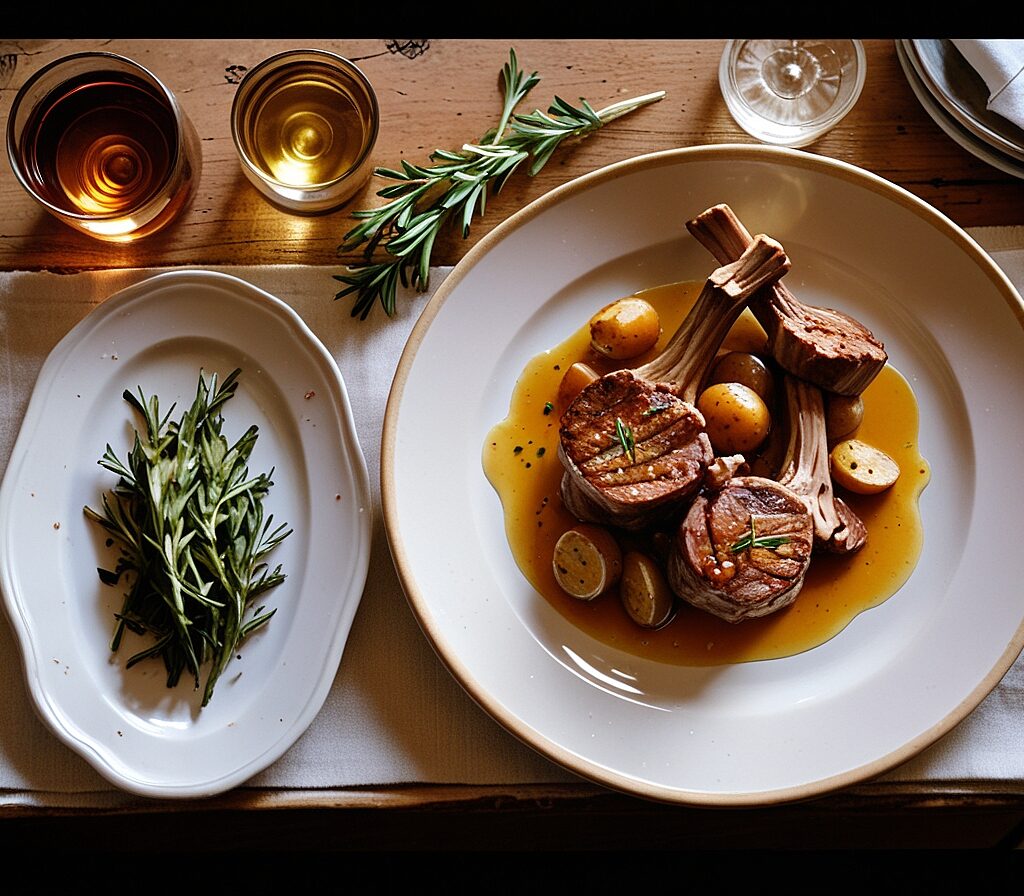
A Review of Italian Main Courses and Recipes
This briefing document summarizes the key themes and important ideas presented in the provided sources, which discuss various aspects of Italian cuisine, including meal structure, classic dishes, and specific recipes.
Main Themes:
- Regional Diversity: Italian cuisine is highly regional, with different areas offering unique specialties and approaches to cooking.
- Meal Structure: A traditional Italian meal follows a specific structure, starting with antipasto (appetizer), followed by primo (first course, typically pasta, risotto, or soup), secondo (main course, protein-focused), contorno (side dish, vegetables), dolce (dessert), and finally caffè & digestivo (espresso and liqueur).
- Secondi Piatti (Italian Main Courses): This course is the centerpiece of an Italian meal, emphasizing protein-rich dishes like meat, fish, or eggs. The quality of ingredients and simple preparations are highlighted.
- Dolce (Dessert): Desserts are an important and varied part of Italian cuisine, ranging from simple to elaborate and showcasing regional flavors.
- Importance of Fresh, High-Quality Ingredients: Authentic Italian cooking emphasizes using seasonal and high-quality ingredients for optimal flavor.
- Simplicity and Technique: Italian Main courses and other dishes often rely on a few, good ingredients and proper technique rather than over-complication.
- Pasta’s Special Place: Pasta is typically served as a distinct first course (“primo”) and is rarely a side dish.
- Culinary Ritual and Enjoyment: Italian Main course and the overall meals are seen as an experience centered around enjoyment and sharing.
- Adapting Classics: While traditional methods are valued, there’s also room for creative “spins” on classic recipes to create new and delicious dishes.
- Home Cooking Accessibility: Many classic Italian Main dishes are presented as being accessible for home cooks, even for those with limited experience.
Most Important Ideas/Facts and Supporting Quotes:
1. The Structured Italian Meal:
The sources consistently outline the traditional multi-course structure of an Italian meal.
- “A traditional Italian meal is composed of multiple courses, with the secondi piatti (main courses) and dolci (desserts) being central highlights.” – Discover Classic Italian Meals
- The typical structure includes: “Antipasto: Appetizer… Primo: First course… Secondo: Main course… Contorno: Side dish… Dolce: Dessert… Caffè & Digestivo: Espresso and sometimes a liqueur.” – Discover Classic Italian Meals
- “for a proper Italian menu they’re going to be quite a lot of things to go through so I’m going to be teaching you all about them how to pronounce them and usually what you can expect when you’re ordering off of this specific section of a menu” – Learn Italian | The Italian Menu & Food
2. Secondi Piatti: The Protein-Focused Main Course:
Italian Main dish or Secondi piatti are highlighted as the core of the meal, centered around proteins.
- “In Italy, secondi piatti is the centerpiece of every meal, focusing on proteins like meat or fish.” – Discover Classic Italian Meals
- “Secondi piatti are the heart of the meal, focusing on proteins and often accompanied by a simple vegetable side.” – Discover Classic Italian Meals
- “you second o or second D this is basically the main course or really the second course but this is usually consisting of something more hearty so it would be a little bit more expensive but this would usually be like your meat or your fishes or nowadays Italy’s becoming a lot more vegetarian or vegan friendly so this would be a vet vegetable based option” – Learn Italian | The Italian Menu & Food
3. Examples of Secondi Piatti:
Several specific examples of classic Italian Main dishes or secondi piatti are provided, showcasing regional diversity.
- Meat-Based: Ossobuco alla Milanese (veal shank), Saltimbocca alla Romana (veal cutlets), Bistecca alla Fiorentina (T-bone steak), Pollo alla Cacciatora (Chicken Cacciatore), Braciole (rolled beef slices).
- Fish & Seafood: Pesce al Forno (Baked fish), Impepata di Cozze (Mussels).
- Vegetarian: Parmigiana di Melanzane (Eggplant Parmesan), Carciofi alla Giudia (Deep-fried artichokes).
- Highlighted dishes include “Mortadella and Pistachio Veal Meatballs,” “Grilled Octopus | Polpo alla Griglia,” “Chicken Saltimbocca,” and “Braised Beef with Shallots & Carrots.” – Discover Classic Italian Meals
4. Dolce: The Sweet Ending:
Desserts are presented as a crucial and varied part of the Italian meal.
- “Dolce, the dessert course in a traditional Italian meal, serves as a sweet finale.” – Discover Classic Italian Meals
- “Desserts are an important component of Italian cuisine, showcasing flavors from each region.” – Discover Classic Italian Meals
- Examples of “Timeless Italian Sweets” include Tiramisù, Panna Cotta, Cannoli Siciliani, Ricciarelli, Babà, Pasticciotto, and Maritozzo. – Discover Classic Italian Meals
- “Dolci it’s always written and if you’re at a restaurant they’ll usually have a special dulce de la caza or took the delin on now you’ll see that very common that just means the house dessert or like the specialty grandmother’s cake” – Learn Italian | The Italian Menu & Food
5. The Unique Role of Pasta as a First Course:
Pasta is specifically designated as a “primo” (first course) and not a side dish.
- “Primo: First course, usually pasta, risotto, or soup.” – Discover Classic Italian Meals
- “pasta has never eaten on the side with other things you have pasta in a plate plain eat that and then you’re on to the next course or you’re on to dessert but pasta is just in a league of its own so that would just be dedicated an entire first course just to pasta” – Learn Italian | The Italian Menu & Food
6. Emphasis on Quality and Simplicity in Home Cooking:
Making authentic Italian food at home is encouraged, with a focus on using good ingredients and avoiding over-complication.
- “Use Seasonal, Fresh Ingredients: Italians prioritize quality and seasonality for maximum flavor.” – Discover Classic Italian Meals
- “Don’t Overcomplicate: Italian food shines with just a few, high-quality ingredients.” – Discover Classic Italian Meals
- “Cooking Italian food at home is about respecting tradition, quality, and simplicity.” – Discover Classic Italian Meals
7. Specific Recipes and Techniques:
Several sources provide detailed instructions for specific Italian Main dishes, and first courses highlighting key steps and ingredients.
- Buttery Cheesy Baked Polenta: Features toasting the polenta, using good quality parmesan, and a simple marinara sauce. “use the most flavorful parm that you can find because this dish is very simple so the quality of everything matters a lot” – 4 Simple Italian Dishes Anyone Can Master
- Linguini and Clams: Emphasizes frying garlic and chili flakes to build flavor, reserving clam meat while reducing clam juice and wine, and emulsifying butter with pasta water. “The flavor of this oil is kind of the backbone of this dish so we want it to be deeply saturated with roasty garlic and fried chili flavor” and “I’m going to swirl this butter into the pan whilst agitating the pasta this releases additional starch that will help hold the butter in an Emulsion” – 4 Simple Italian Dishes Anyone Can Master
- Chicken Cacciatore: This is an Italian Main and involves searing chicken thighs for crispy skin, sautéing vegetables until softened, and braising in a tomato sauce.
- Italian Sausage Pasta (with Rapini): Highlights crumbling the sausage well, blanching rapini, using pasta water to create a sauce base, and emulsifying butter with cheese off-heat.
- Ravioli Lasagna Bake: Combines a meat sauce (starting with ground beef, peppers, and onions), frozen ravioli, and a cheese mixture (mozzarella and cottage or ricotta) for a layered bake. “to frozen ravioli we’re using the cheese ones if you want to use the beef ones you can certainly do that” and “we’re going to place half of our mozzarella cottage cheese mixture and just dollop it over the meat mixture” – DELICIOUS SPINS ON ITALIAN CLASSIC RECIPES
- Spaghetti Bolognese Alfredo Bake: Features a meat sauce (ground sausage, peppers, and onions) and a separate Alfredo sauce (butter, flour, heavy cream, parmesan) layered with spaghetti and baked. “Double creaminess here I would have never thought to put those two flavors together the Alfredo and a regular pasta meat sauce that is comfort food” – DELICIOUS SPINS ON ITALIAN CLASSIC RECIPES
- Spaghetti Pie: Creates a spaghetti “crust” bound with egg and cheese, layered with a meat sauce, and topped with cheese before baking in a pie plate. “spaghetti pie what a fun way to make spaghetti in a pie” – DELICIOUS SPINS ON ITALIAN CLASSIC RECIPES
- Ossobuco alla Milanese (Sample Recipe): Details braising veal shanks with vegetables, wine, and stock.
- Panna Cotta (Sample Recipe): Describes heating cream, sugar, and vanilla, adding gelatin, and chilling.
- Simple Homemade Lasagna: Provides instructions for making a meat sauce (beef and/or sausage with onion and garlic), a ricotta cheese mixture, and layering with noodles and mozzarella before baking. A key “hack” involves soaking noodles in hot water instead of boiling. “no boiling required it’ll finish cooking in the oven it’s a perfect hack to save some time when it comes to making homemade lasagna” – The Most Amazing Lasagna
- Pasta al Limone: A simple pasta dish with lemon zest, lemon juice, mint, olive oil, and Pecorino cheese, explicitly stating no cream. “I don’t want to see you putting cream like so many other people always put cream this does not deserve cream” – Vincenzo’s Plate 5 Top Pasta Recipes (My Favorite Pasta Dishes)
- Spaghetti Meatballs (Abruzzo Style): Highlights making a tomato sauce with a soffritto (onion, carrot, celery) and creating tiny mini meatballs that are boiled separately before being added to the sauce and mixed with the pasta. “you have to make tiny mini meatballs” – Vincenzo’s Plate 5 Top Pasta Recipes (My Favorite Pasta Dishes)
- Spaghetti Carbonara (Vincenzo’s Version): Focuses on cooking guanciale until crispy, using egg yolks and Pecorino cheese (no cream) to create a thick sauce, and finishing the pasta by mixing it with the guanciale fat and the egg mixture off-heat with pasta water. “this is how you mix the spaghetti meatballs like non okay so you put the spaghetti in there okay do one layer Put the Pino or parmo you put some meatball in there okay and then we do another layer I don’t want to see you putting the spaghetti first and then you put the sauce on top everything needs to be mixed properly” – Vincenzo’s Plate 5 Top Pasta Recipes (My Favorite Pasta Dishes)
- Potato Gnocchi: Describes making gnocchi dough with potatoes, egg, and flour, and the process of rolling and cutting the gnocchi, to be served with a simple sauce.
- Spaghetti Vongole: Vincenzo’s favorite, made with small clams, garlic, parsley, white wine, and olive oil, emphasizing a white sauce and mixing the pasta with the clam meat and sauce. “this is my favorite dish on the planet linguine Al Leong it’s my favorite and I want to show you how I love to make my favorite pasta” – Vincenzo’s Plate 5 Top Pasta Recipes (My Favorite Pasta Dishes)
8. Types of Italian Restaurants:
Different types of restaurants offer varying experiences and menus.
- La Pizzeria: Specializes in pizza, often with a wood-fired oven.
- La Trattoria: More casual, family-style, often inexpensive, offering local cuisine.
- L’Osteria: Similar to a trattoria but with a simpler menu and more extensive wine list.
- Il Ristorante: More expensive and elegant, with a larger dining area and extensive drink list.
- “for ordering off of a lunch or a dinner menu you should know that lunch is called prom so Prancer is lunch dinner is China dinner is China” – Learn Italian | The Italian Menu & Food
9. Cultural Dining Norms:
Certain cultural practices related to dining are mentioned.
- Restaurants often close between lunch and dinner hours (typically 3 pm to 5 pm).
- Locals tend to dine later than tourists.
- Ordering a drink (“Bevande”) first is customary.
- Ordering a cappuccino after a meal is not done by Italians due to beliefs about digestion. “you’ll never ever see in a time ordering a cappuccino with lunch after lunch or for dinner you’ll never see that happening because in Italy you don’t drink a cup of Chino after 11:00 or 11:30” – Learn Italian | The Italian Menu & Food
This Podcast provides a comprehensive overview of Italian Main dishes. Italian cuisine is very diverse, its structure, key courses, regional variations, and accessible nature for home cooks.


 Cart is empty