Contact us: ww@blogquizshop.com


 Cart is empty
 A Journey Through Time, Movie Genres, and Fantasy







Defining Time Travel Movies
Time travel movies take us on trips through history and the future. They show characters moving through time, changing past events or facing the outcomes in their futures.
Characteristics of Time Travel Narratives
Movies like “Back to the Future” and “Doctor Who” show us that time travel stories have a special way of grabbing our attention. These tales often mix real history with exciting what-ifs, making us think about how different choices could lead to different futures.
They play with the idea that someone from today could go back and meet famous people or witness big events from the past. Sometimes, they even suggest we could change bad things before they happen.
Characters might use a machine, magic, or science to jump through time. This can lead them to face dangers or solve mysteries by using knowledge from their own time in the past or future.
They often learn something important about themselves along this journey.
Time travel movies invite us into worlds where every second can mean a new adventure.
Turning now to the effects these narratives have on viewers’ perception of time…
Impact on Viewer’s Perception of Time
Time travel movies play with our understanding of time. They show us that time can stretch or shrink. Think about “Back to the Future” or “Interstellar”. These films make us wonder if we could change our past or see our future.
They mix fantasy with stories about time, making the impossible seem real.
These movies also teach us that every moment is important. A small choice today might change everything tomorrow. This idea comes from watching characters in time travel tales try to fix their mistakes.
Next, let’s explore key films through the decades that have shaped this genre.
Key Time Travel Films Through the Decades
Time travel movies take us on wild rides across different eras. From “The Time Machine” in the 1960s to recent hits like “Interstellar,” these films show how times and technology change, but the excitement of discovery stays the same.
https://www.youtube.com/watch?v=jUcmvH3VtBk
Classic Era: “The Time Machine” (1960)
The Time Machine” (1960) is a film that takes viewers on a journey through time. It follows the story of an inventor who creates a machine to travel through time. He goes far into the future and finds that the world has changed in ways he did not expect.
This movie shows us how time travel can change our view of the world.
The Time Machine explores not just the fantasy of moving through time, but also the hope and fear that come with it.
This film stands out because it was one of the first to bring time travel to life on the big screen. People loved seeing someone move through different times right before their eyes.
The idea was new and exciting back then, setting a path for many more time-travel movies to follow.
Modern Classics: “Back to the Future” Series
The “Back to the Future” series took us on an epic ride with Marty McFly and Dr. Emmett Brown. Their adventures in a time-traveling DeLorean car became instant hits. This series showed fans how messing with the past can change the future in wild ways.
Michael J. Fox played Marty, making him a star of the 1980s.
In these movies, they travel to different times – from the 1950s to the far future and even back to the Wild West. Each trip was full of laughs, dangers, and cool science stuff that made viewers wish they had their own DeLorean.
It mixed fun stories with serious moments about family and choices.
Next up is “Interstellar,” where we leap from fun time travels to deep space journeys.
Recent Innovations: “Interstellar” (2014)
Interstellar,” directed by Christopher Nolan, came out in 2014. It pushed the edges of time travel movies. This film mixes science with fantasy, creating a story where astronauts look for a new home for humanity.
Their journey through space bends time in ways that make viewers think hard about what time means.
In this movie, Earth is dying. A group of explorers use a wormhole to travel vast distances across the cosmos. They hope to find habitable planets to save humans from extinction. Their trip shows how time can change based on where you are in the universe and how fast you’re moving.
This idea comes from Einstein’s theories but “Interstellar” makes it feel real and personal. It challenges us to imagine living in different times at once or saying goodbye to loved ones not knowing how much they will age before we see them again.
With its stunning visuals and deep questions about love, duty, and survival, “Interstellar” has set a new standard for what time travel films can be.
Exploring Fantasy Genres in Film
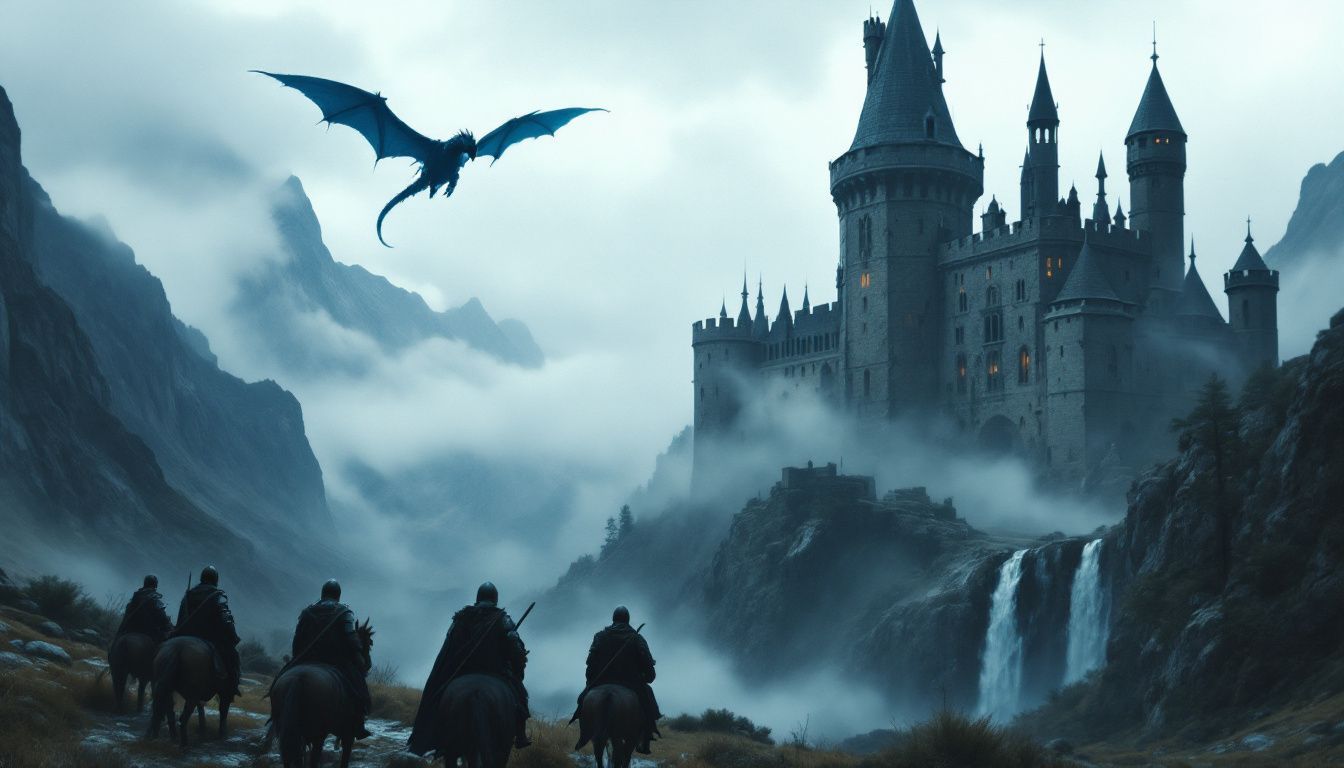
Movies transport us into a magical world filled with myths. In this domain, dragons soar, and heroes undertake grand adventures.
High Fantasy: “The Lord of the Rings” Series
The Lord of the Rings” series takes us to a world full of magic, monsters, and epic battles. It shows us kingdoms, dragons, and quests. This series is a prime example of high fantasy because it has magical elements that don’t exist in reality.
The stories follow heroes on a mission to save their world from evil forces.
In every walk with nature, one receives far more than he seeks. – John Muir
The books were written by J.R.R. Tolkien and later turned into movies. These films have become a big part of fantasy history. They help people understand what makes these types of stories so exciting for audiences around the world.
Urban Fantasy: “The City of Lost Children” (1995)
Shifting from the vast, open landscapes of high fantasy, “The City of Lost Children” pulls us into a darker world. This movie blends magic and mystery with real-world grit. It shows us a place that feels like our cities but filled with wonders and dangers we don’t see every day.
In this film, children’s dreams are stolen by a mad scientist. Heroes fight to save them in narrow streets under dim lights. It’s not just about saving the day – it’s about finding what makes each child special.
This story mixes elements we know – like cities and science – with things from fairy tales.
“City of Lost Children” also makes us think about what it means to grow up and keep hope alive in tough times. It brings magic into places we might walk through every day, making us wonder what could be hiding around the next corner or lurking in the shadows.
The Impact of Movie Genre on Storytelling

Movie Genres shapes the way stories unfold. Fantasy invites us into worlds where magic is real, while time travel challenges how we see past and future events.
How Fantasy Shapes Narrative
Fantasy stories use magic and other unreal elements. They take us to worlds with dragons, knights, and quests. These tales change how we see narrative by adding layers of adventure and mystery.
For example, the “Harry Potter” series introduces us to Hogwarts—a place where students learn about spells and battle dark forces. This setting alone shapes a unique story that mixes real-world issues with fantasy elements.
Movies like “The Lord of the Rings” show epic journeys across magical lands. They make viewers think about bravery, friendship, and the fight between good and evil in new ways. Fantasy doesn’t just tell stories; it creates whole universes that push our imagination beyond everyday life.
Through these adventures, narratives gain depth—mixing what we know with what we can only dream about—to teach lessons or simply entertain.
Time Travel as a Narrative Device
Time travel in movies lets people think about time in new ways. It makes us wonder “what if.” Movies like “Back to the Future” and “The Terminator” show this well. They let us see different times and ask big questions.
What would you change if you could go back? These stories mix real places with fantasy, creating worlds where anything can happen.
This tool also changes how we see heroes and villains. In “Harry Potter and the Prisoner of Azkaban,” Harry uses time travel to save lives. But in “Looper,” characters face hard choices because of it.
Time travel can twist plots and surprise viewers, making films exciting to watch.
Conclusion
Movies genres transport us through history and into realms of fantasy. They present us vistas and epochs we can only fantasize about. Films such as “Back to the Future” and “Interstellar,” illustrate how time travel alters narratives.
Fantasy films, from “The Lord of the Rings” to “Harry Potter,” infuse magical elements into our existence. These narratives provoke us to reconsider our world.
They combine ancient stories with fresh ones, making each viewing exhilarating. You can discover action, adventure, or a combination of both in these films. They encourage us to dream expansively and perceive beyond our immediate surroundings.
So let’s continue exploring these films that stretch the boundaries of imagination.
FAQs
1. What makes the “Harry Potter” series a significant part of fantasy cinema?
The “Harry Potter” series, including movies like “Harry Potter and the Sorcerer’s Stone”, “Order of the Phoenix”, and “Deathly Hallows”, has been pivotal in shaping modern fantasy cinema. The franchise, directed by David Yates and based on J.K. Rowling’s books, introduced us to iconic characters such as Hermione played by Emma Watson, Rupert Grint’s Ron Weasley, and Harry Potter himself portrayed by Daniel Radcliffe.
2. How do time-travel films like ‘Back to the Future’ trilogy or ‘Quantum Leap’ contribute to movie genres?
Time-travel films like ‘Back to the Future Part II’, ‘Part III’, or TV shows like ‘Quantum Leap’ add an exciting twist to conventional narratives. They challenge our understanding of time while providing thrilling storylines featuring memorable characters such as Marty McFly or Captain Jean-Luc Picard from Star Trek: First Contact.
3. Are there any notable movies that blend elements of both time travel and fantasy?
Yes! Movies like ‘In The Shadow Of The Moon’, ‘See You Yesterday’, ‘Palm Springs’, ‘Source Code’ and ’Edge Of Tomorrow’ artfully combine elements of both time travel and fantastical adventure into their narratives.
4. Can you name some fantasy adventure films that have had a profound impact on popular culture?
Films such as “Fantastic Beasts And Where To Find Them”, “Big Friendly Giant” (BFG), “Charlie And The Chocolate Factory”, “Bridge To Terabithia” ,“Stardust” , ”Cinderella”, ”Nanny Mcphee”, ”A Monster Calls”,”The Dark Crystal” ,”The Jungle Book” with Neel Sethi playing Mowgli have all left their mark on pop culture with their imaginative storytelling.
5. What are some movies that have creatively used the concept of mythical creatures?
Movies like “Clash Of The Titans”, “Jason And The Argonauts” and “The Thief Of Bagdad” have brought to life mythical creatures in a way that captivates audiences, while films like “Edward Scissorhands” and ”Godmothered” offer a modern twist on classic folklore.
6. How has the depiction of wizardry evolved in cinema over time?
From Dorothy’s encounter with the Wizard in ‘The Wizard Of Oz’ to Harry Potter’s battles against Death Eaters, cinematic portrayals of wizards have evolved significantly. They’ve moved from being mysterious figures to complex characters with their own story arcs, reflecting changing audience tastes and advancements in film-making technology.