The French Renaissance Themes and Ideas
This briefing document summarizes the main themes and important ideas presented in the provided sources regarding the French Renaissance and the regional diversity of France.
Main Themes of The French Renaissance
France Beyond Paris
Several sources emphasize the rich cultural and historical significance of regions outside of Paris. One of the most recurring comment that we get from French people is that Paris is not France and this is so true there’s so much more to France than just Paris. This highlights the unique attractions, cuisines, and histories of the 12 distinct regions (excluding Île-de-France).
The French Renaissance as a Rebirth and Transformation
The French Renaissance is a period as a significant “rebirth” of culture, thought, and art in France, emerging from the Late Middle Ages.
Italian Influence on the French Renaissance
A strong and recurring theme is the significant impact of the Italian Renaissance on France. The French Renaissance was significantly influenced by Italian artists and thinkers.
Patronage and Royal Influence
The role of French monarchs, particularly Francis I and Catherine de Medici, as key patrons of the arts and drivers of the Renaissance is highlighted. Francis I is referred to as the “Renaissance King” and is credited with inviting Italian artists like Leonardo da Vinci to France and commissioning grand projects like Fontainebleau and Château de Chambord.
Architectural Innovation
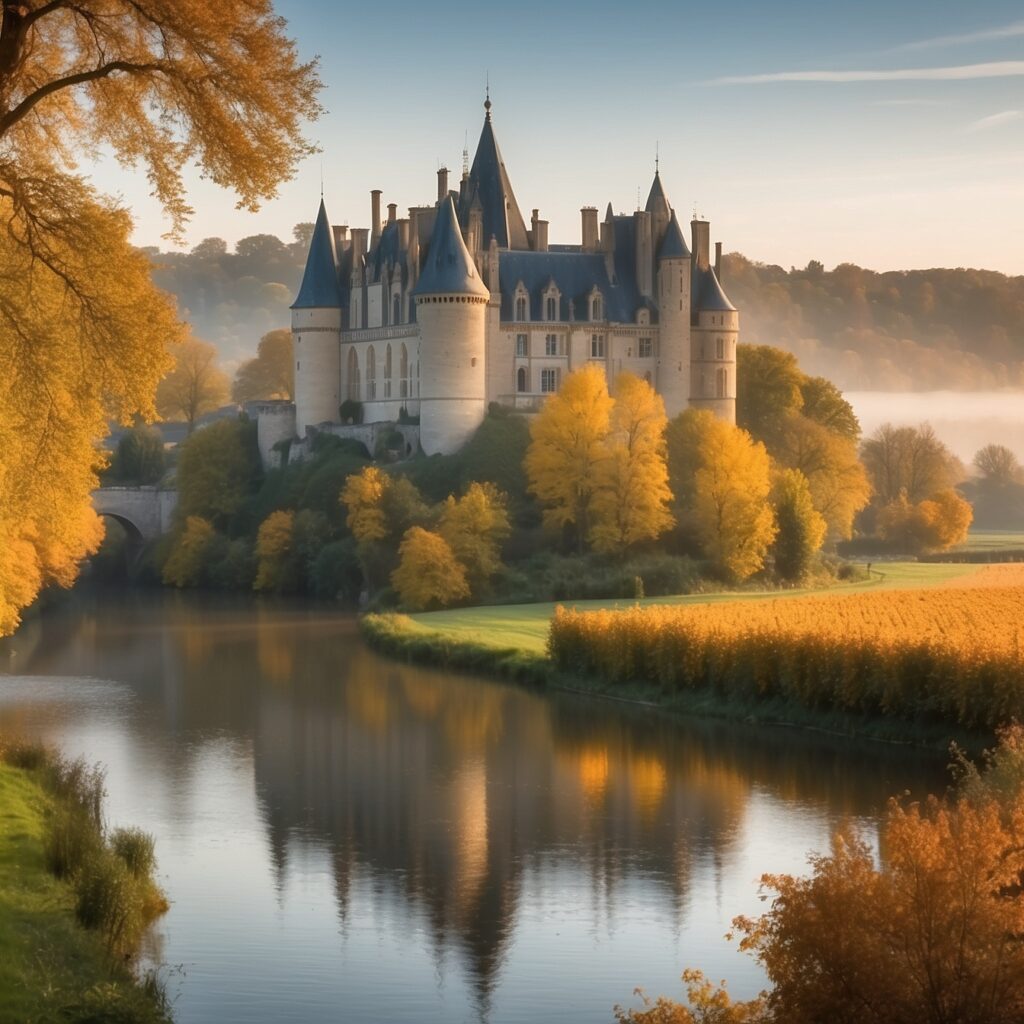
The emergence of a distinct French Renaissance architectural style, blending traditional French forms with classical Italian design elements, is a major focus. The châteaux of the Loire Valley, such as Chambord, Amboise, Blois, and Chenonceau, are prime examples of this “architectural grandeur”
Humanism and Intellectual Change
The spread of humanism, emphasizing human potential and the study of classical texts, is presented as a crucial aspect of the French Renaissance, impacting thought, culture, education, and literature.
Artistic Flourishing and Innovation
The Renaissance in France witnessed a significant flourishing of art, with the introduction of new techniques and styles influenced by Italian and Flemish artists. Leonardo da Vinci’s presence in France is noted as having a profound impact.
Most Important Ideas and Facts:
Regional Identity
France is a diverse country with strong regional identities, and Paris does not represent the entirety of its cultural and historical offerings. Each region boasts unique culinary traditions, landscapes, and historical sites.
Timeline of the French Renaissance
Generally situated between the 15th and early 17th centuries, this period followed the Late Middle Ages and was characterized by significant cultural and artistic changes.
Key Figures of the French Renaissance – Monarchs
Charles VIII (initial exposure to Italian culture), Louis XII, Francis I (major patron), Henry II, Catherine de Medici (influential patron in the later Renaissance).
Artists
Leonardo da Vinci (invited to France), Rosso Fiorentino, Francesco Primaticcio (leaders of the School of Fontainebleau), Jean Goujon (sculptor), Philibert Delorme (architect), Bernard Palissy (ceramicist).
Humanists/Writers
François Rabelais, Michel de Montaigne.
Iconic Locations
The Loire Valley châteaux (Chambord, Amboise, Chenonceau, Blois, Chaumont Sur-Loire) are central to understanding French Renaissance architecture and royal patronage. Fontainebleau was a key center of artistic innovation.
Key Artistic Developments of The French Renaissance
The blending of Gothic and Italian Renaissance architectural styles.
The rise of portraiture and detailed realism in painting.
The development of Mannerism at the School of Fontainebleau.
Innovations in sculpture and decorative arts, including ceramics (Palissy ware, Saint-Porchaire).
The influence of humanist thought on literature and intellectual discourse.
The School of Fontainebleau
This artistic movement, spearheaded by Italian artists in France, developed a distinctive style characterized by elongated figures, complex allegories, and decorative ornamentation.
Grotesques
These elaborate and often bizarre decorative motifs, inspired by ancient Roman discoveries, became a popular element in French Renaissance design.
The Significance of Prints
Prints played a crucial role in disseminating the designs and styles of the French Renaissance throughout Europe.
The Mystery of Saint-Porchaire Ware
This rare and technically sophisticated ceramic production continues to be a subject of scholarly debate, with intriguing connections to Bernard Palissy’s work.
This blog post provides a comprehensive overview of the key themes and important aspects of the French Renaissance as presented in the provided sources. It highlights the regional diversity of France and the transformative impact of the Renaissance period on its art, architecture, literature, and culture, heavily influenced by Italy and driven by royal patronage. The lecture on “Rustic or Refined” offers a unique lens through which to understand the creative dialogues within this vibrant era.


 Cart is empty