

 Cart is empty





TAKE THE QUIZ
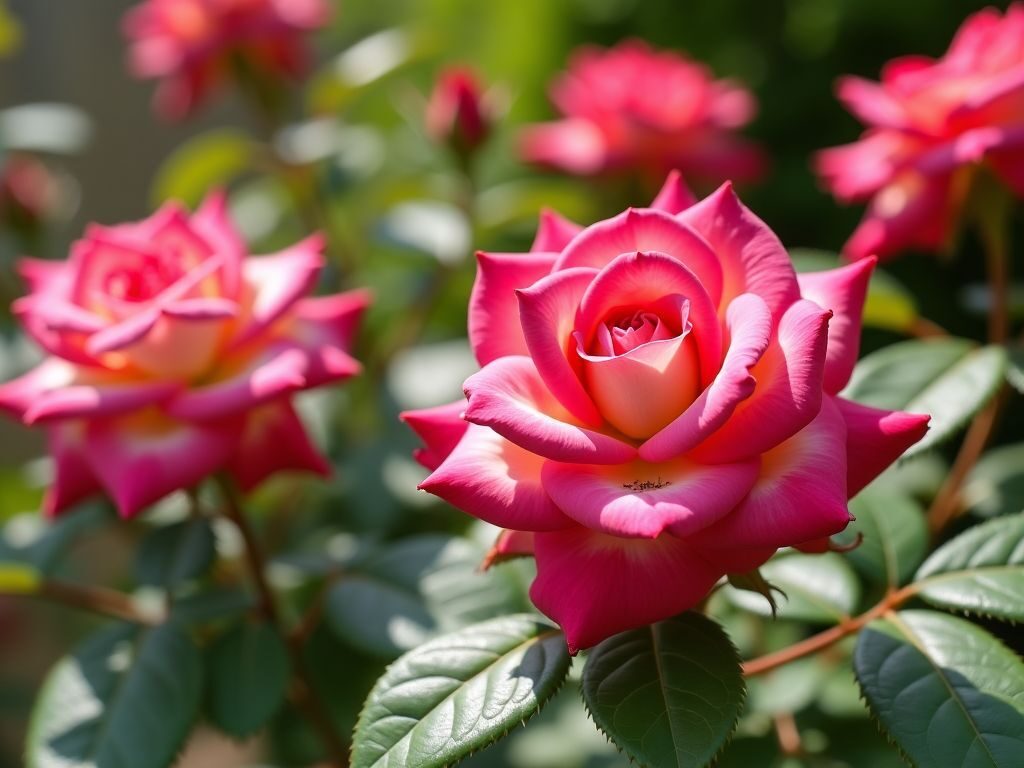
The Rose Garden Guide
This Podcast explores the diverse world of the rose garden, detailing various plant types ranging from structured Hybrid Teas to hardy landscape shrubs. It highlights how these gardens offer significant sensory and mental health benefits while acknowledging the challenges of intensive maintenance and pest management.
Readers are provided with practical advice on strategic design, emphasizing the differences between formal and cottage styles. Crucial care instructions are also included, focusing on soil preparation, seasonal pruning, and disease prevention to ensure plant longevity. Ultimately, the text serves as a comprehensive resource for both novice and experienced gardeners looking to cultivate thriving floral landscapes.
Family Ties: The Broader Rose Garden Lineage
The rose, seemingly a singular symbol of beauty, actually belongs to a vast and diverse botanical family: Rosaceae. This extensive family includes many familiar fruits. When you consume an apple, cherry, plum, or strawberry, you are engaging directly with botanical relatives of the rose.
Ancient Roots and Historical Significance
The historical presence of roses and the rose garden, is staggering. Wild rose species are estimated to be 35 million years old. Humans have been actively cultivating roses in China for approximately 5,000 years, deeply weaving them into human history and culture.
- War of the Roses (15th Century): Roses famously symbolized the warring houses in England.
- 17th Century Europe: Dried roses and rosewater were even used as legal tender and currency in parts of Europe, highlighting their value and esteemed position.
Currently, there are over 30,000 rose cultivars globally, a sheer volume of choices that can be overwhelming for new gardeners.
Grafted vs. Own-Root Roses: A Fundamental Choice
One of the most critical strategic decisions in a rose garden and rose gardening is choosing between a grafted rose and an own-root rose. This choice dramatically impacts future maintenance and the plant’s long-term health.
Grafted Roses
- What they are: Most roses found in big-box stores are grafted. This means a desirable rose variety (the scion) is physically attached to a hardier, more vigorous rootstock.
- Vulnerability: The point where the two plants are joined creates a ‘graft union’ or ‘knuckle.’ This union is particularly vulnerable to cold temperatures and requires protection. If a shoot emerges from below the graft union, it is the rootstock, not the desired rose variety. These are often referred to as ‘suckers’ and are typically thorny, wild, and must be aggressively cut out to prevent them from taking over the cultivated rose.
- Initial Growth: Grafted roses may offer a bigger bloom faster due to the robust rootstock.
Own-Root Roses
- What they are: In an own-root rose, the entire plant grows from its own roots and is genetically uniform. It is essentially a clone of the desired variety.
- Resilience: If a cane dies back in winter or a shoot emerges from the soil, it is guaranteed to be the desired rose. This eliminates the issue of suckers compromising the plant.
- Long-Term Reliability: Own-root roses are generally hardier and more reliable in the long run, even if their initial growth might be slightly slower than a grafted counterpart.
This distinction is the number one strategic decision a gardener makes before even starting to dig, as it fundamentally reframes the long-term care and success of the rose.
Classifying Roses in 4 Main Groups: Miniature, Floribunda, Hybrid Tea, and Grandiflora
The Rose garden and the Roses, have a vast diversity, can be effectively categorized by their growth habits, size, and bloom characteristics. Understanding these classifications helps in selecting the right rose for a particular garden aesthetic and maintenance preference.
The Container Heroes: Miniatures and Compact Floribundas
These smaller rose varieties are perfect for patios and decks, excelling as ‘container heroes’ due to their manageable size and abundant blooms.
- Miniature Roses: The key characteristic of a miniature rose is the size of its flower, not necessarily the size of the whole plant. While many miniatures are compact, some can grow surprisingly large if given support. They typically produce small flowers and are cluster-flowering, repeating their blooms throughout the season. An example is ‘Warm Welcome,’ which has tiny flowers but can climb 8 to 10 feet up a wall.
- Compact Floribundas: These are smaller versions of the floribunda class, offering similar bushy growth and continuous clusters of flowers on a more compact frame.
Medium Roses: Show Ponies vs. Workhorses
This category, typically ranging from 3 to 5 feet tall, encompasses many household names in the rose world. Within this medium height, a clear distinction emerges between roses bred for dramatic visual impact (show ponies) and those prized for their continuous flowers and hardiness (workhorses).
The Show Pony: Hybrid Tea Roses
Hybrid Tea roses are the quintessential ‘show pony’ of the rose world. They are celebrated for their classic, high-centered florist-quality blooms.
- Defining Characteristics: Typically feature a single, large, stunning bloom on a long, strong stem. Varieties like ‘Black Pearl’ or ‘Moonstone’ exemplify this form.
- Maintenance: Beautiful as they are, Hybrid Teas are considered high-maintenance. They are genetically programmed for that one spectacular flower, requiring more regular feeding, intensive pruning, and vigilant disease management to maintain their peak form and health.
The Workhorse: Floribunda Roses
Floribunda roses are the ‘workhorses,’ offering continuous prolific blooms with less fuss than Hybrid Teas.
- Defining Characteristics: They are bushier, shorter, and carry their blooms in continuous, generous clusters rather than single stems. They tend to be bred for hardiness and disease resistance, making them generally much more robust than Hybrid Teas.
- Ideal for Beginners: Their lower maintenance requirements and reliable performance make them excellent choices for novice gardeners.
The Elegant Bridge: Grandiflora Roses
Grandiflora roses serve as an elegant bridge between the Hybrid Tea and Floribunda classes, attempting to offer the best of both worlds.
- Defining Characteristics: They strive to provide the large bloom size of a Hybrid Tea but hold them in clusters, similar to a Floribunda. ‘Queen Elizabeth’ is a classic example. These are tall, vigorous plants that aim to capture both the striking individual blooms and the continuous display.
The Ultimate Workhorse: Shrub & Landscape Roses
For gardeners whose primary goal is truly low maintenance, continuous color, and extreme disease resistance, shrub and landscape roses are the ultimate workhorses.
- Defining Characteristics: Varieties like ‘Knock Out’ or ‘Oso Easy’ lines are bred for mass effect of color rather than the formal elegance of a single bloom. They prioritize robust health and consistent flowering over individual flower perfection. These are excellent starting points for those seeking a vibrant, trouble-free display.
Training Techniques for Climbers and Ramblers
Understanding Vertical Growth: Climbers and Ramblers
Climbers and ramblers are often confused, but they have distinct growth habits and bloom cycles that dictate how they should be trained and utilized in the garden.
Key Learning: Neither climbers nor ramblers inherently ‘climb’ like a vine. They produce long canes, some stiff, some flexible, but they do not possess tendrils or adhesive pads to attach themselves. You, the gardener, are responsible for physically attaching, tying, and training their canes onto structures such as arches, pergolas, or walls.
Climbers
- Growth Habit: Climbers typically have stiffer canes, though still pliable enough for training.
- Bloom Cycle: They usually repeat flower throughout the season, offering continuous blooms from early summer until frost.
- Flower Size: The blooms of climbers are generally larger, making a significant visual impact. A popular example is ‘Fourth of July’ climber.
- Training Process: Due to stiffer canes, climbers are well-suited for training horizontally along support wires on walls or fences. This horizontal training encourages more flowers by breaking apical dominance and stimulating lateral growth.
Ramblers
- Growth Habit: Ramblers are incredibly vigorous and produce long, whippy, flexible canes. Their extreme flexibility is a key differentiator.
- Bloom Cycle: They typically produce one massive, unbelievable explosion of small flowers once in early summer. After this spectacular flush, they do not repeat bloom.
- Aesthetic: Ramblers create a wilder, more romantic, and dreamy look, as their flexible canes can be easily bent and woven over curved structures like arches.
- Training Process: Their long, flexible canes make them ideal for covering large structures and flowing over arches or pergolas, creating a cascading effect. They allow for easy bending and weaving to follow the contours of a structure, which is difficult with stiffer-caned climbers.
Heritage and Fragrance: Old Garden Roses
Old Garden Roses in a rose garden, or heirloom varieties, refer to roses bred before 1867. These roses are treasured for their profound fragrance and robust health, despite generally flowering only once a season.
- Defining Characteristics: Varieties like Damasks and Gallicas are known for being profoundly fragrant. They are also incredibly tough and disease-resistant, showcasing a resilience often lacking in modern hybrids.
- Bloom Cycle: A significant trade-off for their heritage scent and toughness is that many Old Garden Roses only flower once per season. You trade continuous color for heritage, incredible scent, and disease resistance.
- Scent Profile: They are often associated with the classic ‘Damask’ fragrance profile, which is intensely rich and sweet. However, despite their single bloom period, their contribution to the sensory garden experience is immense.
Supporting Ambitious Growth: Structures and Placement
Matching the right vertical rose to the right garden structure is crucial for success and visual impact.
- Obelisks (5-8 ft structures): Best suited for smaller shrub roses or patio climbers. These structures are not large enough to support the full vigor of a rambler or a large climber.
- Arches and Pergolas: Ramblers are often preferred for arches, even though climbers repeat bloom. The long, flexible canes of a rambler allow you to bend and weave them easily over the curve, creating a massive, dreamy, cascading flower effect. Climbers have stiffer canes and tend to grow straight up, making them less ideal for curved structures.
- Long Pergolas: For symmetry and visual impact, use the same rose variety on the first two poles to frame the entrance. Remember to leave gaps in the roof structure to ensure that plants at ground level receive adequate sunlight.
- Walls and Fences: Climbers are usually better for house walls and fences. Train their canes horizontally along support wires. This technique encourages the production of more flowers, maximizing the display against the flat surface.
Common Mistake: Never assume a single rose plant will cover a standard arch or doorway. You almost always need two roses, one planted on each side, to achieve a full, continuous tunnel effect.
Key for Every Rose Choice in a Rose Garden: Scent, Health, and Style
To cultivate a thriving rose garden, strategic decisions about plant genetics, comprehensive understanding of pruning techniques, and informed choices regarding fragrance and disease resistance are paramount.
Foundational Choices for Success
- Grafted vs. Own-Root: This is the most critical decision. Grafted roses (a desirable variety attached to a hardy rootstock) offer faster initial growth but are susceptible to cold at the graft union and prone to suckers (rootstock shoots). Own-root roses are genetically uniform, hardier, more reliable long-term, and eliminate the sucker issue, ensuring consistent desired growth.
- Rose Categories: Based on size and maintenance preferences:
- Miniatures & Compact Floribundas: Ideal for containers, patios, small flowers, often repeat bloom.
- Hybrid Teas: ‘Show ponies’ with classic, large, single blooms on long stems; high maintenance for feeding, pruning, and disease.
- Floribundas: ‘Workhorses’ with bushy, shorter growth, continuous clusters of blooms; generally disease-resistant and great for beginners.
- Grandifloras: An elegant blend, offering large blooms in clusters; vigorous taller plants.
- Shrub & Landscape Roses: The ‘ultimate workhorses’ (e.g., Knock Out) for low maintenance, continuous color, and extreme disease resistance, focusing on mass color effect.
- Vertical Growers (Climbers & Ramblers): Neither truly ‘climb’ like vines. Gardeners must physically attach and train their long canes.
- Climbers: Stiffer canes, repeat bloom all season, larger flowers. Best for horizontal training on walls/fences.
- Ramblers: Incredibly vigorous, long, whippy, flexible canes, one massive bloom explosion in early summer. Ideal for weaving over arches for a romantic, cascading look.
- Old Garden Roses (Pre-1867): Known for profound fragrance (e.g., Damask, Gallica) and incredible toughness/disease resistance. Often flower only once a season, trading continuous color for heritage and scent.
Mastering Rose Care in a Rose Garden: Pruning, Feeding, and Pest Management
Effective care practices are key to health and prolific blooming. Debunking myths simplifies the process.
Pruning Essentials:
- Rule 1: Timing for Bloomers:
- Repeat Bloomers: Prune when Forsythia blooms (mid-to-late March) to signal the start of the pruning window. The structural pruning season is much longer.
- Once-Blooming Roses (Old Garden, Ramblers): MUST wait until AFTER they finish their first bloom. Pruning before sacrifices all flower buds for the entire season.
- Rule 2: Remove the 4 Ds: Dead, Diseased, Damaged, and Crossing stems. Healthy wood is vibrant green, red, or orange. Cut out any gray, black, dark brown, or peeling wood. Remove crossing branches to prevent rubbing, which creates entry points for disease.
- Rule 3: Prune to an Outward-Facing Bud: This encourages an open, vase-like shape for better air circulation, which is crucial for disease prevention. It’s a guideline, not a strict law. Don’t obsess over finding the precise perfect bud.
- Rule 4: Pruning Intensity: Prune lightly for most roses (climbers, large shrubs, Old Garden roses). Harsh pruning (down to 18-24 inches) is almost exclusively for Hybrid Teas and Floribundas, and only if the goal is to force energy into one massive early show quality flush, sacrificing volume for size.
- Rule 5: Clean, Sharp, Disinfected Tools: Non-negotiable. Use bypass pruners for thin stems, a saw for thicker ones. Disinfecting blades with 70% isopropyl alcohol between cuts is vital to prevent spreading diseases, especially viruses, which travel easily in sap.
Pruning Myths to Debunk:
- Prune Cuts on an Angle: Total nonsense. Water will wet the area regardless of the angle; make straight cuts. This was believed to deflect water.
- Sealing Cuts with Glue/Nail Polish: Unnecessary and detrimental. It traps moisture, encouraging fungus.
Guiding Principle: Openness for Health (Rule 7)
- Prune for a pleasing shape, appropriate size, and most importantly, openness. Opening up the center of the plant is the #1 defense against fungal problems like black spot and powdery mildew.
Feeding & Disease Prevention:
- Feeding: A robust feeding program is critical. Use a slow-release fertilizer in early spring, a second dose in summer (when deadheading), and supplement with liquid feed (e.g., tomato fertilizer).
- Disease Prevention: Good culture is your best defense: full sun (at least 6 hours), good air circulation, and deep watering at the base (never overhead).
- Pest Management (Aphids, Japanese Beetles): A strong jet of water or insecticidal soap works well.
Replant Sickness:
- If removing an old rose, do not plant a new one in the exact same spot without replacing the soil entirely. The old plant depletes specific trace elements roses need, causing new plants to struggle and fail.
Matching Roses to Rose Garden Structures and Desired Aesthetics
A successful rose garden shifts from rigid rules to a strategic decision-making framework, focusing on inherent plant characteristics and long-term garden goals. This approach simplifies the process by framing choices around desired outcomes.
The Genetic Blueprint Framework: Grafted vs. Own-Root
This is the foundational mental model for approaching rose selection. Before considering aesthetics or care, decide on the plant’s fundamental genetic structure.
Grafted Rose Model: Envision two distinct plants joined. The top (scion) provides the desired flower, while the bottom (rootstock) provides vigor.
- Mapping to Source Details: Purchased as a single unit, often in big-box stores. The ‘graft union’ is visible. Shoots from below this union are undesirable ‘suckers.’ Vulnerability to cold at the union.
- Illustrative Example: You buy a ‘Black Baccara’ Hybrid Tea which is beautiful. If you see a thorny, wild shoot erupting from the soil below the main plant, the genetic blueprint model immediately tells you this is the vigorous rootstock, not your prized rose. You know to remove it aggressively.
Own-Root Rose Model: Envision a single, genetically uniform plant. Everything above and below ground is the same variety.
- Mapping to Source Details: Propagated from cuttings, all parts are true to type. No graft union. What you see is what you get.
- Illustrative Example: If the ‘Iceberg’ Floribunda you planted shows new shoots from the base after a harsh winter, the own-root model assures you it’s simply new growth of your ‘Iceberg,’ not a foreign rootstock taking over. This eliminates a common source of anxiety and maintenance.
Strategic Choice Implication:
Choosing between these models dictates fundamental care requirements. The ‘Grafted Rose’ model implies a need for cold protection at the union and constant vigilance for suckers. The ‘Own-Root’ model allows for consistent performance and less ‘genetic policing’ throughout the plant’s life.
The ‘Show Pony vs. Workhorse’ Framework for Bush Roses
This framework helps categorize medium-sized bush roses based on their primary function in the garden: either for dramatic, individual blooms or for consistent, mass-effect color with less effort.
Show Pony Model (Hybrid Tea): Focus on individual perfection. High reward, but demands high input.
- Mapping to Source Details: Classic high-centered florist rose, single large bloom on a long stem. Requires intensive feeding, pruning, and disease management.
- Illustrative Example: Planning a rose bed for cutting long-stemmed, perfect ‘Peace’ roses for vases. This model guides you to be prepared for regular deadheading, targeted fertilization, and diligent pest/disease monitoring for those pristine blooms.
Workhorse Model (Floribunda/Shrub/Landscape Rose): Focus on continuous, resilient, mass flower production with lower maintenance.
- Mapping to Source Details: Bushy, shorter, continuous clusters of blooms. Bred for hardiness and disease resistance. Focus on ‘mass effect’ of color.
- Illustrative Example: Designing a border where you want reliable, season-long color from ‘Iceberg’ Floribundas or ‘Knock Out’ shrub roses. This model allows for a more relaxed approach to care, with less focus on individual bloom perfection and more on overall garden impact.
The Bridge Model (Grandiflora): Attempts to combine elements of both, offering large blooms in clusters. This acknowledges that some roses bridge these primary functions.
The ‘Gardener as Architect’ Framework for Vertical Roses
This model reframes vertical rose care: the gardener is not just a caretaker, but an active architect creating the plant’s form and direction.
Growth Habit Dictates Training: Recognize that climbers and ramblers do not self-climb. Their ‘mechanism’ of vertical growth requires direct, hands-on ‘process’ from the gardener.
- Mapping to Source Details: Both produce long canes; climbers have stiffer canes, ramblers have flexible, whippy canes. Both need tying and training onto structures.
- Illustrative Example: When installing a new ‘Fourth of July’ climber on a wall, the ‘Gardener as Architect’ model prompts you to immediately plan for support wires. You understand that the rose will not attach itself; you must actively guide and tie the stiff canes horizontally to maximize flowering, effectively designing its growth pattern.
Bloom Cycle Dictates Pruning Timing: The other crucial mechanism is understanding when the plant blooms to avoid sacrificing flowers.
- Mapping to Source Details: Climbers repeat bloom (prune in spring). Ramblers bloom once in early summer (prune after flowering).
- Illustrative Example: You have a mature ‘Dorothy Perkins’ rambler on an arbor. The ‘Gardener as Architect’ model, coupled with awareness of its single bloom cycle, ensures you delay pruning until after its magnificent flush of flowers in early summer, preserving that year’s display.
The ‘Openness for Health’ Pruning Framework
This framework simplifies pruning decisions by prioritizing plant health over aesthetic dogma, focusing on air circulation as a primary defense mechanism against disease.
- Core Principle: An open center allows for good air circulation.
- Mapping to Source Details: Prune to an outward-facing bud. Remove crossing stems. Prune out dead, diseased, or damaged wood. This directly prevents fungal diseases like black spot and powdery mildew.
- Illustrative Example: When pruning your Floribunda, instead of obsessing over a perfect 45-degree angle cut (a myth), the ‘Openness for Health’ model directs you to remove any branches crossing into the center. This strategic removal directly enhances air flow and reduces the likelihood of disease, leading to a healthier plant even if your cuts aren’t perfectly angled.
These mental models and frameworks provide a strategic lens through which to approach rose selection and care, moving beyond rote memorization to informed, proactive gardening decisions

