
 Cart is empty





TAKE THE QUIZ
The Architecture of Assassination
This Podcast examines the Architecture of Assassination throughout history, focusing on the specific techniques and justifications used to eliminate powerful figures. The analysis covers a range of weapons, from traditional daggers and firearms to more sophisticated methods like toxins and explosives.
Beyond the mechanics of the acts, the Podcast explores how ideological extremist views, personal grievances, and quests for political dominance drive individuals to target leaders. These killings are portrayed as transformative events that frequently trigger wars, lead to massive shifts in government policy, or create lasting martyrs. Ultimately, the material highlights how the removal of a single person can destabilize entire nations and permanently alter the course of global history.
Study Notes: The Architecture of Assassination
I. Core Motivations and Ideological Drivers
- Ideological Extremism: Many assassins act to defend a specific vision of the state or to oppose social reform.
- Nathuram Godse killed Mahatma Gandhi (1948) due to opposition to Gandhi’s advocacy for Hindu-Muslim reconciliation.
- John Wilkes Booth assassinated Abraham Lincoln (1865) as a Confederate sympathizer opposing the abolition of slavery and Reconstruction.
- Political Gain and Nationalism: These acts aim to destabilize a regime or spark a revolution.
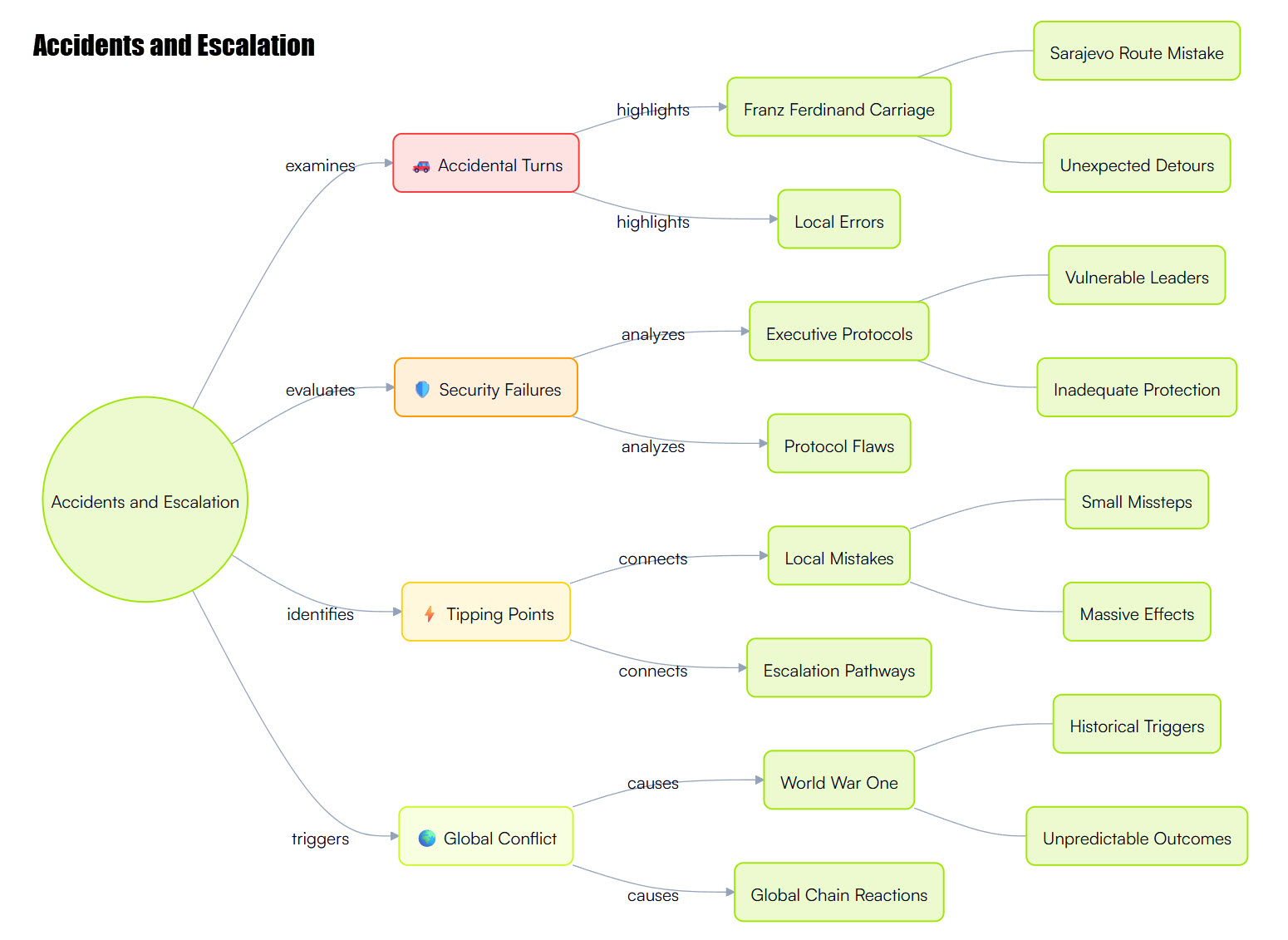
- Gavrilo Princip targeted Archduke Franz Ferdinand (1914) to free South Slavs from Austrian rule, unintentionally triggering World War I.
- Yigal Amir assassinated Yitzhak Rabin (1995) to halt the Israeli-Palestinian peace process.
- State-Sponsored Silencing: Modern cases show governments targeting dissidents or perceived threats to maintain power.
- Jamal Khashoggi (2018) was killed inside a Saudi consulate for his criticism of the Saudi government.
- Georgi Markov (1978) was targeted by Bulgarian intelligence for his anti-communist broadcasts.
- Mental Instability and Personal Obsession: Some acts lack a clear political program and stem from psychological distress.
- John Hinckley Jr. shot Ronald Reagan (1981) to impress actress Jodie Foster.
- Mark David Chapman killed John Lennon (1980) out of an obsessive desire for notoriety and fame.
Assassins utilize various tools based on the security landscape and the desired level of stealth or public impact.
Method | Notable Victims | Context/Details |
|---|---|---|
Firearms | Shinzo Abe, JFK, William McKinley | The most prevalent method, often involving homemade weapons (Abe) or rifles (JFK). |
Stabbing | Julius Caesar, Pavel Adamowicz | Involves close contact; Caesar was stabbed 23 times by his own senators. |
Explosives | Rajiv Gandhi, Benazir Bhutto | Often involves suicide bombers (Tamil Tigers in Gandhi’s case) to maximize casualties. |
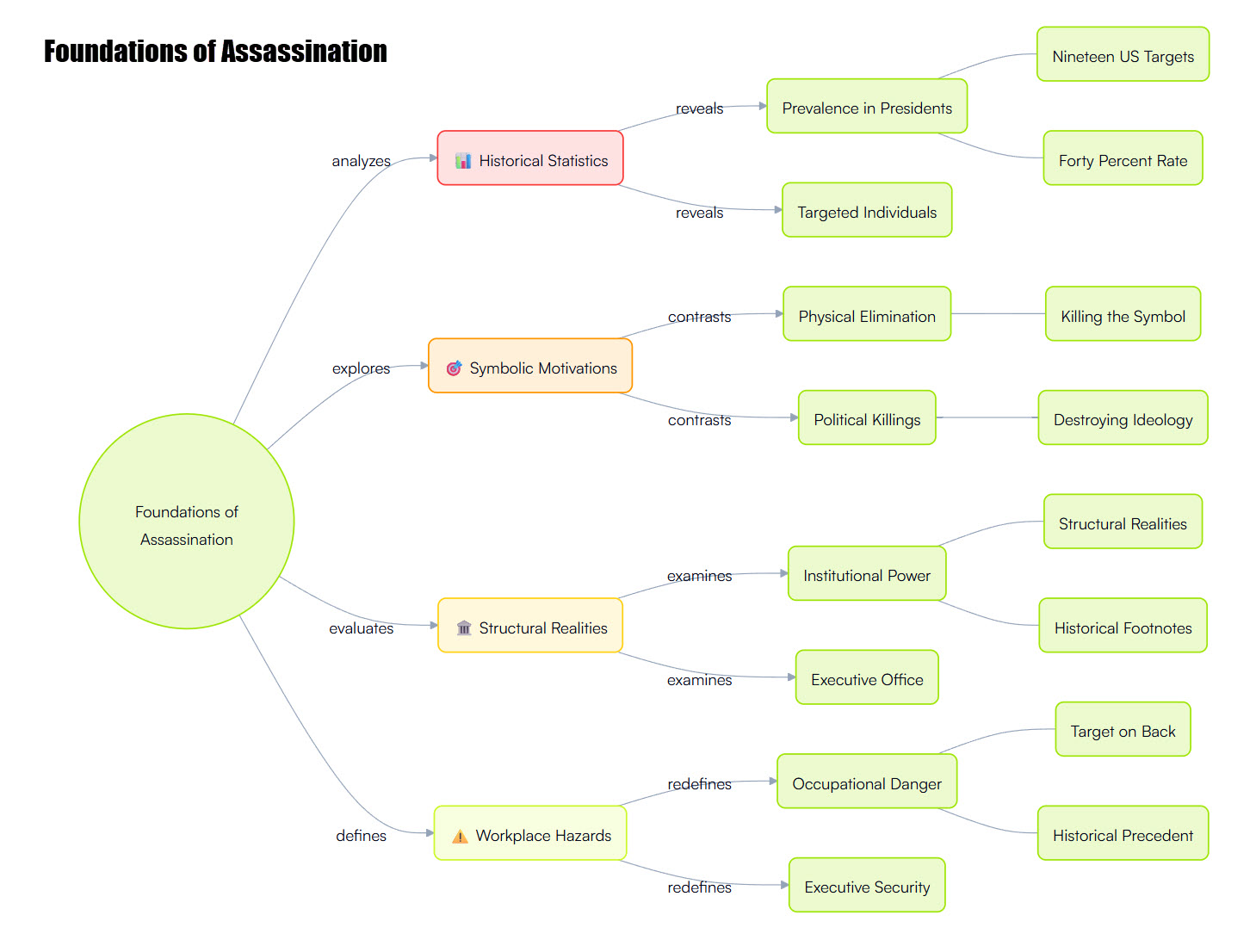
Poison/Chemicals | Kim Jong-nam, Alexander Litvinenko | Stealthy tools like VX nerve agent (Kim) or radioactive Polonium-210 (Litvinenko). |
Bladed Objects | Leon Trotsky | Attacked with an ice pick by a Soviet agent in Mexico. |
III. Historical Case Studies and Turning Points
1. The Death of William McKinley (1901)
- Impact: His death elevated Theodore Roosevelt to the presidency, ushering in the Progressive Era. It also led to the U.S. Secret Service being granted permanent responsibility for presidential protection.
2. Archduke Franz Ferdinand (1914)
- The Paradox: Ironically, Ferdinand was one of the few voices in the Austrian Empire determined to avoid war with Russia and was sympathetic to creating a “tri-partite” state that included a union of Slavic peoples. By killing him, Princip removed the primary obstacle to the very war that would devastate the region.
3. Patrice Lumumba (1961)
- Geopolitical Context: His death was a defining symbol of Cold War interference, involving the CIA and Belgian officials who feared his ties to the Soviet Union. His body was dismembered and dissolved in sulfuric acid to prevent his grave from becoming a site of pilgrimage.
4. Shinzo Abe (2022)
- Motivation: The assassin, Tetsuya Yamagami, targeted Abe due to the politician’s perceived ties to the Unification Church, which Yamagami blamed for his family’s financial ruin.
IV. Systemic Repercussions and “The Assassination Effect”
Institutional Resilience vs. Instability
- Formal Successions: Democracies with clear “second-in-command” protocols (like the U.S.) tend to buffer against long-term instability.
- Informal Successions: In autocracies or fledgling republics (e.g., Haiti after Jovenel Moïse), assassinations create power vacuums that invite factional violence and coups.
Public Policy and Social Shifts
- Martin Luther King Jr. (1968): His assassination accelerated the passage of the Fair Housing Act.
- Robert F. Kennedy (1968): His death led to the Gun Control Act of 1968.
- John F. Kennedy (1963): His murder gave rise to decades of conspiracy theories and a profound loss of public trust in government narratives.
The Normalization of Targeted Killings
V. Key Insights and Quotes
- The Martyrdom Effect: Killing a leader often intensifies their movement. Figures like Malcolm X, Harvey Milk, and Gandhi became more influential as symbols after their deaths than they were in the final stages of their lives.
- Success of the Act vs. Failure of the Goal: Assassins frequently fail to achieve their intended political outcomes. John Wilkes Booth intended to save the Confederacy; instead, his act plunged the South into a more chaotic Reconstruction.
- The Role of Media: High-profile assassinations (e.g., JFK, Alexander I of Yugoslavia) were some of the first historical events captured on film, shaping public perception through visual trauma and fueling the “conspiratorial politics” that persist today.