 Cart is empty
Warning: Undefined array key "attribution" in /home/u528323978/domains/blogquizshop.com/public_html/wp-content/plugins/pin-generator/frontend/pin-generator-insert-pins.php on line 15






TAKE THE QUIZ
Essential Spices
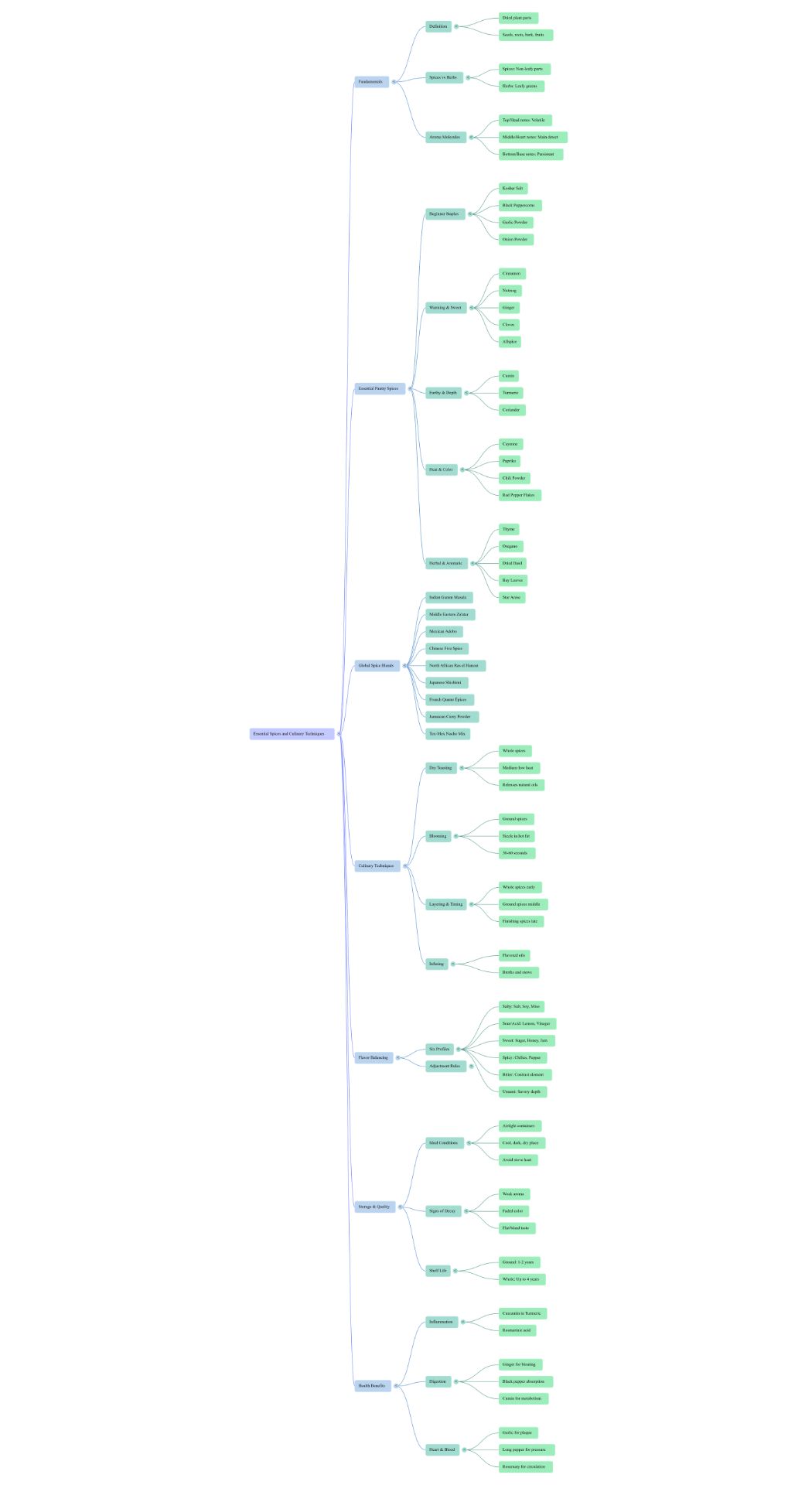
The podcast serves as a comprehensive guide for enhancing culinary skills through the use of some essential spices, which are defined as dried plant parts like seeds, bark, and roots. It distinguishes spices from leafy herbs and highlights their ability to transform bland meals by adding depth, aroma, and vibrant color. The podcast outlines essential spices and techniques such as toasting whole spices to release oils and blooming ground varieties in fat to intensify their flavor.
Listeners are introduced to global spice blends, including garam masala and za’atar, alongside advice on building a versatile starter kit for the kitchen. Practical tips emphasize proper storage in airtight containers and the importance of replacing old spices that have lost their potency. Finally, the podcast explores the nutritional advantages of these ingredients, noting their roles in reducing inflammation and aiding digestion.
The Essential Guide to Essential Spices: Science, Technique, and Health
- The Flavor Equation: Flavor is the combination of taste (detected by the tongue) and aroma (detected by over 400 olfactory receptors). Spices primarily provide the latter through volatile organic compounds.
- Heat as a Catalyst: Techniques such as toasting (dry heat) and blooming (heat in fat) are essential for liberating essential oils and creating cohesive, “rounded” flavor profiles.
- Whole vs. Ground: Whole spices act as “time-release” agents with longer shelf lives, while ground spices offer convenience but lose potency rapidly due to increased surface area and volatility.
- Health Efficacy: Beyond culinary appeal, spices like turmeric, garlic, and rosemary provide documented physiological benefits, including anti-inflammatory properties and cardiovascular support, often requiring specific pairings (e.g., turmeric with black pepper) for maximum bioavailability.
1. Defining Spices and Flavor Profiles
- Salty: Essential for bringing out natural flavors. Sources include kosher salt, soy sauce, fish sauce, miso, and parmesan cheese.
- Sour (Acid): Provides contrast and “brightens” a dish. Sources include citrus (lemon/lime) and various vinegars (red wine, white wine, sherry).
- Sweet: Rounds out tartness and enhances other flavors. Sources include sugar, honey, maple syrup, and jams.
- Spicy/Smoky: Adds heat and depth. Sources include various chilies, black pepper, and smoked paprika.
- Umami: A savory depth often found in fermented or aged products like anchovies or aged cheeses.
Essential Spices Starter Kit
- Essentials: Kosher salt, black peppercorns (in a mill), garlic powder, onion powder.
- Warming/Earthy: Cinnamon, cumin, turmeric, coriander, nutmeg, cloves.
- Herbal/Aromatic: Dried thyme, oregano, bay leaves.
- Heat/Color: Smoked paprika, cayenne pepper, chili flakes.
2. The Science of Spice Application
Feature | Whole Spices | Ground Spices |
|---|---|---|
Surface Area | Low; aromatics are protected inside. | High; aromatics escape easily. |
Volatility | Low; requires heat/time to release. | High; immediate but fades quickly. |
Best Use | Slow-cooked stews, broths, rice. | Quick sautés, finishing, baking. |
Shelf Life | Up to 4 years. | 6–12 months (up to 2 years if sealed). |
The “Time-Release” Concept
3. Advanced Culinary Techniques using Essential Spices
Toasting and Blooming
- Toasting (Dry Heat): Heating whole spices in a dry pan until fragrant (usually <2 minutes). This drives off raw notes, mellows the flavor, and creates new aromatic compounds through browning.
- Blooming (Heat in Fat): Frying spices in oil or butter. Because many aroma molecules are fat-soluble, the fat captures these volatiles and distributes them evenly throughout the dish. This is a foundational step in curries and Mexican adobo.
Layering and Finishing
- The Early Stage: Use “hard” whole spices (bay leaves, peppercorns, cinnamon) early to build a base layer of flavor.
- The Middle Stage: Add ground spices during the sautéing of aromatics (onions, garlic) to infuse the cooking fat.
- The Finishing Stage: Delicate spices (nutmeg, garam masala, fresh herbs) should be added at the very end to preserve their bright, volatile “top notes.”
- The Acid Finish: A final squeeze of lemon or splash of vinegar can “wake up” the taste buds and balance the heat and salt of the spices.
4. Global Spice Blends
- Garam Masala (Indian): A “warm” (not necessarily hot) blend of coriander, cumin, cardamom, pepper, cloves, and cinnamon. Used as a finishing spice.
- Za’atar (Middle Eastern): A pungent, citrusy mix of dried thyme, sumac, sesame seeds, and salt.
- Chinese Five Spice: A tangy/fresh blend (star anise, cloves, cinnamon, Sichuan pepper, fennel) used to cut through fatty meats like pork or duck.
- Adobo (Mexican/Latin American): A smoky, tangy blend featuring paprika, garlic, cumin, oregano, and chili flakes.
- Ras el Hanout (Moroccan): “Top shelf” blend that can contain unusual ingredients like rose petals and mace.
- Shichimi Togarashi (Japanese): A seven-flavor chili pepper mix featuring orange zest, seaweed, and sesame.
5. Health and Physiological Benefits
- Turmeric (Curcumin): Known for anti-inflammatory properties and joint support. It is poorly absorbed alone; it must be paired with black pepper (piperine) to become bioavailable. It may also help convert white fat to “beige” fat, aiding metabolism.
- Garlic: Studies suggest aged garlic extract can reduce soft plaque in arteries by up to 80% and lower blood pressure.
- Rosemary: Contains rosmarinic acid (a potent antihistamine) and carnosic acid, which helps dilate blood vessels.
- Basil: A rich source of Vitamin K and potassium, essential for heart rhythm and blood pressure regulation.
- Long Pepper: A traditional Chinese spice shown to have effective blood pressure-lowering properties, especially when fermented.
6. Maintenance and Potency of Essential Spices
- Environment: Spices must be kept in airtight glass jars in a cool, dark place (pantry). Heat from stoves or sunlight will cause the essential oils to break down.
- The Potency Test: To check if a spice is still active, rub a small amount between the fingers. if the aroma is weak, the color is faded, or the taste is flat, the spice has lost its volatile oils and should be replaced.
- Quantity Management: Buy ground spices in small quantities to ensure they are used while their aroma is still vivid. Whole spices are a better investment for long-term storage.