
 Cart is empty
HomeBlogsPodcastEntertainmentTop 10 Roles in the Film Production
Top 10 Roles in the Film Production






TAKE THE QUIZ
Top 10 Roles in the Film Production
The Podcast explores various roles within film production, providing insights into their responsibilities and contributions. The presenters highlight the director’s creative oversight, the producer’s crucial logistical and financial management, and the distinct yet sometimes overlapping functions of executive and line producers.
Additionally, the Podcast details the specialized tasks of casting directors, emphasizing their role as industry gatekeepers and offering advice on how actors can effectively connect with them. The Podcast also shed light on numerous other essential crew positions, from cinematographers and editors to sound designers and VFX supervisors, illustrating the intricate teamwork required to bring a cinematic vision to life.
The top 10 roles in the Film production
They are covering the essential creative, technical, and organizational positions that bring a film to life:
Producer
Oversees the entire production, from securing funding and hiring key staff to managing budgets and schedules of the film. The producer ensures the film is completed on time and within budget, balancing both creative and business aspects.
Director
Responsible for the creative vision of the film. The director interprets the script, guides actors’ performances, and makes key decisions about the film’s style, pacing, and storytelling.
Screenwriter
Writes the screenplay, crafting the story, dialogue, and structure. The script serves as the blueprint for the entire production of the film.
Cinematographer / Director of Photography (DP)
In charge of the film’s visual look. The DP selects cameras, lenses, and lighting, and collaborates closely with the director to achieve the desired visual style.
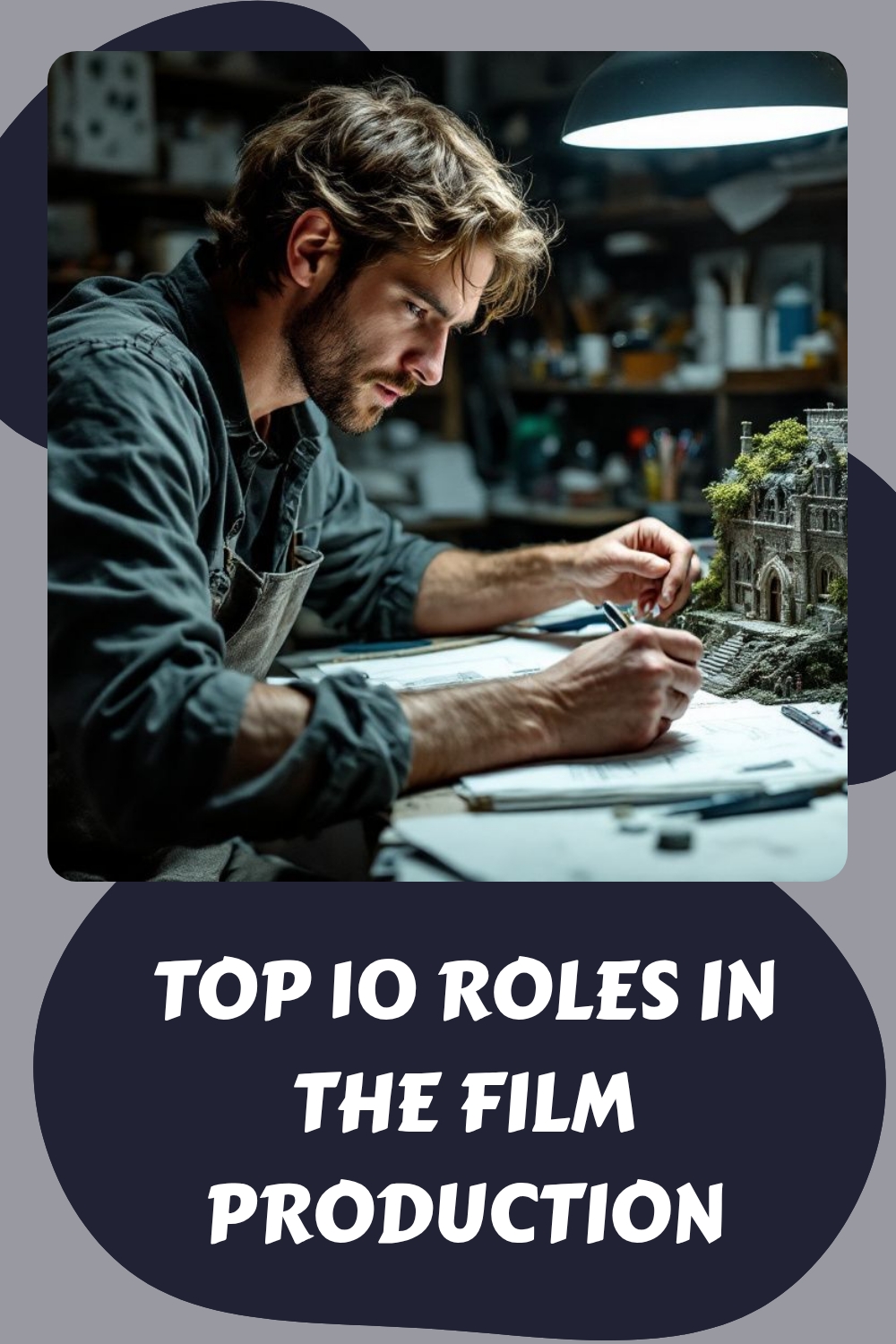
Production Designer
Designs the overall visual environment, including sets, locations, and props. Works with the director and cinematographer to create the film’s atmosphere and aesthetic.
Editor
Assembles the filmed footage into a coherent story, working with the director to shape the narrative, pacing, and emotional impact of the film.
Sound Designer / Audio Engineer
Handles all aspects of sound, including recording dialogue, creating sound effects, and mixing audio to enhance realism and emotional resonance of the film.
Composer
Creates the musical score, working with the director to develop themes and motifs that support the film’s mood and storytelling.
Art Director
Works under the production designer to execute the visual style, overseeing set construction, decoration, and the art department’s logistics.
Visual Effects (VFX) Supervisor
Leads the creation and integration of visual effects, collaborating with the director and cinematographer to ensure effects are seamless and support the story.
These roles are the backbone of most of the film productions, each contributing uniquely to the final product.
SHOP NOW ZAZZLE - CLICK BELOW

What are the most challenging roles in the Film production
Which is considered the hardest job in film?
Demystifying the Different Roles in Film Production
Several roles in movie production are widely recognized as the most challenging due to their high levels of responsibility, stress, and technical or creative demands:
Producer / Line Producer / Unit Production Manager (UPM)
These roles require managing the entire production, balancing the budget, solving logistical problems, and handling emergencies-sometimes with very little notice. The workload is intense, and the pressure to keep everything running smoothly is immense.
Director
The director bears the creative responsibility for the film and must make countless decisions daily, often under tight deadlines and with limited resources. They are responsible for guiding the cast and crew, maintaining the artistic vision, and keeping the project on schedule.
Cinematographer / Director of Photography (DP)
This role demands both artistic vision and technical expertise. DPs work long hours in challenging conditions and must make rapid decisions to capture the desired look, often with little margin for error.
Script Supervisor
This is a detail-heavy job requiring constant attention to continuity, script changes, and coordination between departments. Script supervisors often work long hours and must be vigilant throughout the shoot.
Grip, Electric, and Camera Departments
These physically demanding roles involve moving heavy equipment, working in all weather conditions, and maintaining safety on set. Mistakes can be costly and dangerous, especially in the camera and lighting departments.
Special Effects Technician
This job is both technically complex and potentially hazardous, involving the setup and execution of practical effects, sometimes with explosives or dangerous materials.
Film Editor
Editors face the challenge of shaping the final story, often under tight deadlines and with enormous amounts of footage to review and assemble. The job requires technical skill, creativity, and the ability to work long hours in isolation.
Costume Designer
Costume designers must research, design, and source or create costumes that fit the story, era, and characters-often under time constraints and with tight budgets.
These roles are challenging due to the combination of creative pressure, technical complexity, physical demands, and the need to coordinate with multiple departments. Each is critical to the success of a film and requires a unique blend of skills and resilience