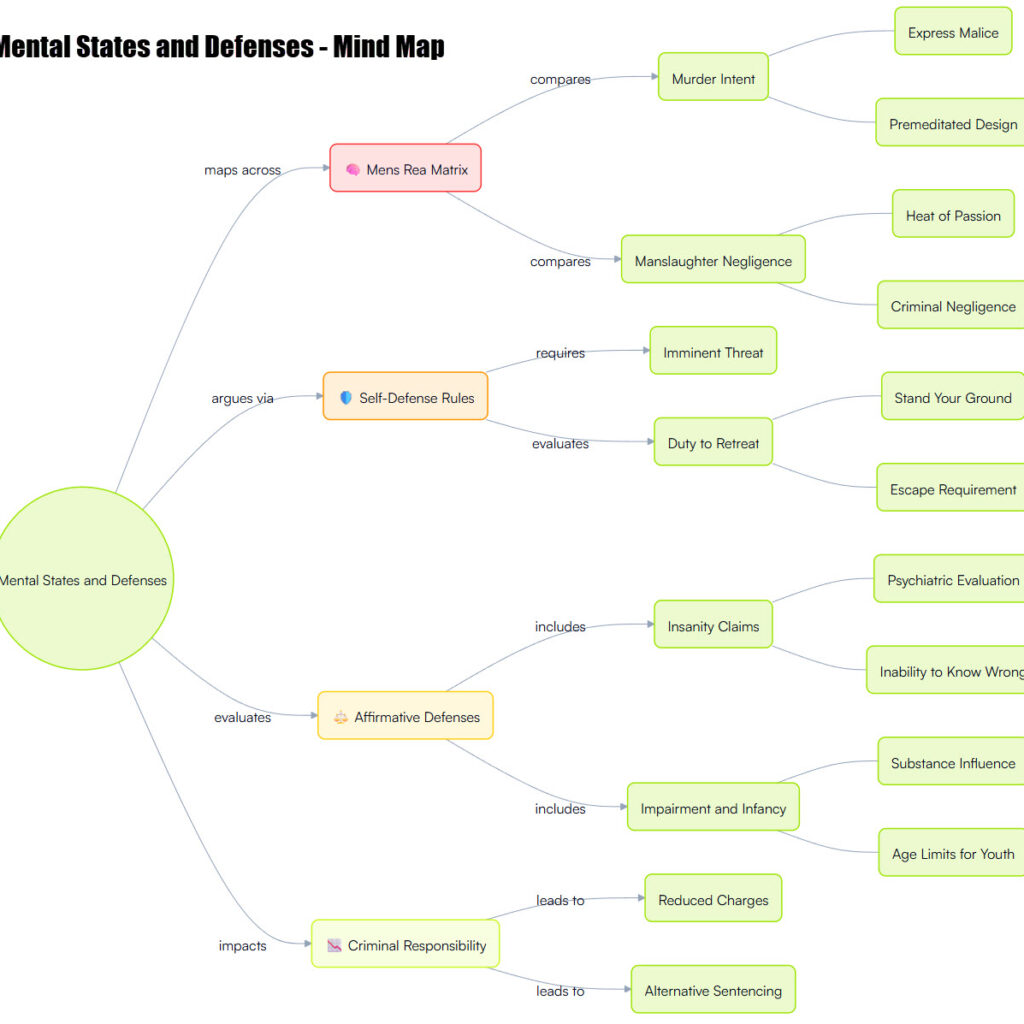
Murder represents the most serious form of criminal homicide because it requires malice aforethought. This legal term indicates that the perpetrator acted with intent to kill, intent to cause serious bodily harm, or reckless indifference to human life.
First-Degree Murder
First-degree murder involves deliberate planning and premeditation. The perpetrator weighs the consequences and decides to kill before executing the fatal act. Certain jurisdictions also apply the felony-murder rule, which classifies deaths occurring during dangerous felonies like robbery or rape as first-degree murder.
Second-Degree Murder
Second-degree murder involves an intentional killing executed without prior planning. The perpetrator acts in the moment, such as losing their temper during a fight, while still demonstrating a reckless disregard for human life.
Penal Consequences
All degrees of murder are classified as Class A-1 felonies. Convictions for first-degree murder carry sentences ranging from 25 years to life without parole. Second-degree murder convictions generally carry sentences of 15 years to life behind bars.


 Cart is empty