Contact us: ww@blogquizshop.com

Feeling stuck in your fitness routine or struggling to see results? Many people want to build strength, lose weight, or improve their health but don’t know where to start. Without a clear plan, it’s easy to feel frustrated and give up.

Weight training offers many benefits. It helps burn calories, strengthen muscles, and improve mental health. These workouts can also enhance bone density while reducing the risk of conditions like osteoporosis.

This blog shares weight training benefits, strength training tips, and how to build muscle effectively. You’ll learn practical steps for creating an exercise routine that meets your goals.

Keep reading—you won’t want to miss this!

Key Takeaways

  • Weight training builds muscle strength, boosts metabolism, and improves mental health. It reduces risks of diabetes, heart disease, osteoporosis, and joint issues over time.
  • Regular strength training increases lean mass by 1.06 kg (1.9%) and bench press performance by 11% on average. Hack squats show a 21% improvement with High Frequency Training (HFT).
  • Exercises like push-ups or chest presses release endorphins, lower anxiety, and enhance self-esteem while reducing visceral fat and supporting better body image in users as young as teens.
  • Proper form prevents injuries; beginners can start with lighter weights for 12–15 reps while learning techniques like Romanian deadlifts or goblet squats using trainers if needed.
  • Tools such as free weights provide improved range of motion; resistance bands suit travel workouts; machines ensure guided movements for safer results at any skill level.
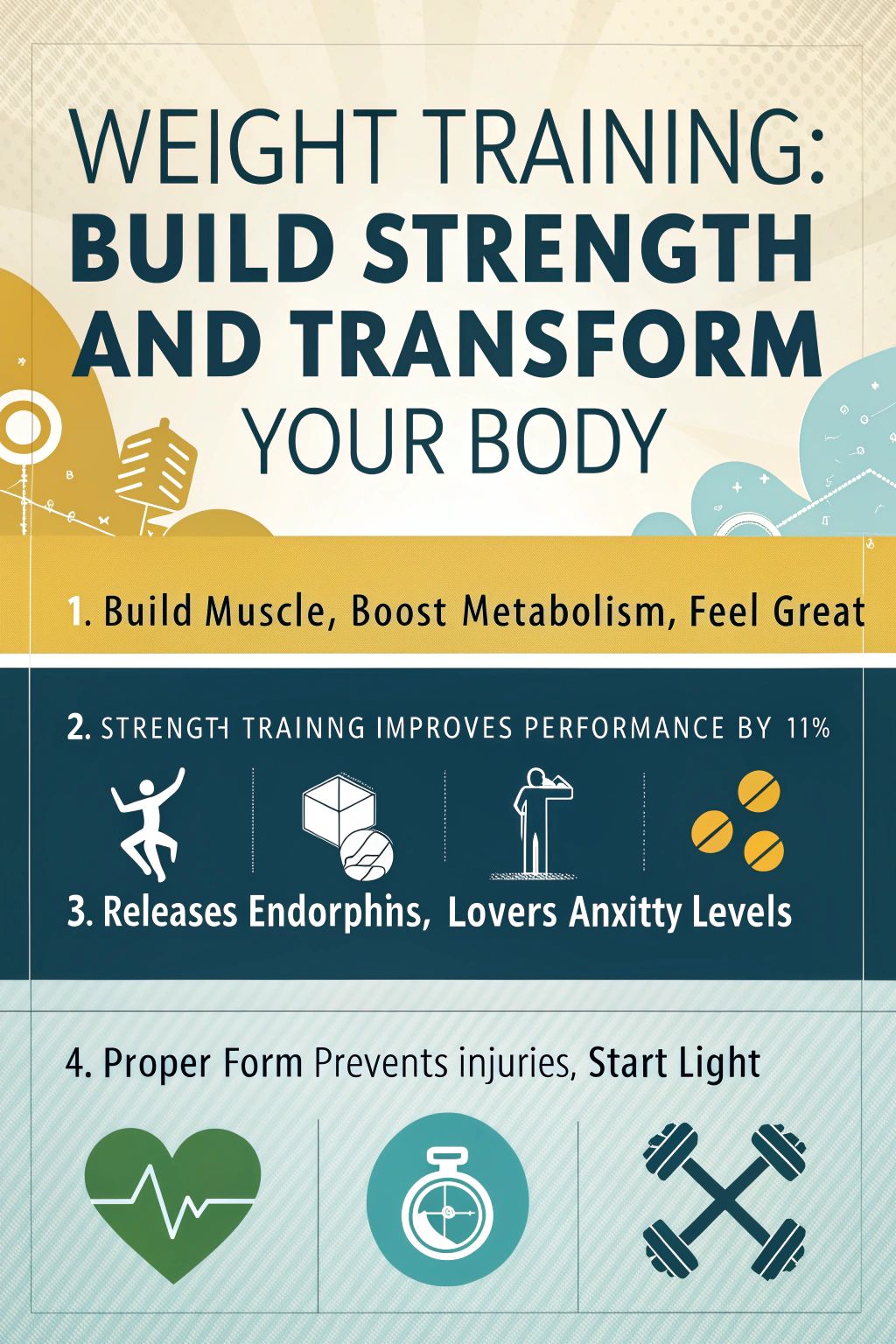
weight training build strength and transform your body 0522

Weight Training for Strength and Body Transformation

Resistance training—exercising muscles against external resistance through free weights, machines, bands, or body weight—reliably increases muscular strength, hypertrophy, power, and endurance while also reducing mortality risk and improving cardiovascular, metabolic, and mental health. Every resistance training prescription produces strength and hypertrophy gains compared with no exercise, but specific variables can be manipulated to optimize outcomes.

Key Training Variables for Strength

Variable Recommendation for Strength  
Load       ≥80% 1RM (heavy loads) maximizes strength gains  
Sets      2–3 sets per exercise; multiple sets outperform single sets  
Frequency      ≥2 sessions/week; higher frequency adds benefit mainly via added volume  
Rest intervals      2–5 minutes between sets for maximal strength-power  
Exercise order      Large muscle group, multi-joint exercises first  

Heavy loads (≥80% 1RM) produce significantly greater 1RM strength gains than low loads, whereas isometric strength gains do not differ between loading conditions. Moderate loads (9–15 RM) also yield superior strength improvements compared with low loads, offering an alternative for individuals who cannot tolerate heavier resistance. Training to momentary muscular failure does not consistently enhance outcomes and is likely unnecessary for maximum strength gains.

Hypertrophy and Body Composition

Muscle hypertrophy is largely load-independent—gains are similar across a spectrum of loading ranges provided sets are performed with sufficient effort. Higher training volumes (≥10 sets per week per muscle group) and eccentric overload further enhance hypertrophy. Both high-load and low-load training to volitional failure produce comparable muscle growth in untrained and moderately trained individuals.

  • Barbell squat training at 60–80% 1RM reduced body fat percentage over 6 weeks, while progressive bodyweight squats increased strength and hypertrophy without significant fat loss.
  • High-intensity functional training (HIFT) with either 30% or 70% 1RM loads equally increased lean body mass and maximal strength over 12 weeks, though low-load training produced marginally greater fat loss.
  • Combined resistance plus aerobic training targeting fat reduction decreased body fat percentage and body weight while still improving strength, whereas a muscle-mass-focused program at 75–85% 1RM with longer rest periods maximized strength and lean mass gains.

Physiological Mechanisms and Population Considerations

Strength gains arise from both neural and morphological adaptations: increased motor unit recruitment, rate coding, synchronization, muscle cross-sectional area, pennation angle changes, and shifts from Type IIx toward Type I and IIa fibers. Strength training activates satellite cells and the mTOR signaling pathway, driving muscle protein synthesis and repair. Neural adaptations are reflected in heightened EMG amplitude, though the effect varies with contraction type and training experience.

  • Free weights vs. machines produce similar increases in muscle mass, strength, and hypertrophy; strength gains are specific to the training modality, so individual preference and goals should guide the choice.
  • Sex differences are minimal: males and females show similar hypertrophy and lower-body strength gains, though untrained females display a larger relative upper-body strength response.
  • Training status matters: untrained individuals exhibit greater hypertrophy, while those with prior training experience benefit from more weekly sessions for continued gains. Weaker athletes should prioritize strength before emphasizing power-type training.

Progressive resistance training with variable prescription—heavy loads for strength, higher volume for hypertrophy, and individualized frequency and exercise selection—remains the evidence-based approach to building strength and transforming body composition

What is Weight Training?

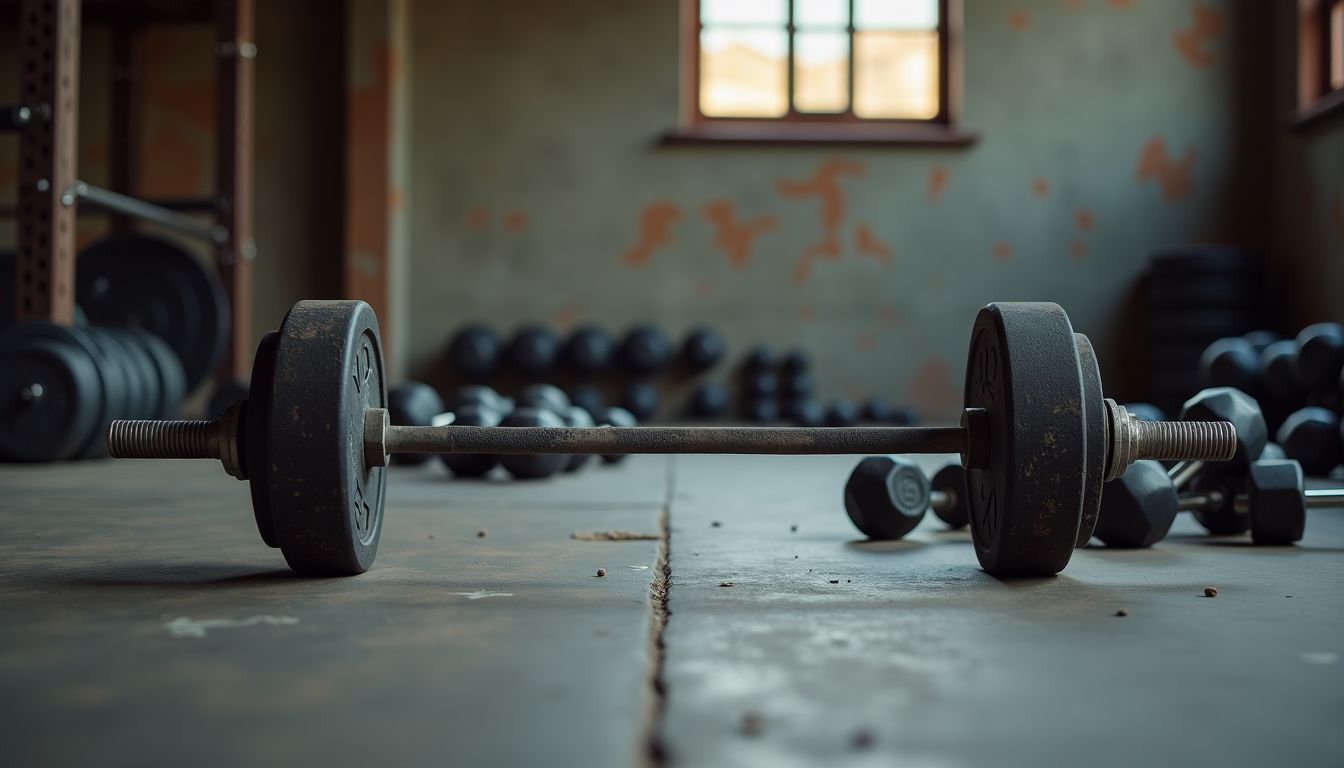
A rustic gym with scattered weights and a worn look.

Weight training, also called strength training, uses resistance to build muscle strength and endurance. This physical activity involves lifting weights, using resistance bands, or performing exercises like push-ups and squats that utilize body weight.

Equipment such as free weights, barbells, dumbbells, and machines are common tools in a gym workout.

This type of exercise promotes stronger muscles by causing muscular contractions through repetitive movements. It benefits people of all fitness levels and assists with core stability while reducing abdominal fat over time.

Weightlifting programs can target specific goals like muscle growth or calorie burning for weight loss.

Strength does not come from what you can do; it comes from overcoming the things you once thought you couldn’t.

Benefits of Weight Training

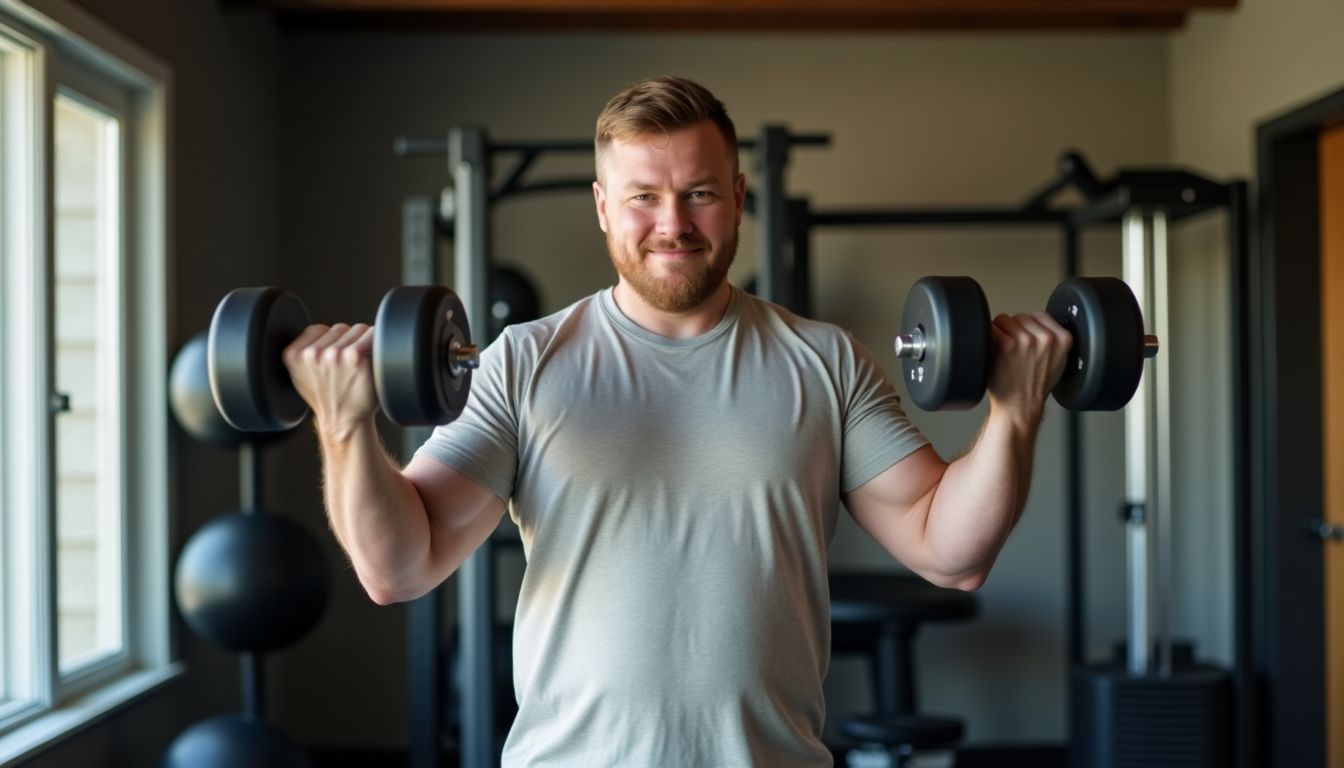
A man in his 30s doing weight training in a home gym.

Weight training helps the body grow stronger and fitter through regular resistance exercises. It promotes better health while reducing risks of conditions like diabetes and heart disease.


Builds strength and muscle massA well-equipped and lively gym with heavy weights and machines.
Strength training increases lean muscle and improves overall physical fitness. High Frequency Training (HFT) has shown impressive results in building strength. Studies reveal that individuals gained 1.06 kg of lean mass, reflecting a 1.9% increase through consistent resistance training.

Bench press performance improved by 11%, with participants lifting an extra 9.07 kg on average.

Hack squats demonstrated even greater progress, showcasing a significant strength boost of 20.16 kg or a 21% improvement using HFT methods. Exercises like goblet squats and dumbbell bench presses work on multiple muscle groups while encouraging muscular hypertrophy and fat burning simultaneously.

Resistance training enhances core strength and effectively reduces visceral fat over time.

Boosts metabolism and burns caloriesHome gym with fitness equipment for strength-building exercises.

Weight lifting increases muscle mass, which boosts metabolism. More muscle means the body burns more calories even at rest. This helps individuals achieve fitness goals like weight-loss and body fat reduction.

High-intensity strength-training sessions also elevate calorie burn for hours afterward.

Regular strength-building exercises target abdominal fat and improve overall metabolism efficiency. Activities like squatting or using kettlebells strengthen skeletal muscles while raising energy expenditure levels.

These workouts contribute to a healthier lifestyle by supporting long-term calorie management and reducing obesity risks.

Improves mental health and moodA tranquil park scene with an outdoor gym and autumn leaves.
Strength training improves self-esteem and body image. Building muscle boosts confidence, making individuals feel better about their physical appearance. Studies show strength exercises lower anxiety, helping regulate emotions effectively.

Adolescents aged 10-16 also experience increased self-worth from weight programs.

Exercise releases endorphins that elevate mood and reduce psychological stress. Performing activities like pushups or biceps curls can lead to calmness and a sense of accomplishment.

Many use training routines as a tool to combat depression while fostering mental wellness through consistent effort.

“The uplifting effect of exercise on the mind is undeniable.”

Enhances bone density and joint health
A colorful outdoor gym surrounded by greenery emphasizes the importance of strength training.

Engaging in weight training boosts mental health, fortifies bones, and supports joint function. Strength-building exercises increase bone mass, reducing the risk of fractures such as hip fractures.

By encouraging stronger muscle contraction, these workouts improve balance and reduce stress on joints.

Lifting weights can prevent bone loss associated with aging or chronic conditions such as arthritis. Studies from 2021 highlight how consistent strength training significantly reduces osteoporosis risks.

It encourages denser bones by stimulating bone development while protecting joints from wear and injury over time.

Weight Training Overview

Building strength and transforming your body with weight training comes down to mastering a few core movement patterns, training consistently 2–4 days per week, and progressively overloading your muscles over time while supporting your efforts with good nutrition and recovery.

Core principles for strength and transformation

  • Progressive overload: Gradually increase the weight, reps, or sets so your muscles keep adapting. For beginners, adding a small amount of weight each session (e.g., 2.5 kg upper body, 5 kg lower body) is a simple, effective method.

  • Compound movements: Prioritize multi-joint exercises that work several muscle groups at once—squats, deadlifts, presses, and rows—because they build the most strength and stimulate the most muscle growth per minute of training.

  • Consistency and frequency: Aim for 2–4 full-body strength sessions per week. Three days per week is a sweet spot for most beginners to make steady progress without overtraining.

  • Recovery: Muscles grow between sessions, not during them. Get enough sleep, manage stress, and leave at least one rest day between heavy full-body workouts.

A simple beginner strength program

A straightforward, proven structure for beginners is the “3–5 rule”: train 3–5 days per week, do 3–5 exercises per session, and perform 3–5 sets per exercise. Here’s a practical 3-day full-body template you can start with:

Workout A

  • Goblet squat or barbell back squat: 3 sets × 8–10 

  • Dumbbell or barbell bench press (or push-ups): 3 × 8–10

  • Dumbbell or cable row: 3 × 8–10 per side

  • Romanian deadlift or hip hinge: 3 × 8-10

  • Plank or other core brace: 3 × 30–45 seconds

Workout B

  • Deadlift (or kettlebell deadlift): 3 × 5

  • Overhead press (dumbbell or barbell): 3 × 8

  • Lat pulldown or assisted pull-up: 3 × 8–10

  • Split squat or lunge: 3 × 8–10 per leg

  • Farmer’s carry: 3 × 30 seconds

Alternate A and B across the week (e.g., Mon: A, Wed: B, Fri: A; next week start with B).

How to choose your starting weights

  • Pick a load that lets you finish all prescribed reps with good form while still having about 2–3 reps “in the tank” (RPE ~7–8/10).

  • For many beginners, that might be bodyweight, light dumbbells (2–5 kg), or empty bars; the exact number matters less than being able to progress weekly.

How to progress week to week

Use one of these overload methods each session or each week:

  • Add weight: If you hit all sets/reps with solid form, increase by ~2.5 kg (upper body) or 5 kg (lower body) next time.

  • Add reps: If you can’t add weight yet, add 1–2 reps per set until you reach the top of the rep range, then increase weight.

  • Add sets: Occasionally add a fourth set to a key lift if progress stalls.

Track your lifts in a notebook or app so you can see progress and know when to increase load.

Nutrition to support strength and body transformation

Training provides the stimulus; nutrition provides the building blocks.

  • Protein: Aim for roughly 1.6–2.2 g of protein per kg of bodyweight per day (about 0.7–1.0 g per lb).

  • Calories:

    • To lose fat while gaining strength: slight calorie deficit (e.g., 200–400 kcal below maintenance) with high protein and progressive lifting.

    • To maximize muscle gain: slight surplus (e.g., 200–300 kcal above maintenance).

  • Whole foods focus: Emphasize lean proteins, vegetables, fruit, whole grains, and healthy fats; limit ultra-processed foods and excessive alcohol.

Recovery and injury prevention

  • Warm-up: 5–8 minutes of easy cardio plus dynamic movements (leg swings, arm circles, bodyweight squats), then 1–2 light warm-up sets before your first big lift.

  • Technique first: Learn proper form before adding heavy loads. Consider a few sessions with a qualified trainer to check your squat, deadlift, and press mechanics.

  • Rest between sets: 90–180 seconds for heavy compound lifts; 60–90 seconds for smaller or isolation work.

  • Sleep: Target 7–9 hours per night to optimize recovery, strength gains, and body composition changes.

Example weekly schedule

  • Monday: Full-body Workout A

  • Tuesday: Light walk or mobility

  • Wednesday: Full-body Workout B

  • Thursday: Rest or light activity

  • Friday: Full-body Workout A (or B)

  • Weekend: Rest, walking, or recreational activity

This gives you three hard strength sessions with built-in recovery days.

Tips for Effective Weight Training

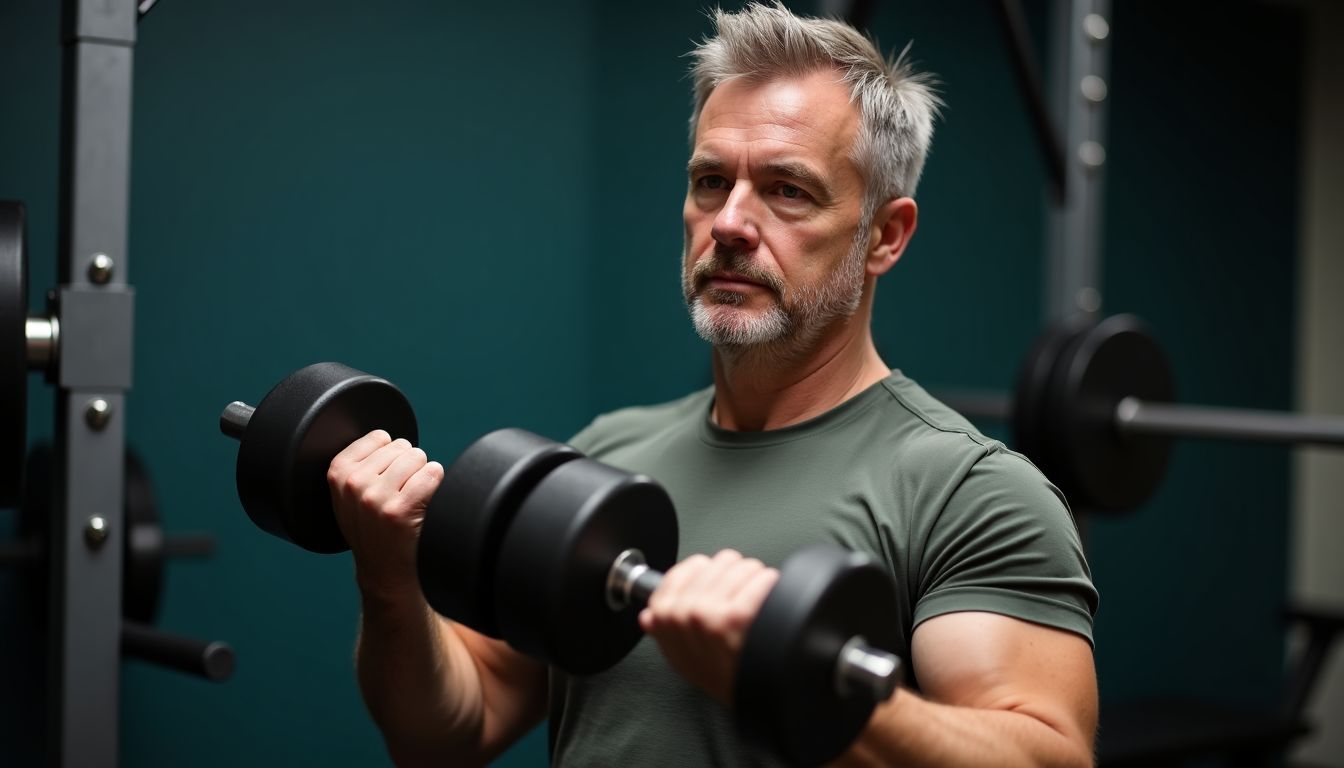
A man in his 30s doing bicep curls with dumbbells in a home gym.

Use controlled movements to keep your muscles engaged and safe. Focus on steady progress by tracking repetitions and increasing resistance over time.

Start with proper form and technique

Proper form and technique are critical for muscle building and injury prevention. Warm up for 5 to 10 minutes with dynamic stretching or light aerobic exercises like jogging. Begin weight training with lighter weights that allow 12 to 15 repetitions comfortably.

Beginners should consider working with a personal trainer or exercise physiologist to learn safe movements, such as the Romanian deadlift or chest fly.

Using incorrect form increases the risk of sports injuries like back pain or muscular imbalances. Keep your core engaged during lifts to protect the abdomen and spine. In a workout plan focused on strength building, prioritize quality over heavy weights.

Proper technique ensures even small adjustments lead to steady progress without muscle soreness turning into serious strain later on.

Gradually increase weight and intensity

Progressive overload is key for strength building. Gradually increase weights, repetitions, or workout frequency to challenge muscles. Adding small weight increments weekly improves muscle endurance and prevents plateaus.

Starting with too much can cause DOMS or injuries. Mastering form is crucial before heavier lifts.

Rest is vital after increasing intensity. Muscles need at least 48 hours to recover and rebuild stronger fibers. A balanced training program should alternate high-intensity days with lighter sessions or full-body workouts for a healthy lifestyle shift.

Incorporate rest and recovery

Rest builds strength by allowing muscle cells to repair and grow. Sleep plays a major role, with some athletes needing over 10 hours per night to fully recover after intense training.

Muscle recovery times vary based on workout intensity. Light sessions may only need 24 hours, while heavy powerlifting or HIIT workouts could require several days.

Good nutrition supports recovery better than costly supplements. Balanced meals replenish energy and aid muscle growth after body sculpting or conditioning exercises. Avoid alcohol and tobacco, as they hinder recovery and damage overall health.

Rest also helps prevent injuries in high-stress activities like sports medicine practices or functional fitness programs.

Common Weight Training Methods
A woman in her 30s lifting a barbell in a home gym.

Weight training offers versatile tools to build strength and endurance. People can use different equipment or techniques to match their fitness goals and abilities.

Free weights

Dumbbells, barbells, and kettlebells make up the core of free weights. They allow users to enjoy a full range of motion while working out. This flexibility helps engage stabilizer muscles more effectively than machines.

Studies show that free weights increase strength faster compared to weight machines.

Significant gains in muscle size have been found in the arms, thighs, and chest with regular use of these tools. Free weight training supports better muscular endurance and anaerobic performance.

Many personal training programs highlight their value for building bone mass and boosting metabolism through efficient calorie burning.

Resistance bands

Resistance bands offer a versatile way to build strength and increase anaerobic endurance. They enhance weight training for people at all fitness levels, from beginners to advanced athletes.

A 2019 study shows they deliver strength gains similar to free weights or machines in the gym. Exercises like chest presses, biceps curls, squats, and clamshells target various muscle groups effectively.

These bands can also help with body transformation by reducing fat, especially in overweight individuals. Many use them during physical therapy to improve joint health or boost bone mass without straining weak areas.

Their lightweight design makes them ideal for home workouts or travel routines outside a weight room setting.

Weight machines

Weight machines offer a controlled way to build strength, especially for beginners. They provide safety features and guided movements, reducing the risk of injury. Studies show significant improvements in upper arm, thigh, and chest size with regular use of these tools.

Novice males using weight machines achieve muscle strength similar to free weights without extra risks.

These machines suit those seeking ease while boosting metabolism or staying physically fit. By offering consistent resistance, they improve bone mass over time. Weight training methods like this help enhance muscularity while promoting self-efficacy in workouts.

Free weights and machines produce similar strength and hypertrophy gains

Free-weight and machine-based resistance training produce comparable increases in muscle strength, hypertrophy, and power when tested on neutral measures, though strength gains are specific to the trained modality Haugen2023Hernández-Belmonte2023Heidel2021. Both modalities similarly improve athletic performance, muscle architecture, and joint discomfort without meaningful differences between groups Hernández-Belmonte2023Hernández-Belmonte2023.

Key Evidence on Modality Equivalence

Evidence Strength Claim
 
Strong
Free-weight and machine training produce equivalent strength and hypertrophy when measured on neutral tests, confirmed across multiple RCTs and two meta-analyses Haugen2023Hernández-Belmonte2023Heidel2021+1 MORE.
 
Strong
Strength gains are modality-specific: free-weight trainees gain more on free-weight tests and machine trainees gain more on machine tests, following the SAID principle Haugen2023Heidel2021Arabas2023.
 
Moderate
Free-weight training confers advantages in balance and functional performance over machine training, though evidence is limited to smaller studies Maior2023.

Comparable Hypertrophy and General Strength

Muscle hypertrophy is equivalent between modalities across diverse populations and measurement methods. A within-subject randomized trial found comparable vastus lateralis and rectus femoris hypertrophy between free-weight lunges and machine leg press in untrained women, with no group-by-time interaction at any muscle site. An 8-week velocity-matched program in resistance-trained men found identical cross-sectional area increases across quadriceps, pectoralis major, and rectus abdominis between free-weight and machine groups, with differences under 2%. Novice males training for 10 weeks showed similar gains in muscularity, strength, and functional ability regardless of equipment, with no penalty when switching from machines to free weights midway.

Both modalities reduce joint discomfort equivalently. The Hernández-Belmonte trial found no between-group differences in stiffness, pain, or functional disability, with both modalities reducing symptoms. In older adults, traditional free-weight and machine training produced 2–3× greater strength improvements than functional weighted-vest training on specific exercises, yet both groups showed comparable gains in isometric knee extensor force and muscle size .

Modality Specificity and Transfer Effects

Finding Population Key Result
Free-weight group gained more on free-weight tests Sport-science students, 8 wk Load-axis intercept and velocity-profile gains favored trained modality
Machine group gained more on machine bench press Mixed-sex adults, 8 wk 13.9% vs 8.6% machine-specific strength advantage 
Machine press outperformed free weights in specific strength College men, 12 wk SVP and SHP gained 10.3–11.8 kg vs 6.5 kg for FW
Free-weight squat superior for jump performance 120 males, 8 wk Squat improved SJ and CMJ; leg press did not

Figure 2 Modality-specific strength and performance transfer effects by study

The specificity principle extends to force application direction. An 8-week Smith machine versus free-weight squat intervention found minimal influence on longitudinal ground-reaction force direction, suggesting both squat variations can be used interchangeably without systematically altering force production patterns Marcos-Frutos2025. Free-weight exercises involve more degrees of freedom than machines, which may facilitate transfer from the more complex task to the simpler one, though this remains debated Haugen2023.

Functional and Neuromuscular Differences

  • Free-weight training produced greater balance, functional performance, and isometric hip abductor/extensor strength than machine training in resistance-trained males Maior2023.
  • Machine-trained individuals showed lower functional performance and bilateral hip extensor asymmetry, potentially elevating injury risk Maior2023.
  • Free-weight training elicited a greater acute testosterone response in men, though this did not translate to superior muscle or strength outcomes Schwanbeck2020.
  • In older adults, free-weight training yielded larger percentage gains in leg and triceps strength (113% and 89% vs 44% and 28%) alongside higher self-reported motivation and perceived daily-life benefit Schott2019.

The current body of evidence indicates that the choice between free weights and machines should be based on individual preferences, goals, and sport-specific demands rather than assumed superiority of either modality for general strength and hypertrophy

8-Week Progressive Strength Training Planner (Excel)

A 4-sheet workbook with 160 live formulas:

  • Instructions — How to use the planner, progression rules, and the full RPE scale (5-10) explained

  • Weekly Tracker — 32 pre-populated rows (4 patterns x 8 weeks). Enter your weight, sets, reps, RPE, and rest duration, and the sheet auto-calculates:

    • Volume (Weight x Sets x Reps)

    • Recommended Action — INCREASE (RPE ≤ 8 and rest ≤ 90s), REPEAT (RPE 8.5-9 or rest > 90s), or REDUCE / DELOAD (RPE ≥ 9.5), with color-coded conditional formatting

    • Next Weight — Automatically adds 5 kg for lower body (Squat, Deadlift) or 2.5 kg for upper body (Bench Press, Row), or reduces by 10% on deload

  • Dashboard — Live LOOKUP formulas pull your latest stats per pattern, plus a SUMIFS-based weekly volume summary table tracking total volume across all 8 weeks

  • Reminders — A 10-item post-session checklist to ensure consistent logging and progressive overload

20-Minute Dumbbell Strength Training SOP (PDF)

A 5-page printable guide:

  • Safety note and session overview table

  • 5-minute warm-up — 6 dynamic mobility exercises with durations

  • 6 core compound movements (Goblet Squat, Romanian Deadlift, Dumbbell Row, Overhead Press, Push-Up, Reverse Lunge), each with:

    • Beginner form cues (6 points each)

    • Sets/reps (3 x 8-12) and rest intervals (60-90 sec)

    • Easier and harder progression options

    • Troubleshooting section covering plateaus, pain, and form breakdown

  • A/B rotation table — Since all 6 movements at 3×8-12 won’t fit in 20 minutes, the SOP includes a practical A/B split (3 movements per session, 2×10 reps, 60s rest) that covers all patterns across the week

  • 5-minute cool-down — 6 stretches with instructions

  • Progressive overload callout — Weight increment rules matching the planner (2.5 kg upper, 5 kg lower)

Conclusion

A man lifting weights with correct form in a home gym.

Building strength through weight training offers lasting health benefits. It boosts muscle mass, burns more calories, and supports better mental health. Simple tools like free weights or resistance bands make it accessible to all fitness levels.

Practicing proper form ensures safe and effective progress for anyone starting out. Even short sessions twice a week can improve bone density and manage blood sugar levels. Ask yourself how these strategies fit into your daily routine for a healthier you.

Start today to transform your body and mind with consistent effort!

FAQs

1. What are the health benefits of weight training?

Weight training helps improve bone mass, boost metabolism, and regulate blood sugar levels. It also supports overall physical and mental well-being.

2. Can weight training reduce cognitive decline?

Yes, regular weight training can slow cognitive decline by improving brain function and promoting better circulation.

3. How do tools like kettlebells or suspension equipment help in strength building?

Kettlebells and suspension equipment enhance workouts by targeting multiple muscle groups, increasing strength, and improving balance.

4. Why is maintaining bone mass important during weight training?

Maintaining bone mass prevents fractures as you age while supporting stronger muscles for everyday activities.

References

  1. https://www.healthline.com/health/fitness/benefits-of-strength-training (2021-08-16)
  2. https://pmc.ncbi.nlm.nih.gov/articles/PMC4836564/
  3. https://pmc.ncbi.nlm.nih.gov/articles/PMC4354895/
  4. https://www.mayoclinic.org/healthy-lifestyle/fitness/in-depth/strength-training/art-20046670
  5. https://www.mayoclinic.org/healthy-lifestyle/fitness/in-depth/weight-training/art-20045842
  6. https://www.healthline.com/health/how-to-start-lifting-weights
  7. https://www.healthline.com/health/progressive-overload (2020-07-30)
  8. https://www.healthline.com/health/muscle-recovery
  9. https://www.healthline.com/health/fitness-exercise/free-weight-exercises (2020-03-30)
  10. https://health.clevelandclinic.org/should-you-try-resistance-bands-for-strength-training
  11. https://pmc.ncbi.nlm.nih.gov/articles/PMC7662789/
  12. https://bmcsportsscimedrehabil.biomedcentral.com/articles/10.1186/s13102-023-00713-4
 

Weight Training Build Strength And Transform Your Body generated pin 35912 2
pinit fg en round red 32
Shopping Basket