Contact us: ww@blogquizshop.com

TAKE THE QUIZ

weight training benefits2C strength training tips2C how to build muscle common weight training methods 333589132

Transform Your Body by Weight Training

The Podcast offer a comprehensive guide to resistance training, emphasizing its role in improving metabolism, bone density, and mental health. Expert insights from various trainers and specialists clarify that consistent effort and progressive overload are more critical for muscle growth than the specific choice between free weights or machines. Practical content includes structured workout routines, to transform your body such as full-body dumbbell circuits and 30-minute sessions, designed for efficiency at home or in the gym.

Detailed explanations of physiological principles, like the Henneman size principle and the importance of systemic recovery, help practitioners optimize their strength gains. Additionally, the materials highlight the necessity of proper nutrition and rest to facilitate the repair process where actual muscle development occurs. Overcoming common misconceptions, the collection presents weight training as a holistic tool for longevity, to transform your body and functional health suitable for all ages.

Study Notes: Transform Your Body by Weight Training

Mechanical Tension and Motor Units

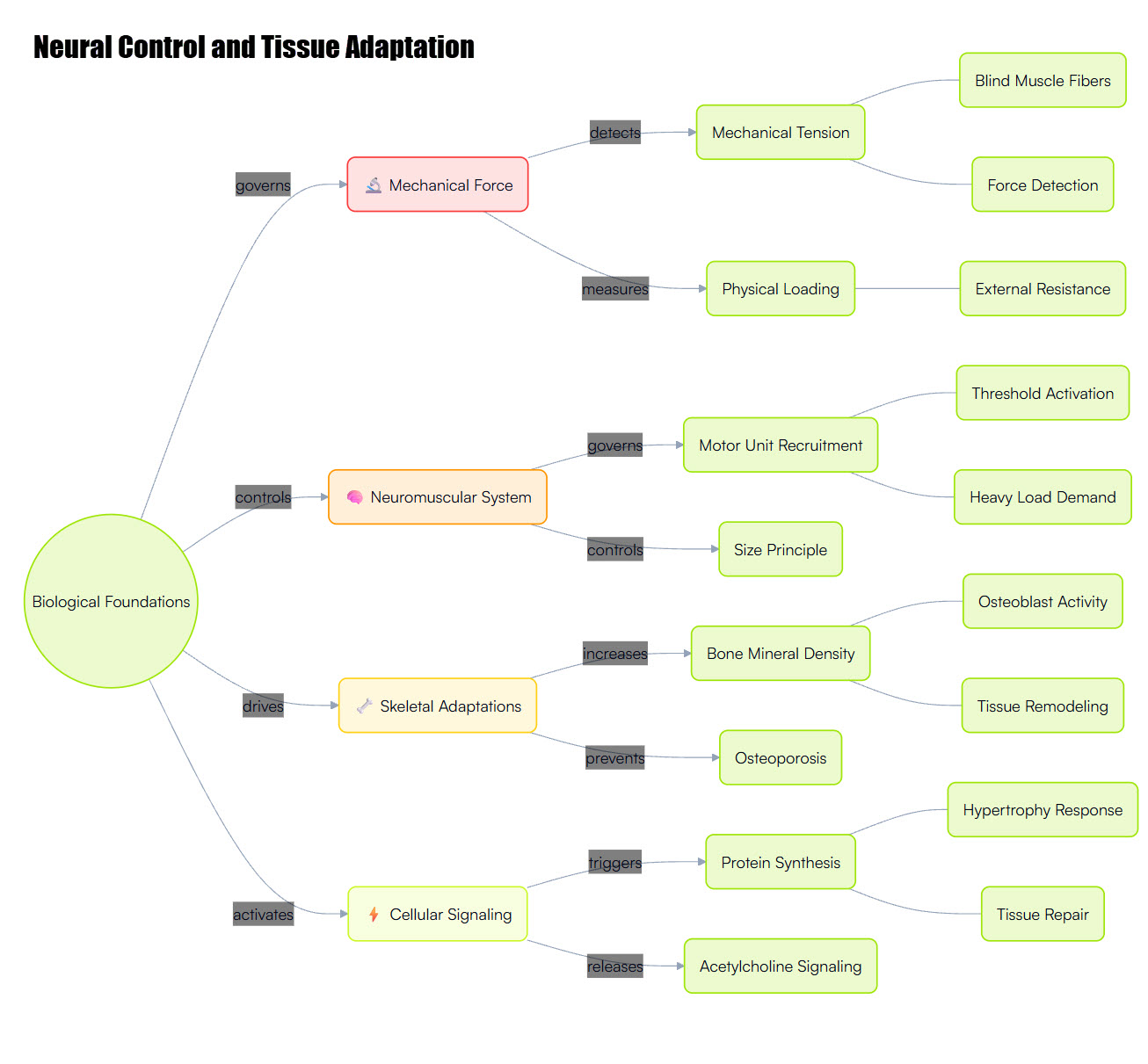
Resistance training relies fundamentally on the mechanical forces detected by muscle fibers and the structural adaptations that follow mechanical loading to transform your body.

Muscle Fibers and Mechanical Tension

The muscle itself functions as a blind physiological engine lacking sensory awareness of equipment costs or aesthetic goals. Muscle fibers simply detect mechanical tension when physical forces pull against them.

  • Muscle fibers register mechanical tension as the primary physical trigger for adaptation
  • Mechanical stress initiates intracellular signaling cascades responsible for muscular hypertrophy
  • The neuromuscular system translates external loads into internal biological responses

Henneman Size Principle

The nervous system recruits motor units in an orderly progression based on the magnitude of the force required. The Henneman size principle ensures that smaller, fatigue-resistant motor units activate first before larger, more powerful motor units engage.

  • Low-threshold motor units activate during minimal force production
  • High-threshold motor units engage only when heavier loads demand maximum recruitment
  • Mechanical tension dictates the extent of motor unit activation across the nervous system

Bone Mineral Density Adaptations

Mechanical loading places physical stress on the skeletal system, stimulating osteoblast activity and increasing bone mineral density, all helping to transform your body.

  • Bone tissue adapts to mechanical forces by laying down new structural matrix
  • Resistance training provides superior osteogenic stimulation compared to aerobic exercise
  • Skeletal remodeling strengthens bone architecture to withstand future mechanical demands
Synthesis and Protocols

The Brain-Muscle Connection and Visceral Fat

Systemic adaptations reveal the profound internal transformation that occurs when the human body undergoes progressive resistance training. Muscle tissue acts as the hardware while the central nervous system serves as the software. All working in tandem to transform your body, by producing functional strength and metabolic health.

Visceral Versus Subcutaneous Fat Reduction

Resistance training fundamentally alters body composition by targeting internal visceral fat stores alongside superficial subcutaneous fat. Visceral fat represents the hidden, dangerous layer that wraps around internal organs and correlates heavily with cardiovascular disease and metabolic dysfunction. Controlling these fat deposits are key to transform your body via a fitness program.

  • Visceral fat reduction occurs as new muscle tissue actively burns internal adipose stores
  • Subcutaneous fat sits directly under the skin, contrasting with metabolically active visceral fat
  • Resistance training taps into specific energy stores that standard cardio often fails to address effectively

Central Nervous System Control

The central nervous system acts as the puppet master behind every muscular contraction, dictating force output through precise neural signaling.

  • Motor cortex signals travel down the spinal cord to activate specific motor neuron pools
  • Neural adaptations improve intermuscular and intramuscular coordination during heavy lifting
  • Strength gains in early training phases stem primarily from neural efficiency rather than massive tissue growth

Metabolic Changes From Elevated Muscle Mass

Increasing skeletal muscle mass elevates the resting metabolic rate, transforming the body into a metabolically expensive engine that burns calories continuously.

  • Muscle tissue consumes energy constantly, even during periods of complete rest
  • Elevated muscle mass increases daily caloric expenditure without requiring additional activity
  • Resistance training upgrades the body’s metabolic machinery to handle greater nutritional throughput

Neural Control and Tissue Adaptation

Mental Models and Frameworks for Muscle Growth

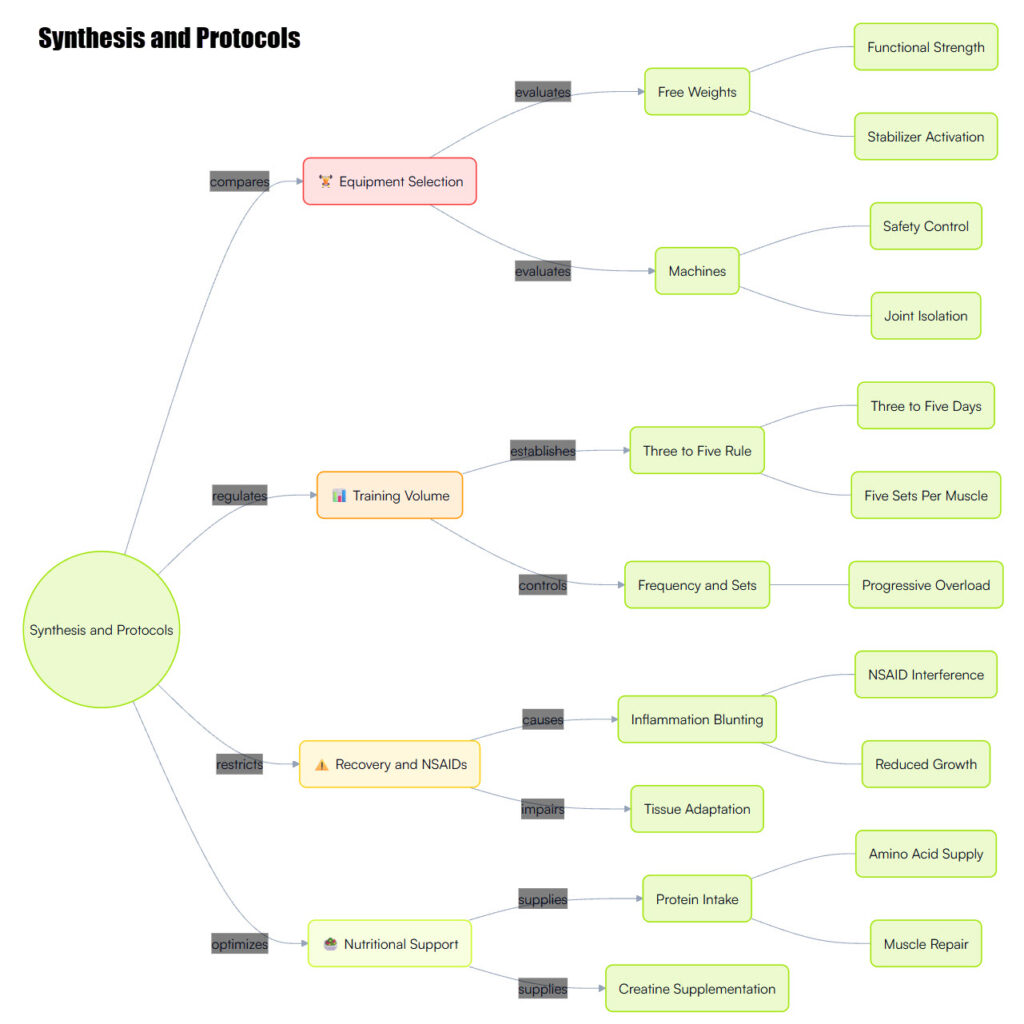
To transform your body, sustainable physical transformation requires a coherent framework that integrates mechanical principles, equipment selection, and rigorous recovery protocols.

Free Weights Versus Machines

Equipment debates often obscure the primary driver of muscular growth, which remains tension and mechanical stress regardless of the apparatus used.

  • Free weights challenge stabilizing musculature and demand complex intermuscular coordination
  • Machines isolate target muscle groups effectively and offer superior safety profiles for beginners
  • Both modalities stimulate hypertrophy successfully provided mechanical tension reaches the required threshold

The Three-to-Five Rule for Training Frequency

Training volume and frequency must balance stimulus with adequate recovery to optimize muscle protein synthesis in order to transform your body.

  • Optimal hypertrophy requires targeting each muscle group three to five times per week
  • Session volume should range between five and fifteen working sets per muscle group weekly
  • Progressive overload must occur systematically across all selected movement patterns

Physiological Consequences of Inadequate Recovery and NSAID Usage

Recovery protocols dictate whether training results in adaptation or systemic breakdown.

  • Inadequate sleep and nutrition blunt the muscle repair process and elevate cortisol levels
  • NSAID usage blunts the acute inflammatory response necessary for muscle adaptation and bone remodeling
  • Complete recovery allows the cellular machinery to rebuild tissue stronger than before
Transform Your Body via Weights generated pin 37925 3
pinit fg en round red 32
Shopping Basket